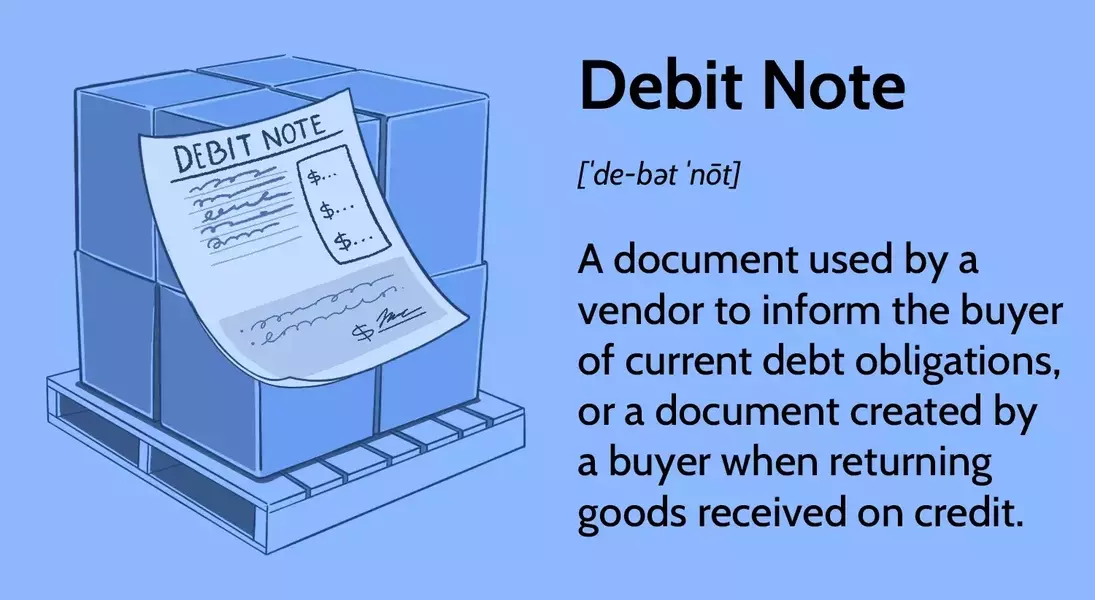
This guide delves into the essential role of debit notes within commercial dealings, clarifying their function, characteristics, and distinction from other financial documents. It highlights how these notes facilitate clear communication regarding financial obligations and adjustments between parties.
Clarifying Financial Commitments: The Role of Debit Notes
Defining a Debit Note
A debit note is a formal communication from a vendor to a buyer, signaling a current financial obligation. Although it shares some characteristics with an invoice, such as providing details about a transaction, its primary function can also be to serve as a reminder for outstanding payments. These documents are frequently utilized in business-to-business (B2B) exchanges, particularly when payments are not settled concurrently with the sale.
The Operational Mechanics of Debit Notes
In credit-based B2B transactions, suppliers dispatch goods to purchasers without upfront payment. Debit notes then inform the buyer that the seller's records reflect an increase in their outstanding balance. They are crucial for monitoring shipped goods and tracking owed amounts in an accounting system, even before a formal invoice is issued. Unlike invoices, which are direct requests for payment, debit notes are often structured as letters and may not demand immediate financial remittance. This is particularly true when they are used to communicate future financial responsibilities that have not yet been formally billed.
Key Considerations for Issuing Debit Notes
Organizations may issue debit notes for charges beyond their core offerings, such as renting out extra storage space. For instance, a company leasing a portion of its warehouse might send a debit note for the rental fees. They are also instrumental in rectifying billing discrepancies; if a client was undercharged, a debit note can be issued for the difference. These notes can also accompany delivered items as shipping confirmations. While the amount due is typically stated, payment is usually deferred until an official invoice is dispatched, allowing buyers the flexibility to return goods before making a payment. Furthermore, debit notes can function as simple postcard reminders for accrued debts, especially if there's uncertainty about the receipt of an initial invoice, and often include contact information for payment arrangements.
Essential Elements of a Debit Note
While the design of debit notes may vary across issuers, they generally include several core pieces of information to ensure clarity and accuracy in transactions. These typically encompass the issue date, the names and addresses of both the seller and the buyer, a clear description of the goods or services provided, the price per unit, and the total cost of the order. These details are vital for both parties to maintain precise transaction records.
Differentiating Debit and Credit Notes
It is important to distinguish between a debit note and a credit note. A debit note notifies a buyer of their financial liabilities, thereby increasing the amount they owe. Conversely, a credit note informs a buyer of an incoming credit to their account, effectively reducing their financial obligation. Credit notes are issued under various circumstances, including corrections for invoicing errors (such as pricing mistakes), modifications to an order, instances where goods were damaged during shipping, or when a customer rejects an order. While a credit note can offset all or part of a bill, it represents a credit on file rather than a direct refund, applicable towards future purchases.
Why Are Debit Notes Employed in Commerce?
Vendors issue debit notes to customers as a reminder of payments due for delivered goods or services. Buyers, on the other hand, may send debit notes to suppliers to communicate adjustments to their orders, such as the value of returned merchandise.
Who Issues Debit Notes?
Typically, a vendor or supplier dispatches a debit note to a buyer to inform them of their financial obligations pertaining to a purchase. Buyers may also initiate debit notes to notify a vendor of returned goods.
Is a Debit Note Identical to an Invoice?
While debit notes and invoices share similarities, they are not interchangeable. Invoices serve as formal bills, detailing the specifics of a sale, including items, unit prices, and total costs, along with sender and recipient information. Debit notes, however, are primarily generated by sellers to remind customers of impending payments or to document order adjustments.
Concluding Thoughts on Debit Notes
Debit notes are crucial documents in commercial exchanges, serving to formalize financial obligations. Primarily issued by vendors to remind customers of pending payments, they can also be used by buyers for specific purposes, such as signaling order adjustments. These documents are indispensable for maintaining accurate records and fostering transparent communication in business. It is crucial to differentiate them from invoices, which are formal bills of sale detailing transaction specifics, whereas debit notes typically address adjustments or reminders of deb
