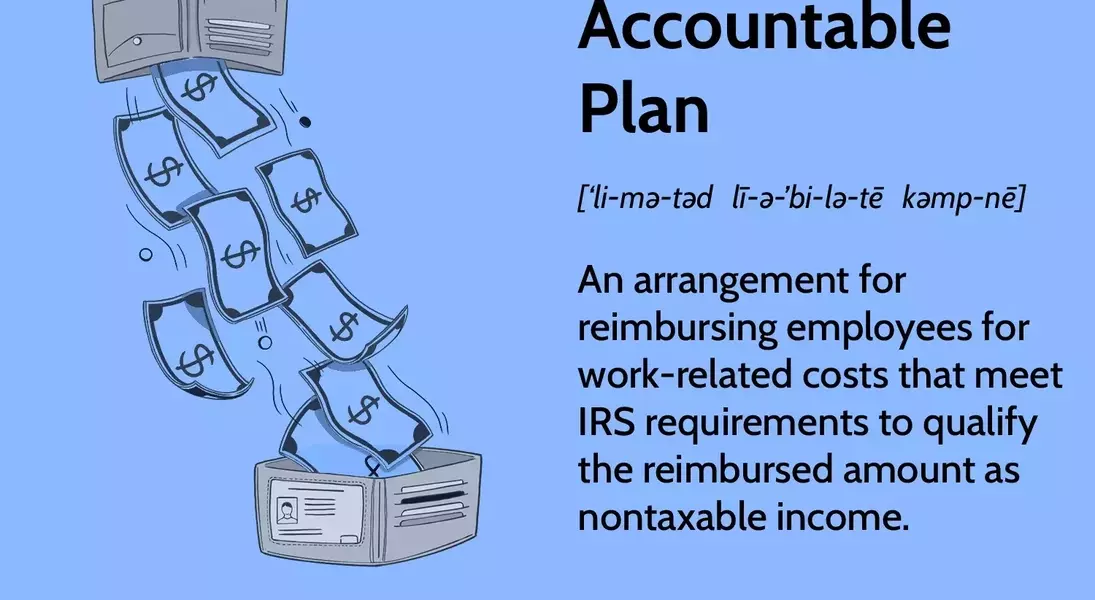
Accountable plans serve as a crucial mechanism for employers to manage employee business expense reimbursements in a tax-efficient manner. These plans, adhering to strict IRS guidelines, ensure that reimbursements are not treated as taxable income for employees, thereby offering significant financial benefits to both parties. The core tenets of an accountable plan revolve around the business relevance of expenses, meticulous documentation, and the timely return of any over-reimbursed funds. This framework distinguishes accountable plans from non-accountable ones, where reimbursements are considered taxable income, impacting an employee's gross pay and tax obligations. By streamlining the reimbursement process and ensuring compliance, accountable plans help maintain transparency and fairness in employee compensation for business-related outlays.
The successful implementation and maintenance of an accountable plan hinge on a clear understanding and strict adherence to its requirements. Employers, while not mandated to submit their plans directly to the IRS, must be prepared to demonstrate compliance through robust internal processes and record-keeping. This proactive approach safeguards against potential tax liabilities and ensures that employees can confidently incur business expenses knowing they will be reimbursed without adverse tax implications. The detailed record-keeping, timely reporting, and prompt return of excess funds are not just procedural formalities but essential components that underpin the integrity and benefits of an accountable plan, fostering a supportive and tax-compliant work environment.
The Mechanics of Accountable Plans for Tax-Exempt Reimbursements
An accountable plan provides a structured approach for businesses to compensate their staff for work-related expenditures without the reimbursements counting towards the employees' taxable income. This system is governed by specific Internal Revenue Service (IRS) stipulations designed to ensure that only legitimate business costs are covered in a tax-advantageous manner. For these reimbursements to remain tax-free and exempt from withholding or W-2 reporting, they must satisfy critical conditions. Employees are tasked with meticulously tracking and reporting their expenses, which is fundamental to maintaining the plan's integrity and ensuring compliance with federal tax laws. The meticulous record-keeping not only facilitates accurate reimbursements but also acts as a safeguard during potential audits, confirming that the employer's plan meets the necessary regulatory standards for tax-exempt status.
Central to an accountable plan's operation is the principle that reimbursed expenses must genuinely be business-related and adequately documented. This means that costs associated with travel, meals, lodging, and transportation, for instance, must directly contribute to the employee's work responsibilities. Should an employee receive an advance payment for anticipated expenses that exceeds their actual outlays, the surplus amount must be returned to the company within a specified timeframe, typically 120 days. Failure to do so could result in the excess funds being reclassified as taxable income. While employers are not required to formally file their accountable plan with the IRS, they bear the responsibility of proving its compliance through comprehensive records, highlighting the importance of clear guidelines and diligent adherence to prevent reimbursements from becoming taxable income.
Distinguishing Accountable Plans and Their Core Requirements
The fundamental distinction between an accountable plan and a non-accountable plan lies in the tax treatment of expense reimbursements. Under an accountable plan, reimbursements are exempt from an employee's gross income, provided they meet specific IRS criteria. Conversely, reimbursements made through a non-accountable plan are considered part of an employee's taxable income, subject to standard payroll withholding and W-2 reporting. This crucial difference underscores the financial benefit of an accountable plan, as it effectively reduces the tax burden for employees. The IRS outlines mandatory criteria for an accountable plan: expenses must be directly related to business activities, adequately substantiated with records, and any overpayments must be promptly returned to the employer. Adhering to these requirements is paramount for employers to ensure their reimbursement practices are tax-compliant and beneficial to their workforce.
For an expense to qualify under an accountable plan, it must be directly attributable to the employee's work and not mixed with personal costs. For example, if a personal vehicle is used for business, only the mileage pertaining to business travel is eligible for reimbursement, necessitating careful segregation of expenses. Proper documentation, usually in the form of receipts or other third-party verifications, is essential for proving the legitimacy of reported costs, although some exceptions exist for minor expenses like small non-lodging costs or certain transportation fares. Furthermore, the handling of excess reimbursements is a critical component; if an employee receives an advance that exceeds actual spending, the unspent portion must be returned within a reasonable period, typically 120 days from the expense incurrence. The IRS also provides clear guidelines on timely reporting, expecting expenses to be accounted for within 60 days and any advances to be received within 30 days of the expense, reinforcing the need for strict adherence to these administrative timelines.
