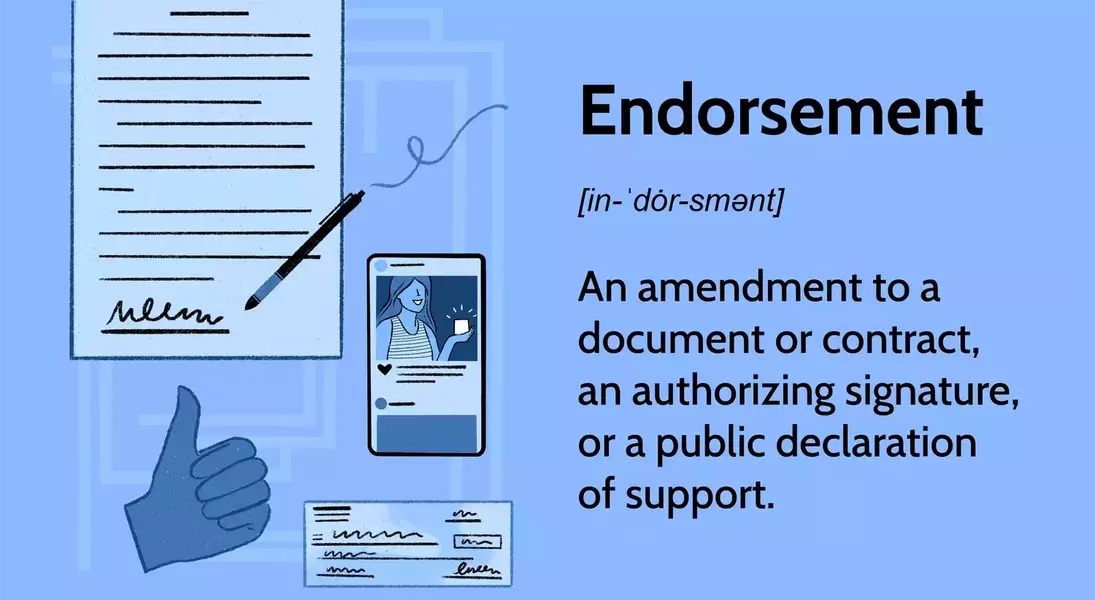
Endorsement, a multifaceted term, embodies different forms of official confirmation, alteration, or public backing. At its core, an endorsement can signify a formal signature validating a financial transaction or a modification to a document. It also extends to expressing open support for a person, an idea, or a specific initiative. This concept is fundamental in various sectors, from finance and law to advertising and public relations, underscoring its broad applicability.
In practical terms, endorsements manifest in several ways. For instance, a signature on a check functions as an endorsement, legally enabling the transfer of funds. In the realm of insurance, an endorsement, often referred to as a rider, amends the original policy's conditions, potentially adding benefits or adjusting coverage. Similarly, a license endorsement grants additional rights or expanded capabilities to the holder, such as the privilege to operate a motorcycle. Beyond these formal applications, endorsements are powerful tools in public relations and marketing. They involve influential figures or entities publicly advocating for products, services, or political candidates, thereby influencing public opinion and consumer choices. A historical example highlights this, detailing how early sports celebrities leveraged their fame for product promotion, illustrating the long-standing impact of endorsements in shaping market trends and public perception.
The act of endorsement, whether formal or informal, serves as a crucial mechanism for validating actions, modifying agreements, and shaping public sentiment. From the simple act of signing a document to the complex dynamics of celebrity product placements and political campaigns, endorsements facilitate trust, establish legitimacy, and drive influence. Their diverse applications highlight their importance in both daily interactions and broader societal movements, continually evolving with new platforms like social media to reach wider audiences.
