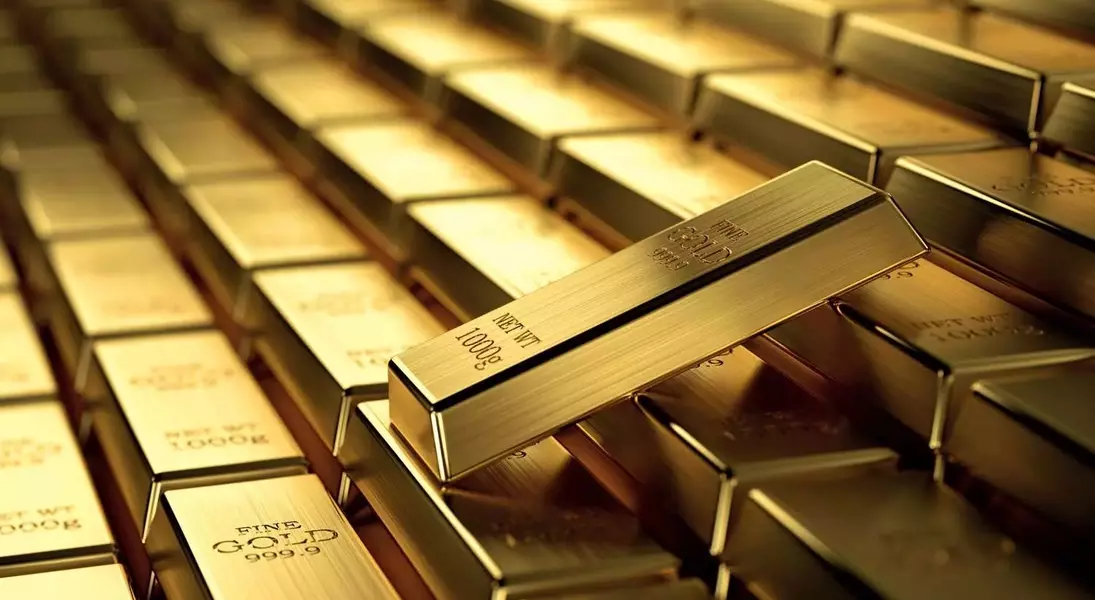
Gold has long been seen as a safe haven asset, offering refuge during times of economic instability. However, its performance as a long-term investment is complex and varies significantly depending on the period under review. While stocks have historically provided stronger returns over extended periods, gold has demonstrated its value during shorter periods, especially amid market stress. Gold's returns are primarily driven by price appreciation, unlike stocks and bonds that generate income through dividends or interest. This characteristic positions gold more as a portfolio diversification tool rather than a primary growth investment.
Gold's Enduring Legacy: A Detailed Investment Perspective
Gold, often considered a timeless store of value, presents a fascinating case study in long-term investment. Its role fluctuates dramatically based on prevailing economic conditions and geopolitical landscapes. For instance, between 1990 and 2020, gold prices surged by nearly 360%, yet this was overshadowed by the Dow Jones Industrial Average's remarkable 1,081% increase. However, a different narrative emerges when examining the period from 2000 to the mid-2020s, during which gold investments tripled, surpassing the S&P 500's doubling. This stark contrast highlights gold's pronounced ability to outperform during times of market volatility, high inflation, or geopolitical unrest.
Recent history further underscores gold's sensitivity to crises. In August 2020, amidst the global pandemic, gold reached an unprecedented peak of $2,064 per ounce. This was followed by successive record highs in 2024 and 2025, culminating in an all-time peak of $5,344 per ounce in January 2026, driven by ongoing geopolitical tensions and inflationary pressures. These events demonstrate that gold, while not always the fastest-growing asset, acts as a crucial hedge, preserving wealth when other markets falter.
The journey of gold as an investment is deeply intertwined with government policies. From January 1934, under the Gold Reserve Act, until December 1972, the price of gold was rigidly fixed at $35 per ounce. This era contrasts sharply with today's free-floating market. A pivotal moment occurred in 1933 when President Franklin D. Roosevelt mandated citizens to exchange gold for U.S. dollars, effectively curtailing gold investment for decades. The reinstatement of private gold ownership in 1974 marked its reintegration into the public market, ushering in an era of dynamic price movements.
Since 1971, when the U.S. dollar decoupled from gold, the precious metal has seen an average annual return of 10.6% until 2019, mirroring the U.S. stock market's performance. However, recent years have shown extraordinary gains, with gold averaging approximately 26% in 2024 and over 66% in 2025. This surge is notable, especially as it occurred even while inflation moderated, indicating a complex interplay of factors beyond traditional economic indicators.
The contemporary gold market is influenced by a confluence of factors, including central bank policies, which continue to sway prices through strategic buying and selling, particularly as emerging markets diversify their reserves away from U.S. dollar-denominated assets. The advent of gold exchange-traded funds (ETFs) in 2004 revolutionized gold investment by simplifying access, eliminating the need for physical storage, and potentially increasing market participation and price volatility. Investors can also engage in speculation through futures and options contracts traded on exchanges like COMEX.
Gold's function as a safe-haven asset has intensified in a globally interconnected world. Major events such as the 2008 financial crisis, the pandemic, and various geopolitical conflicts have repeatedly demonstrated its appeal during periods of heightened uncertainty. Furthermore, gold typically exhibits an inverse relationship with the U.S. dollar; a weakening dollar often makes gold more affordable, boosting demand. However, this traditional relationship has sometimes diverged, as seen in the mid-2020s, when gold prices climbed despite moderating inflation and a potentially stronger dollar.
Environmental concerns surrounding gold mining, including resource depletion and rising extraction costs, are increasingly influencing supply and prices. This has led to a growing interest in recycled gold and ethically sourced alternatives. Additionally, the opportunity cost of holding non-interest-bearing gold becomes particularly relevant during periods of high interest rates, explaining its stronger performance when real interest rates are low or negative. Bitcoin and other cryptocurrencies, often dubbed "digital gold" due to their scarcity, have shown periods of outperformance, but gold has proven more resilient during recent bear markets for digital assets.
Gold’s narrative as an investment tool is far from straightforward. While it has proven to be an excellent protector of wealth during times of economic turbulence and inflationary pressures, its long-term growth trajectory relative to other asset classes such as stocks and bonds is highly dependent on the specific timeframe analyzed. Historically, over very extended periods, equities have tended to outpace gold. However, in shorter, more volatile intervals, especially during financial crises or periods of heightened market uncertainty, gold has often demonstrated superior returns. This nuanced performance suggests that gold is most effectively deployed not as a singular, dominant investment strategy but as a critical component within a broader, diversified portfolio, offering stability and a hedge against unforeseen risks.
