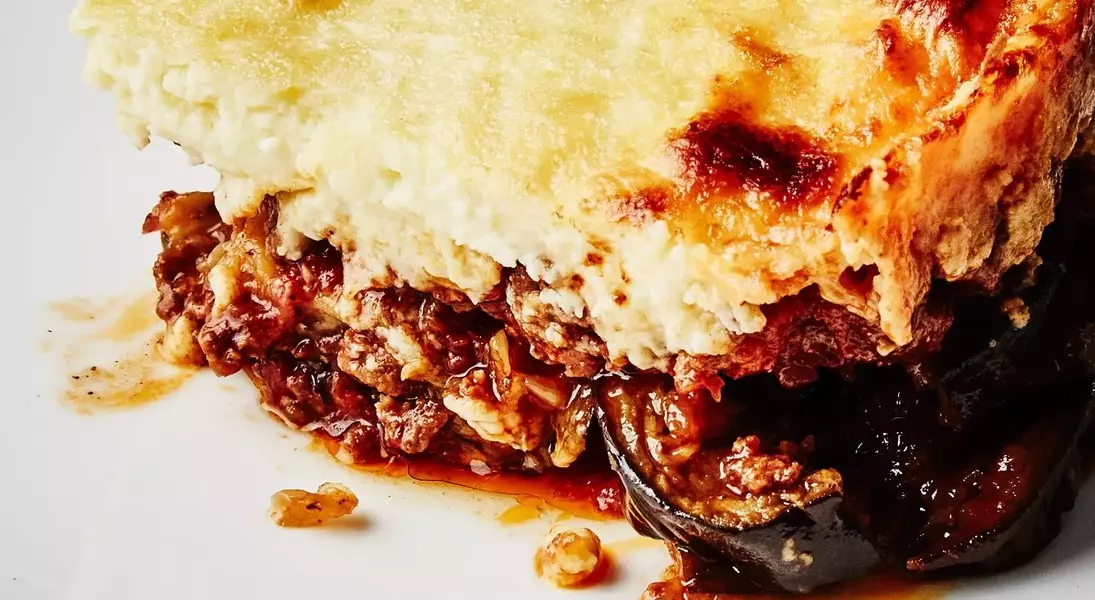
Moussaka, a classic Greek casserole, is a culinary project perfect for a leisurely weekend, culminating in a dish with a beautiful golden, bubbly top. This recipe features succulent layers of tender eggplant and a rich lamb mixture infused with aromatic cinnamon, all generously crowned with a creamy, cheesy Mornay sauce. The addition of fresh mint, oregano, and Fresno chiles introduces a vibrant and slightly spicy twist to this traditional delight. A standout feature of this particular recipe is its innovative method for preparing the eggplant, opting for roasting with a garlic-herb oil instead of the more time-consuming frying. This hands-off approach significantly streamlines the preparation process, making the dish more accessible. While the eggplant roasts, you can begin simmering the lamb and tomato sauce, or even spread the preparation over several days for added convenience. The article also provides valuable advice on selecting the right baking dish to showcase this impressive creation and stresses the importance of a 30-minute resting period after baking, allowing the flavors to meld and the casserole to set perfectly. This resting time also offers an ideal opportunity to whip up a crisp Greek salad, making for a complete and satisfying meal.
Streamlined Preparation and Make-Ahead Options
This recipe offers an efficient approach to creating a traditional Greek moussaka, simplifying what can often be a complex dish. Instead of deep-frying individual eggplant slices, which is time-consuming and can make the dish greasy, the recipe suggests roasting them. Slices are brushed with a fragrant garlic-herb olive oil and baked until tender and lightly browned, a method that is largely hands-off. This allows the cook to concurrently prepare the savory lamb and tomato sauce, which forms the hearty core of the moussaka. The article also emphasizes the flexibility of preparing components in advance, allowing for a more relaxed cooking experience. The lamb and tomato sauce, along with the roasted eggplant, can be refrigerated for up to three days, while the Mornay sauce can be made two days ahead. This modular preparation is particularly useful for those with busy schedules or for meal planning, ensuring that the process remains enjoyable rather than daunting. These strategic steps highlight a modern twist on a beloved classic, making it more approachable for home cooks.
The article provides comprehensive guidance on managing the preparation of moussaka, offering flexibility and convenience. By advocating for roasting the eggplant with a garlic-herb oil, it eliminates the labor-intensive and messy step of frying, allowing for a more relaxed cooking process. This method not only saves time but also results in a lighter yet equally flavorful eggplant component. While the eggplant is in the oven, the lamb and tomato sauce can be initiated, ensuring a cohesive and efficient cooking flow. For those who prefer to spread their culinary efforts, the recipe allows for significant make-ahead preparation. The cooked lamb sauce and roasted eggplant can be stored separately in the refrigerator for up to three days, and the Mornay sauce can be prepared up to two days in advance. Furthermore, the entire moussaka can be assembled and baked a day ahead, then cooled, covered, and chilled. For longer storage, the baked casserole can be frozen for up to three months. To reheat from frozen, it should be thawed and then warmed in a 250° oven for approximately one hour, ensuring it is heated through without overcooking. A crucial tip for preventing a watery moussaka is to allow the meat sauce to thicken thoroughly and the Mornay sauce to reach a pudding-like consistency before assembly. Additionally, the recommended 30-minute resting period post-baking is essential, as it allows the casserole to set, preventing it from becoming loose when served and ensuring the layers remain intact.
Achieving the Perfect Moussaka Consistency
One of the most common challenges in preparing moussaka is preventing it from becoming watery. This recipe provides critical advice to ensure a rich, well-set dish. The first key lies in thoroughly cooking the meat sauce. It is essential to allow sufficient time for most of the liquid to evaporate during the simmering process, resulting in a thick, concentrated lamb and tomato mixture. This prevents excess moisture from seeping into the casserole layers. Similarly, the Mornay sauce, a crucial element for the moussaka's creamy topping, must be prepared to the correct consistency. It should be cooked until it is as thick as pudding before the cheese and egg yolks are incorporated. This ensures that the sauce forms a stable, flavorful cap that browns beautifully during baking. Finally, the post-baking rest period is not merely a suggestion but an integral part of the recipe. Allowing the moussaka to rest for 30 minutes after it comes out of the oven is vital. This resting time permits the various layers to settle and firm up, preventing the casserole from falling apart when sliced and served, and ensuring a cohesive and enjoyable texture.
Achieving the ideal consistency in moussaka is paramount for a successful dish, and this recipe offers clear strategies to avoid a watery outcome. The first critical step involves the preparation of the meat sauce. It is imperative to cook the lamb and tomato mixture until a significant portion of its liquid has evaporated, transforming it into a dense, flavorful ragu. This reduction process is crucial; if the sauce retains too much moisture, it can compromise the structural integrity of the casserole and lead to a soggy result. The Mornay sauce, which acts as the creamy, golden crust of the moussaka, also requires careful attention to its thickness. It should be cooked over medium heat, whisking continuously, until it achieves a consistency comparable to thick pudding. This rich, viscous base is what allows the cheese and egg yolks to meld seamlessly, creating a stable and luxurious topping. The recipe also highlights the importance of not rushing the final step: the 30-minute resting period after baking. This interval is not merely a waiting time but a crucial phase during which the casserole's layers set and the flavors deepen. Skipping this step can result in a dish that is difficult to slice and may appear loose or unformed. Adhering to these guidelines ensures a moussaka that is firm, beautifully layered, and bursting with flavor, showcasing a perfectly balanced texture that is neither dry nor watery.
