
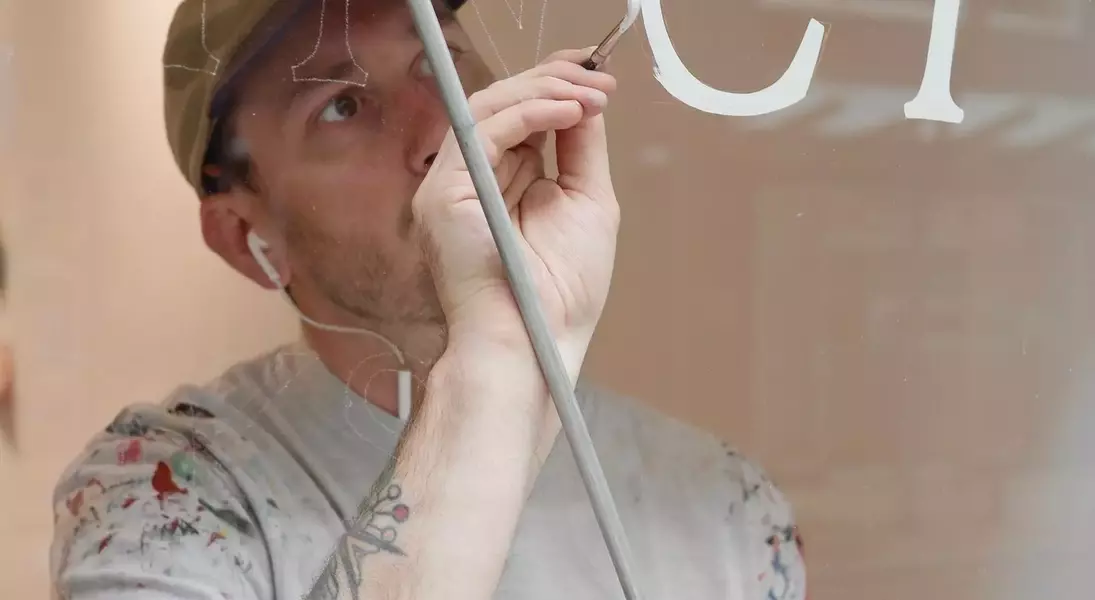
In an era increasingly dominated by artificial intelligence and digital aesthetics, a Brooklyn-based artisan is demonstrating the enduring value of traditional craftsmanship. Will Van Zee, a master sign painter, is not only preserving age-old techniques but also leveraging modern platforms like Instagram to reignite interest in his meticulous art form. His hand-painted and gilded signs have become a distinctive feature of New York City's vibrant culinary landscape, offering a refreshing counterpoint to the pervasive digital imagery.
The Revival of Hand-Painted Signs in New York City
Will Van Zee, through his enterprise, Van Zee Sign Co., has become an indispensable figure for numerous New York dining establishments, including popular spots like Elbow Bread, S&P Lunch, and Levain Bakery. His work, characterized by intricate brushwork and delicate gold leaf applications, transforms restaurant exteriors into works of art. Despite his methods being rooted in centuries-old traditions, Van Zee finds many of his clients through the digital realm. His mesmerizing Instagram Reels, showcasing the painstaking process of his craft, frequently garner millions of views, connecting him with a new generation of businesses and patrons.
Van Zee's journey into sign painting began unexpectedly. After moving to New York in 2008 to pursue product design, he transitioned to professional sign painting within a year. His early experiences as a house painter, working with his father, laid the foundation for his exceptional brush control. Complementing this, his passion for the restaurant industry, cultivated from years of working in various roles from dishwasher to prep cook, shaped his desire to contribute to the city's dynamic food scene. He cherishes the collaborative spirit of restaurant projects, often forming lasting relationships that lead to new opportunities through word-of-mouth referrals. For Van Zee, seeing a restaurant he contributed to finally open its doors, especially during friends-and-family nights, is immensely rewarding. He describes his design philosophy as a commitment to preserving and recreating the visual essence of New York City, often drawing inspiration from historical photographs to ensure his signs resonate with the city's rich past while representing the unique identity of each business. He strongly advocates for clients to explore their building's historical context, believing that adapting successful designs from decades past can infuse new life into contemporary signage.
In a world saturated with AI-generated visuals and inexpensive digital graphics, Van Zee champions the inherently human element of his work. He argues that hand-painted signs possess a 'soul' that machine-made designs cannot replicate. This human touch, much like a chef's personal imprint on a meal, communicates care and meticulous craftsmanship. Businesses, particularly those in fine dining where every detail matters, recognize that investing in custom, hand-painted signs signals a deep commitment to quality and authenticity to their customers. Initially hesitant about social media, Van Zee credits his wife with encouraging him to document and share his process online. This decision not only boosted his business but also fostered a broader appreciation for the forgotten craft of sign painting, allowing people to witness the intricate artistry behind what they often take for granted in their urban environment. Among his most cherished projects are signs for Rezdôra, Sailor, and Baby Blues Luncheonette, where he even designed the logo. He takes particular pride in projects that endure, noting that in the transient New York restaurant scene, a sign that graces a thriving establishment for a decade is a testament to its lasting impact and his small but significant role in shaping its beloved identity.
This narrative provides a compelling perspective on the enduring value of human skill in an increasingly automated world. It reminds us that while technological advancements offer efficiency, there remains an irreplaceable demand for the authenticity, charm, and unique character that only handmade creations can provide. For businesses, particularly in the hospitality sector, it highlights the strategic importance of investing in craftsmanship as a powerful statement of their brand identity and commitment to quality. Furthermore, the story underscores the unexpected ways traditional crafts can find new life and appreciation through modern digital platforms, bridging the gap between heritage and innovation.
