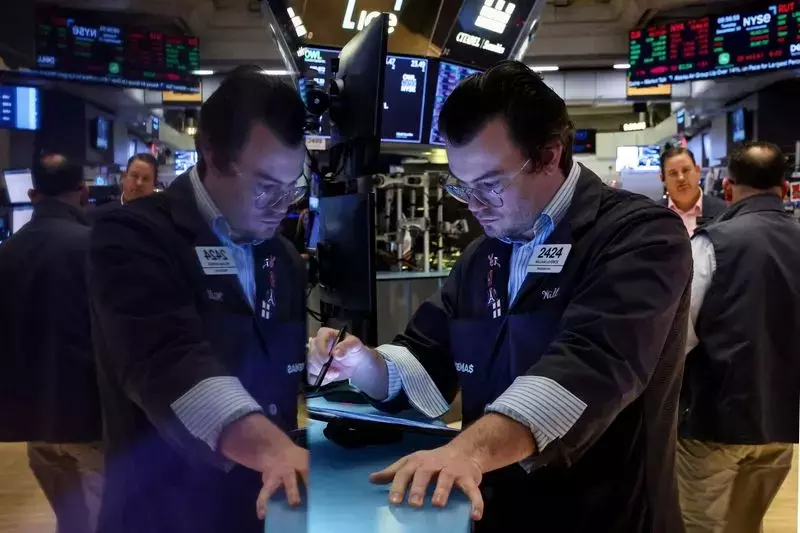
On Thursday, U.S. stock index futures witnessed a slight upward trend. This came as investors were processing the Federal Reserve's projections. These projections showed fewer-than-expected interest rate cuts and higher inflation for the next year. The previous day, these factors had severely impacted Wall Street. The Fed, in its Wednesday announcement, now anticipates only two 25 basis point cuts next year. This is half a percentage point less than its September forecast. Additionally, it raised the inflation expectation for the first year of the new Trump administration. As a result, the three main U.S. stock indexes suffered their sharpest daily declines since August. Traders now expect just one quarter-point rate reduction by mid-2025 and less than two cuts in total by the end of the year. This is in contrast to last week's expectations of three rate cuts. The S&P 500 hit a one-month low on Wednesday as investors adjusted their risk exposure to account for the impact of higher borrowing costs in 2025. Meanwhile, the Dow dropped for the tenth consecutive session, marking its longest streak of losses since 1974. Dow e-minis were up 124 points, or 0.3%, while S&P 500 E-minis were up 21.3 points, or 0.4%, and Nasdaq 100 E-minis were up 58.5 points, or 0.3%. The hawkish shift from the Fed occurred just three months after the U.S. central bank initiated its monetary easing cycle with a larger-than-usual 50 basis point interest rate cut. This cut had initially spurred risk appetite and helped push Wall Street to record levels. Since then, improving U.S. economic data and the prospects of higher inflation under Donald Trump's second U.S. presidential term have had an impact on the Fed's view. Chris Weston, the head of research at Pepperstone, stated, "If the Fed is holding off on a belief that we're seeing an end to disinflation, then equity faces renewed headwinds and drawdown." Stocks generally regained some ground in premarket trading after the sharp losses on Wednesday. Megacap Tesla and Nvidia each firmed by about 2%. In corporate news, Micron slumped 14% after its forecast of quarterly revenue and profit fell below estimates. SentinelOne gained around 4% as Jefferies upgraded the cybersecurity firm's shares from "hold" to "buy".
