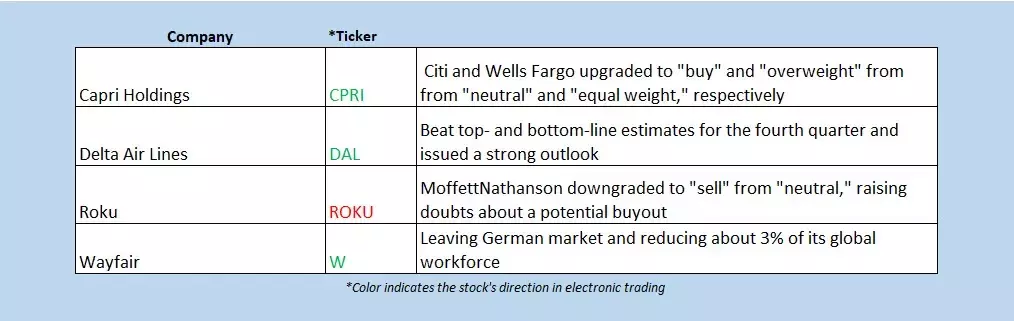

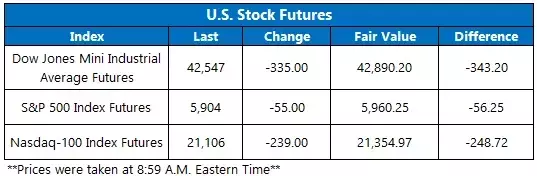
The U.S. job market showed unexpected strength in December, with employers adding 256,000 jobs, significantly surpassing the estimated 155,000. This positive labor data has sent ripples through global financial markets. Stock futures are notably lower as investors digest the implications of a robust job market on interest rates and economic policy. Treasury yields have surged, hitting their highest levels since 2023. Meanwhile, individual stocks like Walgreens Boots Alliance Inc (WBA) saw a premarket surge following better-than-expected quarterly results, while Constellation Brands Inc (STZ) and ON Semiconductor Corp (ON) faced declines due to earnings misses and downgrades. Asian markets reacted negatively to Japan's spending data, while European markets displayed mixed performance.
American Labor Market Strength Boosts Economic Outlook
The latest employment figures from the United States reveal an unexpectedly strong job market. Employers added 256,000 positions in December, well above the anticipated 155,000, and the unemployment rate dipped to 4.1%. These numbers suggest that the economy remains resilient despite various challenges. The immediate reaction was seen in treasury yields, which spiked sharply after the report, indicating heightened expectations for tighter monetary policies. Investors now anticipate potential changes in interest rates, which could impact borrowing costs and investment strategies. The robust job growth also signals increased consumer confidence and spending power, potentially driving further economic expansion.
This surge in employment is particularly significant given the broader economic context. Analysts had expected a slowdown in hiring due to ongoing inflationary pressures and geopolitical uncertainties. Instead, the job market has demonstrated remarkable resilience. The higher-than-anticipated payroll growth reflects not only the recovery in certain sectors but also the adaptability of businesses to changing conditions. With the unemployment rate at its lowest point in months, this development could influence policymakers' decisions on fiscal and monetary measures. Moreover, it may encourage more cautious investment behavior, as investors weigh the prospects of rising interest rates against the benefits of a thriving job market.
Global Market Reactions to U.S. Jobs Data
The release of the U.S. jobs data has triggered varied responses across global markets. In Asia, stocks fell as investors processed Japan's underwhelming household spending and pay data. Real household spending declined by 0.4% year-over-year, falling short of expectations, while average real income per household increased by 0.7%. Consequently, Japan's Nikkei dropped by 1.1%, reflecting concerns about domestic consumption. China's Shanghai Composite also slid by 1.3%, influenced by reports of the People's Bank of China suspending treasury bond purchases amid high demand and limited supply. Hong Kong's Hang Seng and South Korea's Kospi followed suit, albeit with smaller losses.
In Europe, the market response was more nuanced. While London's FTSE 100 declined by 0.4% due to rising yields on 30-year gilts, other major indices showed modest gains. France's CAC 40 edged up by 0.2%, supported by a rise in November industrial output. Germany's DAX gained 0.4%, signaling some optimism among European investors. The divergence in market reactions underscores the complex interplay between U.S. economic indicators and global financial trends. As investors continue to assess the implications of the strong U.S. job market, they will closely monitor how central banks and governments adjust their policies in response to these developments.
