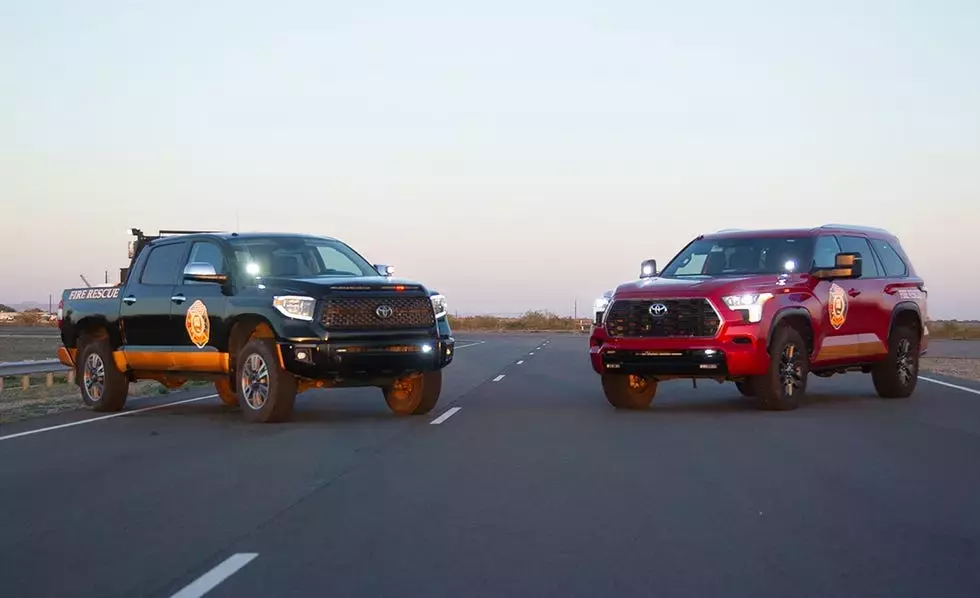
At Toyota's extensive Arizona Proving Ground, a dedicated emergency response team ensures the safety of personnel and operations across diverse and demanding terrain. This elite unit, led by shift captain Don Donka, utilizes highly customized Toyota Sequoia SUVs and Tundra pickups, specifically modified to handle the unique challenges of the 12,000-acre test site. These vehicles are equipped with essential medical and firefighting capabilities, enabling rapid and effective responses to a range of incidents, from vehicle testing accidents to environmental hazards like brush fires and encounters with desert wildlife. The modifications, including enhanced suspension, off-road tires, and integrated emergency systems, highlight Toyota's commitment to safety and operational efficiency within its testing facilities, ensuring that aid can reach any part of the proving ground quickly, regardless of the conditions.
The Customized Toyota Sequoia: A First Responder's Command
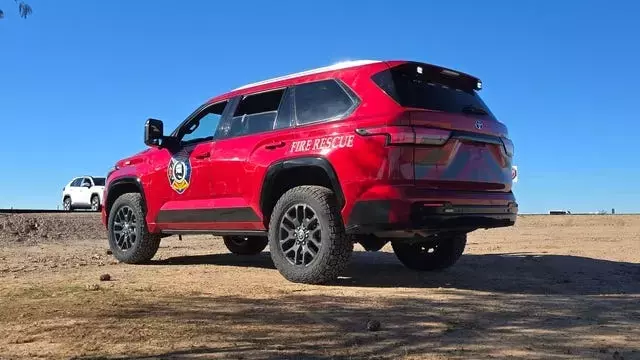
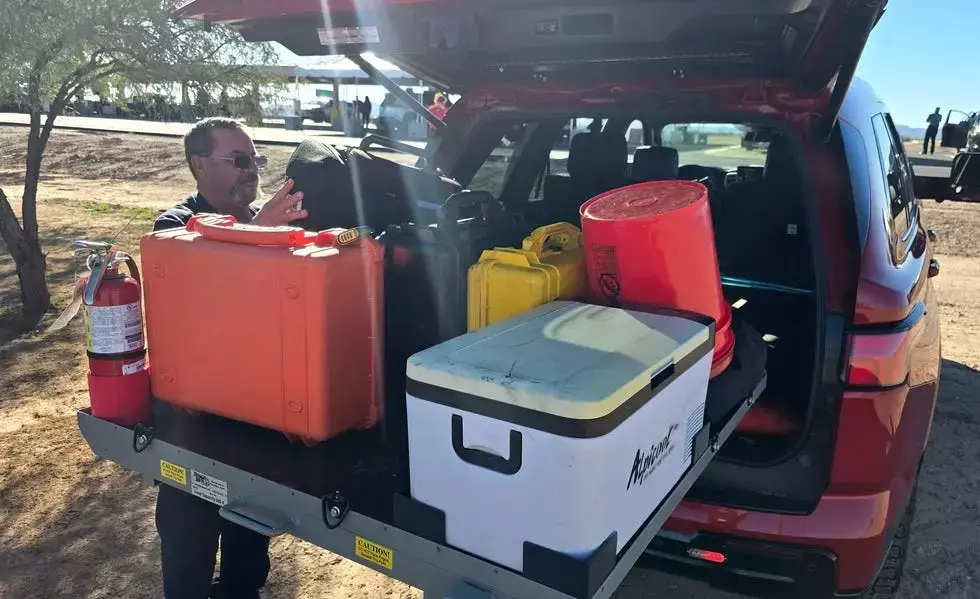
Don Donka, the shift captain for Toyota's Arizona Proving Ground (TAPG) fire-rescue team, relies on a highly customized Toyota Sequoia as his primary emergency response vehicle. This robust SUV, initially a press vehicle, was repurposed and extensively modified for its critical role. It features a lifted suspension system, courtesy of a Westcott Designs preload collar kit, and is fitted with 34-inch Falken Wildpeak A/T4W tires, enabling it to traverse the varied and challenging desert landscape, including sand, rocks, and deeply rutted dirt roads. The vehicle's interior has been reconfigured, with the third-row seats removed and replaced by a practical slide-out cargo system designed to store vital medical equipment such as defibrillators and fire extinguishers, ensuring quick access during emergencies. Despite these significant functional upgrades, Donka notes that the vehicle retains a factory-like feel from the driver's seat, demonstrating the seamless integration of specialized equipment. The cabin is equipped with a Lamphus SoundAlert siren controller, an LED emergency light control pad, and a Motorola public-safety radio, transforming it into a fully capable off-road EMT rig.
The Sequoia's ability to reach accident sites that conventional ambulances cannot, and to do so more rapidly, is crucial given the nature of activities at TAPG. Engineers at the proving ground push vehicles to their limits through high-speed loops, brutal ride-and-handling surfaces, and steep off-road obstacles, making accidents an inherent risk. Donka recounts that serious incidents are infrequent, with only a handful requiring hospitalization over his tenure, underscoring the effectiveness of their rapid response. The vehicle's role extends beyond human emergencies to include managing disruptions caused by desert wildlife, such as sidewinder rattlesnakes or javelinas, which can interfere with time-sensitive testing schedules. The in-house design and installation of reflective graphics, wiring, and lighting, often using CAD and 3-D printing for custom mounts, further illustrate the team's meticulous approach to creating a self-sufficient and highly capable emergency vehicle without relying on aftermarket sponsorships, focusing solely on meeting operational needs.
The Tundra's Role: Battling Desert Hazards
In addition to the Sequoia, Toyota's emergency response team at the Arizona Proving Ground also deploys a pair of last-generation Tundra pickups, each specifically outfitted to tackle the unique environmental challenges of the desert testing facility. These Tundras are critical assets, serving as mobile firefighting units capable of combating brush fires that occasionally erupt in the arid landscape. They are equipped with an Ironman 3.5-inch lift kit and reinforced with helper springs on the rear suspension to support a substantial 500-gallon water tank. This setup, combined with powerful water pumps, allows them to effectively respond to fire incidents, preventing them from escalating and causing significant damage or disrupting testing operations. Donka aptly describes these modified pickups as "basically small fire trucks," highlighting their specialized function and vital contribution to the overall safety infrastructure of the proving ground.
The presence of these custom Tundras underscores the comprehensive nature of the emergency services at TAPG, which operates 24/7 with four personnel per shift and even includes an on-site heliport for the most severe emergencies. While most incidents are managed internally by the dedicated team, the capability to quickly address brush fires with specialized vehicles like the Tundras minimizes the need for external state or county assistance, reserving it for only the most critical situations. The strategic deployment of both the highly mobile Sequoia for medical emergencies and the fire-suppressing Tundras ensures a robust, multi-faceted emergency response system tailored to the unpredictable conditions of a desert proving ground. This proactive approach to safety allows Toyota to conduct its rigorous vehicle testing with confidence, knowing that a skilled and well-equipped team is always on standby to mitigate any unforeseen circumstances, whether they involve human incidents, mechanical failures, or environmental hazards.
