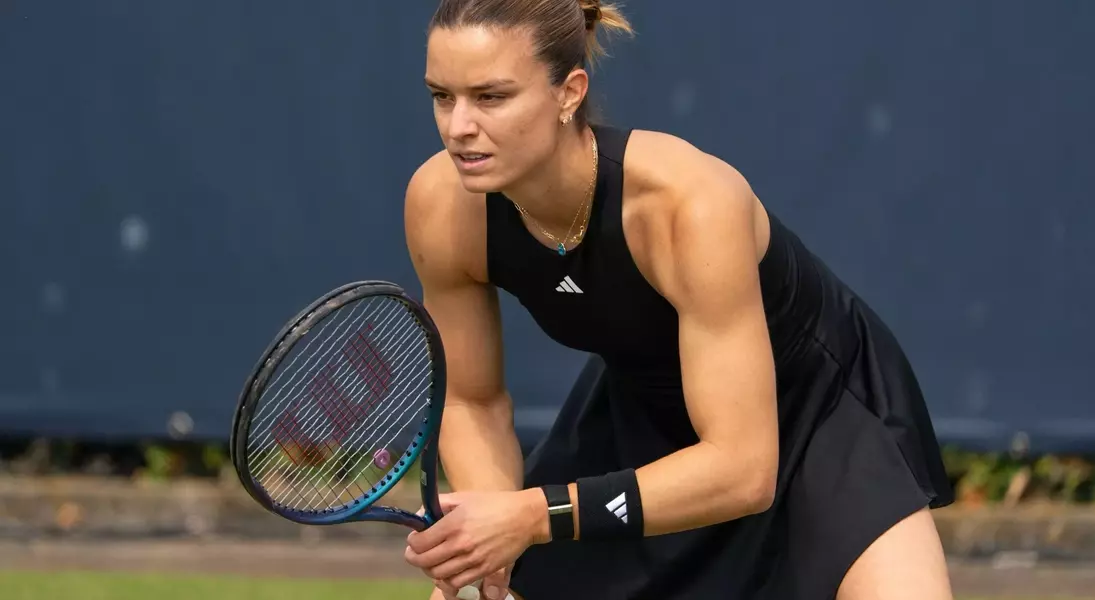
The upcoming Iasi Open, a significant WTA 250 tournament, promises an exciting week of professional tennis on Romania's outdoor clay courts. Scheduled from July 14th to 20th, 2025, this event attracts a strong lineup of 32 singles players vying for valuable ranking points. While last year's victor, Mirra Andreeva, will not be returning, the field remains competitive, highlighted by the participation of top-tier athletes. Maria Sakkari, a renowned figure in the sport, is making her return to clay at this event, adding considerable star power. She is joined by Alycia Parks and Elina Avanesyan, who are both among the top 50 players globally, and local favorite Jaqueline Cristian, ensuring a thrilling display of skill and determination. The tournament offers a crucial opportunity for players to adjust to clay after Wimbledon, serving as a distinct challenge before the North American hard court swing commences.
This year's Iasi Open marks a shift in dynamics compared to previous editions. Many prominent players opt out of this specific clay tournament in favor of preparing for the demanding US hard court season, which includes events in Washington and Canada. This strategic choice often leads to a less crowded field, as athletes prioritize adapting to faster surfaces over continued play on clay, especially after the grass-court season. Consequently, the absence of last year's champion, Mirra Andreeva, who can no longer enter as a non-top 10 player, further emphasizes this trend. For players not heavily focused on Olympic preparations, an extended period on clay might not be the most advantageous approach, making the Iasi Open an intriguing platform for those looking to fine-tune their clay-court game or accumulate points in a less congested competitive environment.
The Elite Field at Iasi Open 2025
The Iasi Open 2025 is poised to be a compelling event featuring a diverse array of talent, including several highly-ranked players. Headlining the draw are Maria Sakkari, currently World No. 86, along with Alycia Parks and Elina Avanesyan, both of whom are ranked within the top 50 globally. Their presence guarantees a high level of competition and strategic play on the clay courts. Additionally, Romanian standout Jaqueline Cristian will be a strong contender, drawing significant support from the home crowd. The absence of previous champion Mirra Andreeva opens up the field, making the tournament a more unpredictable and exciting prospect for all participants.
The competitive landscape of the Iasi Open is further enriched by the inclusion of other notable players like Lucia Bronzetti, Ann Li, and Anastasija Sevastova, among others. These athletes, along with newcomers and rising stars, contribute to a challenging environment where every match holds significance. For Maria Sakkari, the tournament presents an opportunity to rebound on clay after a challenging performance at Wimbledon. The strategic timing of the event, positioned between the grass-court season and the upcoming North American hard court swing, provides a unique platform. While some top players opt to prioritize hard court preparation, those participating in Iasi are either seeking valuable points, refining their clay game, or simply prefer to compete in this distinct setting. This blend of seasoned professionals and emerging talents promises an engaging and fiercely contested tournament for tennis enthusiasts.
Strategic Landscape: Clay Before Hard Court Season
The placement of the Iasi Open immediately following Wimbledon creates a unique strategic consideration for players. Many athletes choose to forego this clay-court event, prioritizing their transition to the hard courts of the US Open series tournaments in Washington and Canada. This reflects a broader trend where players seek to maximize their preparation on the surface most relevant to the major championships, often leading to a more focused approach on specific court types. The allure of the hard court swing, with its significant ranking points and prize money, often outweighs the appeal of a return to clay, especially after the demanding grass-court season.
This strategic decision-making impacts the composition of the Iasi Open field. For players who are not aiming for the immediate shift to hard courts or those who feel a need to bolster their clay game, the Iasi Open offers a valuable opportunity. Unlike previous years when the Olympic Games might have influenced a continued focus on clay, the current calendar allows for more individualized preparation. The tournament thus becomes a critical juncture for those seeking to accumulate WTA points on clay or to regain form on the surface before shifting their attention to the hard court season. This dynamic ensures that while the field may appear less star-studded compared to Grand Slams, it comprises dedicated competitors ready to leave their mark on the Romanian clay.
