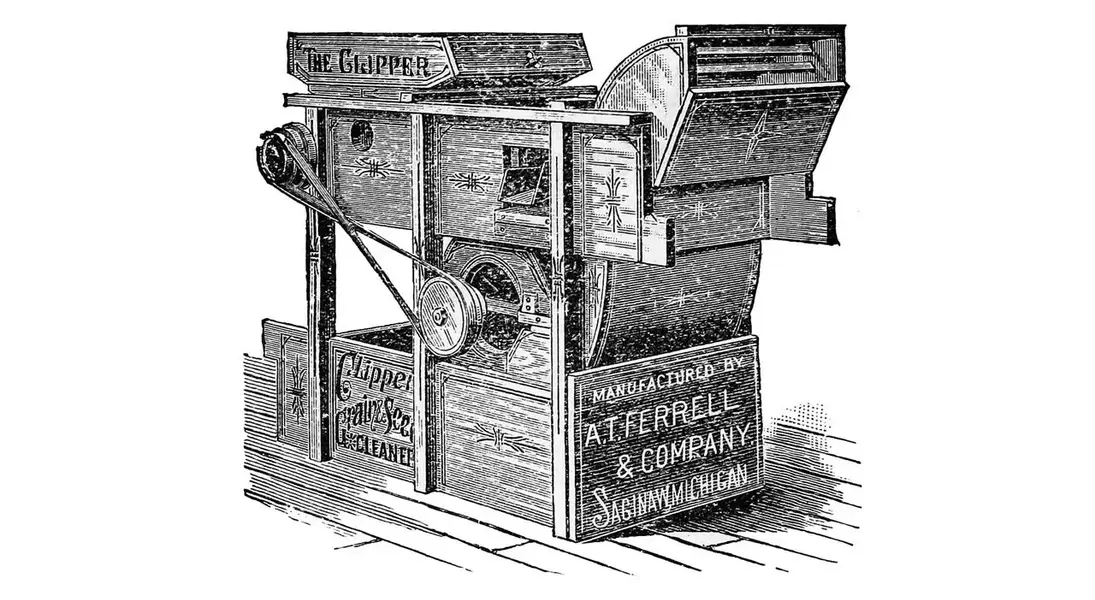
In an agricultural landscape increasingly dominated by advanced technological solutions, a compelling argument emerges for the enduring value of established methodologies and resilient machinery. This perspective suggests that while innovation propels the industry forward, certain long-standing practices, particularly in seed preparation, continue to demonstrate remarkable effectiveness and economic viability. The wisdom of relying on robust, time-tested equipment, often inherited through generations, is gaining renewed appreciation, challenging the pervasive drive towards constant modernization for its own sake. This approach emphasizes consistency and reliability, proving that sometimes, the most effective tools are those that have already stood the test of time and countless harvests.
A prime example of this philosophy in action is Brian Thalmann, a fifth-generation farmer from Minnesota who operates Thalmann Seeds. For many years, Thalmann has relied on a foundational seed-sorting process that originated with his grandfather's simple fanning mill, initially used for cleaning wheat. Today, his operation efficiently cleans and packages soybean seeds for Stein Seed Co. from November through April, utilizing a meticulously refined three-step mechanical procedure. This process begins with the removal of chaff in a large air screen mill. Subsequently, seeds are precisely separated by weight using a gravity table separator—an apparatus Thalmann colorfully describes as an 'air hockey table on steroids.' The final stage involves a rotary spiral, which expertly distinguishes high-quality, rounded kernels from misshapen ones, ensuring optimal seed purity and consistency.
Thalmann's dedication to these proven mechanical systems is rooted in their inherent reliability and straightforward design. He asserts that mechanical equipment, unlike some contemporary alternatives, is less susceptible to unpredictable changes and technical glitches. This focus on dependable, low-complexity machinery not only guarantees superior seed quality but also aligns with his broader farming strategy, which prioritizes unwavering consistency over convoluted technological sophistication. This practical mindset offers farmers a sustainable path, particularly during economically challenging periods when financial prudence is paramount.
The principle extends beyond seed cleaning to other areas of farm machinery. Consider the iconic Big Bud tractors, first manufactured in the 1970s in Havre, Montana. These formidable machines are celebrated for their exceptional durability and ease of maintenance. Scott Sloan, a product manager at Titan International, highlights that approximately 290 Big Bud tractors remain operational today, with some frames boasting over 40,000 hours of service spanning 35 years—a testament to their robust construction. Their design allows for remarkable ease of repair; for instance, a complete engine swap on a Big Bud 747 can be accomplished in less than four hours due to its modular 'gen pack' system, where the engine and transmission slide in and out with relative simplicity. This incredible longevity and repairability make legacy equipment a highly attractive option, especially when new machinery represents a significant financial outlay.
While contemporary agricultural technologies undoubtedly offer efficiencies and potential cost reductions, their initial investment often far exceeds that of a fully depreciated, yet perfectly functional, older machine. In an era where every operational expense is scrutinized, the enduring advice from past generations—to maintain what reliably performs—proves profoundly relevant. This philosophy not only supports fiscal responsibility but also fosters a deeper connection to agricultural heritage, demonstrating that true progress isn't always about the newest gadget, but often about maximizing the potential of what is already well-established and dependable.
