In the heart of subarctic Finland, a unique architectural marvel stands as a testament to the enduring tradition of Finnish saunas. This article explores how architects Laura Mattila and Mikko Merz have reinterpreted an ancient practice, blending it with modern design principles. The sauna they built in Fiskars, a former factory town turned artists' colony, showcases sustainable building techniques and deep cultural roots. With over three million saunas in Finland, this structure not only serves as a place for relaxation but also symbolizes the country's commitment to equality and communal living.
A Journey Through History and Design
On a warm September afternoon, in the picturesque setting of Fiskars, located about an hour west of Helsinki, architect Laura Mattila reflects on the creation of a unique sauna. Eight years ago, she and her partner Mikko Merz embarked on a project that would bridge the past and present. The town, once a bustling industrial hub, has transformed into a thriving community of artists, where tradition meets innovation.
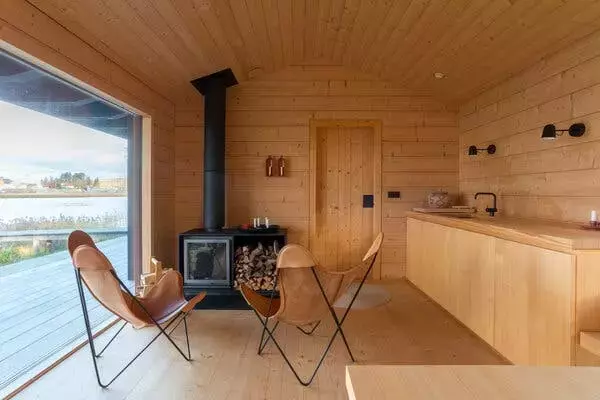
Mattila emphasizes the functionality of the building rather than its aesthetics. The two 135-square-foot volumes—one serving as a changing room and the other as the sauna—are separated by an open space that frames the surrounding forest. The construction features elegant lock joints and thin layers of linen between logs for insulation. These elements ensure that the building remains efficient and sustainable, much like traditional Finnish farmhouses.
The client, Jan Söderblom, a 54-year-old conductor and violinist, sought a design that combined timeless elegance with archaic simplicity. The result is a structure that closely resembles the barns and saunas Finns have built for centuries. The history of Finnish saunas dates back some 3,000 years, evolving from simple smoke saunas used for drying crops to multifunctional spaces central to daily life. In these spaces, families cooked, gave birth, treated the sick, and even performed last rites for the dying. Despite the decline of sweat bathing in Europe during the 16th century due to epidemics, saunas continued to thrive in Finland, eventually becoming a cornerstone of national identity.
Today, Finland boasts approximately three million saunas for its population of 5.6 million people. These spaces, whether lakeside cabins or city-center spas, embody the principle of equality. As Saija Silen, a curator at the Museum of Central Finland, explains, “In the sauna, it doesn’t matter how much money you have or what you do.” The sauna remains a symbol of Finnish egalitarianism, offering a sanctuary where everyone can find solace and connection.
From a journalist’s perspective, the resurgence of interest in Finnish saunas highlights the importance of preserving cultural heritage while embracing modernity. The innovative design by Mattila and Merz not only honors tradition but also paves the way for sustainable living. It serves as a reminder that progress and respect for the past can coexist harmoniously, enriching both individuals and communities.
