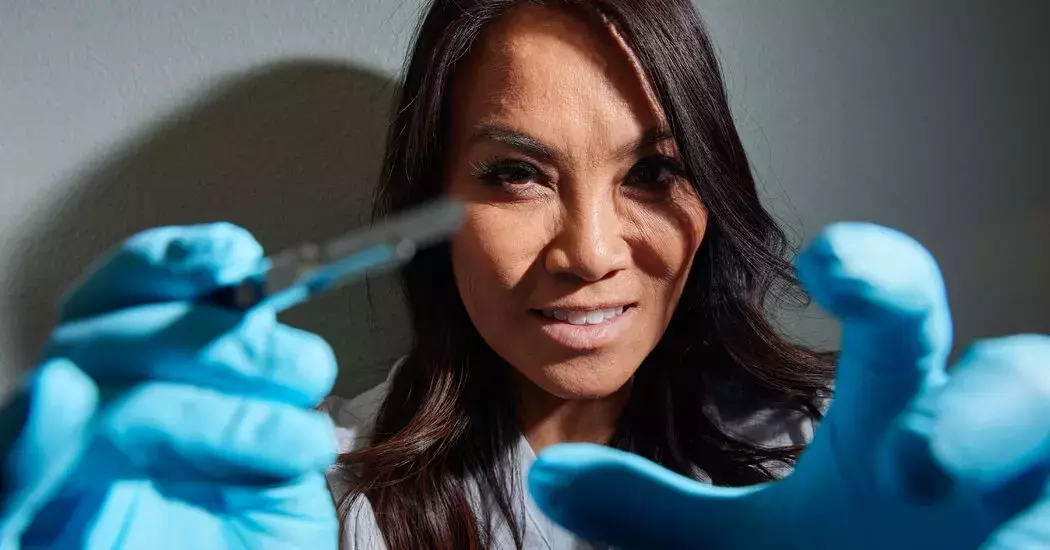
In a California dermatology clinic, Dr. Sandra Lee, an experienced skin specialist, encountered various unusual cases throughout her career. From massive cysts to peculiar growths, she has managed them all with expertise. On this particular morning, she was dealing with a relatively minor issue—a small bump on a patient’s head. The procedure, while routine, offered insights into the unique world of dermatological treatments and the growing intersection between medical practice and social media. Dr. Lee’s approach to these procedures is both professional and engaging, often comparing the textures of growths to everyday foods, which adds a personal touch to her work.
The Procedure Unfolds: A Small Bump Becomes a Learning Experience
On a sunny December morning, Dr. Lee prepared to treat Mike Nixon, who had traveled to her clinic for assistance with a benign lump on his scalp. Despite its modest size—comparable to a grape—the removal process required precision and care. Dr. Lee made an almond-shaped incision using scissors, ensuring the area was numbed adequately. Throughout the procedure, she maintained a reassuring dialogue with Mr. Nixon, confirming his comfort level. This interaction highlighted the importance of patient communication in medical settings.
As the procedure progressed, Dr. Lee explained that the growth was a pilar cyst, noting its texture resembled that of an olive. Her descriptions, often likening cyst contents to familiar foods, make the experience more relatable and less intimidating for patients. Dr. Lee’s methodical approach and positive demeanor contributed significantly to the success of the procedure. Moreover, the presence of a medical assistant filming the extraction underscored the increasing role of social media in sharing medical knowledge and experiences.
Social Media and Medical Practice: A New Frontier
Beyond the clinical aspects, the session revealed the evolving relationship between dermatologists and digital platforms. In exchange for permission to film and share the procedure online, Dr. Lee waived Mr. Nixon’s co-pay. This arrangement not only benefits the patient financially but also provides valuable educational content for a broader audience. It was not the first time such an agreement had been made, indicating a growing trend in blending medical practice with social media outreach.
Dr. Lee’s decision to document and share these procedures reflects a broader shift in how medical professionals engage with the public. By making complex medical processes accessible through relatable comparisons and visual documentation, she bridges the gap between healthcare providers and patients. This innovative approach fosters greater understanding and trust, ultimately enhancing the overall patient experience. The use of social media as a tool for education and engagement marks a significant advancement in modern medical practice.
