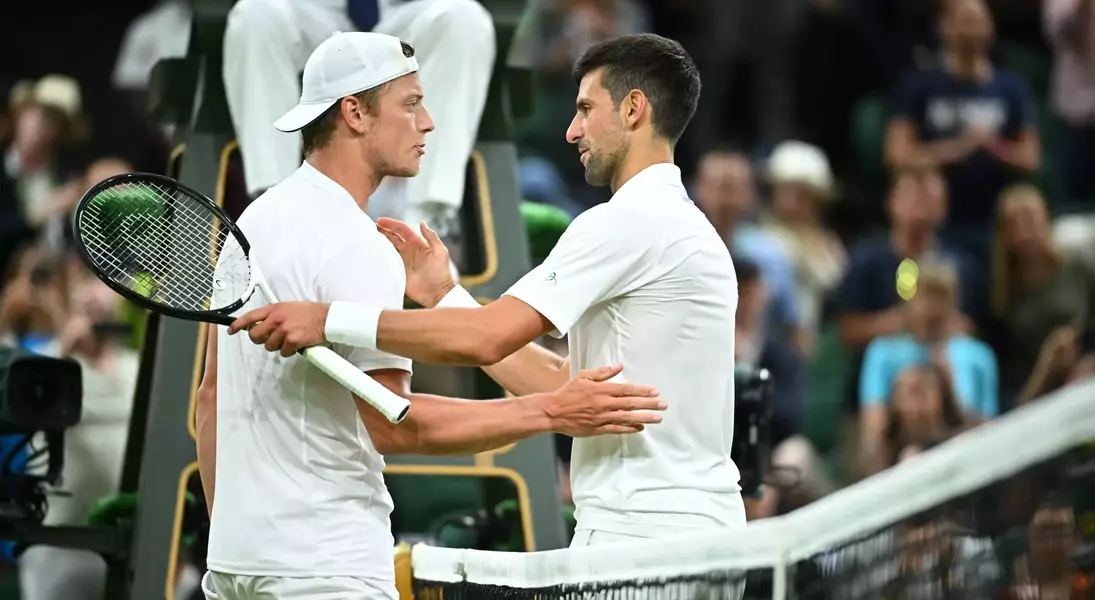
The tennis world bids a poignant farewell to Tim Van Rijthoven, whose burgeoning career has been prematurely concluded at the age of 28. Despite a meteoric rise in 2022, highlighted by an unexpected triumph at the Libéma Open, persistent injuries have relentlessly plagued the Dutch athlete, ultimately compelling him to retire from the professional circuit. His journey serves as a compelling narrative of immense potential tragically curtailed by physical adversity, leaving fans and peers reflecting on what might have been.
A Star's Brief Ascent and Heartbreaking Decline
On a somber Tuesday, July 9, 2025, the tennis community received news of Tim Van Rijthoven's retirement, a decision necessitated by a relentless battle against a series of debilitating physical setbacks. The 28-year-old Dutch talent, once a beacon of promise, was forced to conclude his professional journey. Van Rijthoven's story is particularly striking because, despite his celebrated, albeit brief, moment in the sun, chronic injury interruptions prevented him from ever securing a consistent spot within the top 100 rankings.
His most remarkable achievement unfolded in June 2022 at the 's-Hertogenbosch ATP 250 tournament in the Netherlands. Then ranked a humble 205th globally, Van Rijthoven, granted a wildcard entry, captivated audiences by overcoming a formidable lineup of top-tier opponents. He defeated Taylor Fritz (ranked 14th), Félix Auger-Aliassime (ranked 9th), and the then-world No. 2, Daniil Medvedev, in a decisive final. This victory was astonishing, marking only his second career ATP-level event and his first main-draw experience on grass, save for a qualifying match a week prior at the Surbiton Challenger. He demonstrated incredible prowess by dismantling Medvedev with a commanding 6-4, 6-1 scoreline, lifting his maiden ATP trophy. This extraordinary run continued at Wimbledon, where he advanced to the Round of 16, securing victories against Reilly Opelka (15th seed) and Nikoloz Basilashvili (22nd seed), before succumbing in a hard-fought four-set match against the legendary Novak Djokovic.
However, the momentum cultivated during this dream run was systematically dismantled by recurrent injuries. Van Rijthoven gradually receded from the limelight, struggling with form and consistency due to prolonged periods of absence, including a significant nine-month layoff caused by a back injury. In his final competitive appearances, he participated in the 2024 Australian Open and Roland Garros qualifiers, exiting in straight sets in the opening rounds of both tournaments.
In a heartfelt statement, Van Rijthoven conveyed the profound sorrow of his forced departure: “With a heavy heart, I have to share something today that I have been trying to process for a long time: My professional tennis career is forced to come to an end. Due to a stubborn elbow injury that, despite all the rehabilitation and medical trips, fails to recover, I am forced to bid farewell to the sport I have lived my whole life.” He expressed a wish for a different kind of farewell, one with a racket in hand and an audience cheering, but acknowledged the body's ultimate decision. He concluded with a message of gratitude and hope: “Still, I look back with incredible pride and gratitude. From a small kid in his mother’s arms dreaming big, to this. I want to thank everyone who supported me: my family, team, coaches, physios, sponsors, and fans. I don’t know exactly what’s next, but I know my heart will always belong to tennis. See you soon – maybe on court, maybe not. Who knows.”
Tim Van Rijthoven's career is a poignant reminder of the fragility of athletic greatness. His unexpected rise at 's-Hertogenbosch provided a thrilling glimpse of his immense potential, yet it also underscored the brutal reality that physical health is paramount in professional sports. For athletes, particularly in demanding disciplines like tennis, the body is both their most valuable asset and their greatest vulnerability. His story is a testament to the fact that talent and dedication alone cannot always overcome the relentless challenges of chronic injuries. It prompts reflection on the systemic pressures within elite sports, where athletes often push their bodies to the brink, sometimes at the cost of long-term health and career longevity. His candid honesty about his struggle and his acceptance of this difficult reality offer a valuable perspective on resilience and the profound love for one's craft, even in forced retirement.
