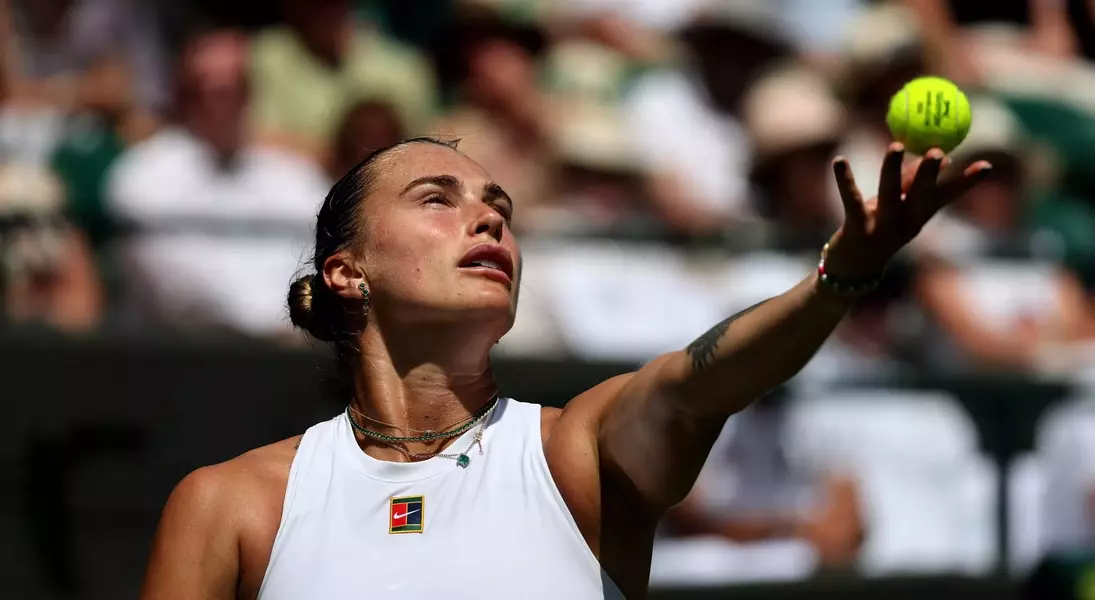
In a thrilling display of determination, world No. 1 Aryna Sabalenka secured her spot in the Wimbledon semifinals, navigating a tough three-set battle against the experienced Laura Siegemund. The match, a true test of mental fortitude, saw Sabalenka drawing on past lessons, particularly her French Open final defeat, to push through and claim victory. Her journey at Wimbledon has been marked by compelling performances, culminating in this hard-won triumph that sets the stage for a compelling semifinal clash against Amanda Anisimova.
Sabalenka's Grueling Path to Wimbledon's Elite Four
On a tension-filled Tuesday at the prestigious Wimbledon Championships, the top-ranked tennis player, Aryna Sabalenka, encountered her most formidable opponent yet in the skilled veteran, Laura Siegemund. Despite having sailed through previous rounds at SW19 without dropping a single set, including a decisive win against her former doubles partner Elise Mertens in the round of 16, Sabalenka faced a stern challenge. The cunning German player, Siegemund, seized the opening set, pushing Sabalenka to her limits. However, displaying the tenacity of a true champion, the former Australian Open winner mounted a powerful comeback, ultimately securing a hard-fought 4-6, 6-2, 6-4 victory. This remarkable display of resilience has propelled Sabalenka into the Wimbledon semifinals, marking a significant milestone in her pursuit of a maiden final at this illustrious tournament.
During her post-match reflections, the Belarusian superstar candidly shared insights into her mental state throughout the demanding encounter. Sabalenka revealed a profound connection between her current resolve and the painful memory of her 2025 Roland Garros final loss to Coco Gauff, a match that also went to three sets. She openly admitted to harnessing the raw emotions from that defeat, transforming them into a driving force against Siegemund. “Honestly, I think there’s a big possibility I would’ve lost this match if I hadn’t learned that lesson at the French Open,” Sabalenka confided. “And in some moments I kept reminding myself, ‘Come on, it’s a quarterfinal of Wimbledon. You cannot give up. You cannot let the emotions take over you and lose another match.’ I was just reminding myself that it’s my dream. Why would I give up so easily? So I have to keep fighting. That’s basically it. I kept telling myself that. I was willing to push myself and get those tough points.”
While Siegemund's memorable Wimbledon campaign has now concluded, Sabalenka stands on the brink of her first-ever final at the historic All England Club. Her next formidable opponent will be American talent Amanda Anisimova. This semifinal promises to be a powerful showdown, as Anisimova, the 20th seed, has already demonstrated her prowess by overcoming Russian Anastasia Pavlyuchenkova in straight sets. The head-to-head record between Anisimova and Sabalenka, with Anisimova leading 5-3 in previous career meetings, adds an extra layer of intrigue and anticipation to this high-stakes match.
From a journalist's perspective, Sabalenka's journey in this Wimbledon tournament is a compelling narrative of growth and unwavering spirit. Her candid acknowledgment of how a past defeat fueled her present victory offers a powerful lesson in sports psychology and human resilience. It underscores the idea that setbacks are not merely obstacles, but crucial learning experiences that can forge stronger, more determined competitors. Her ability to channel negative emotions into positive action is a testament to her elite mindset and her profound commitment to her goals. As she advances to face Anisimova, a player who historically has held an advantage over her, the upcoming semifinal will not only be a test of skill but also a fascinating continuation of Sabalenka's evolving mental game. It serves as an inspiration, reminding us that true champions are not defined by their avoidance of defeat, but by their ability to rise stronger from every challenge.
