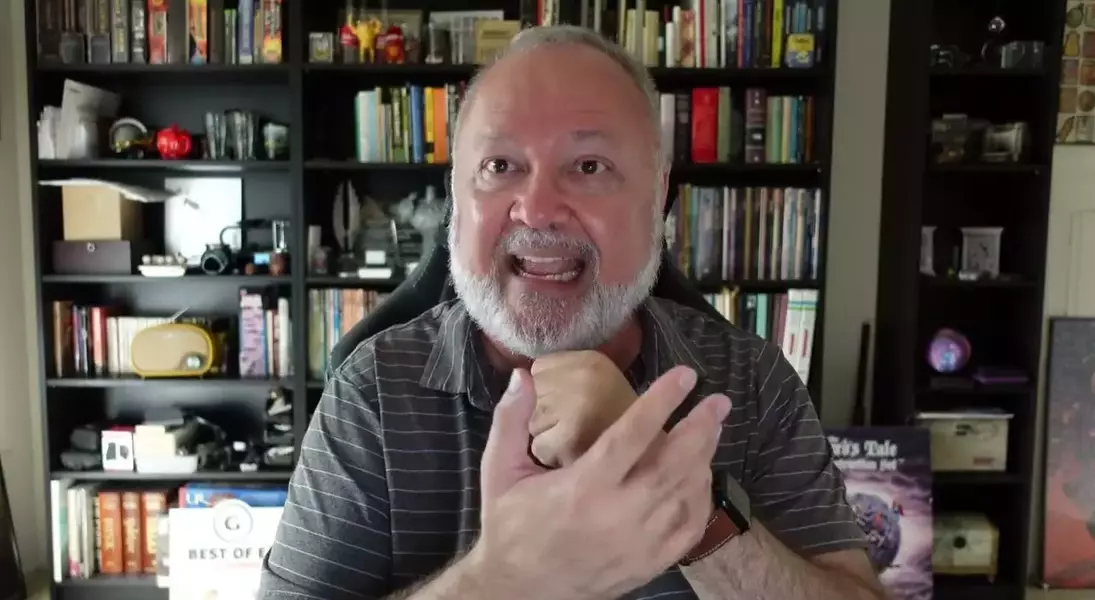

Veteran game developer Tim Cain recently offered his insights on the ongoing discussion surrounding combat mechanics in role-playing games: the choice between turn-based and real-time systems. Rather than advocating for one over the other, Cain adopts a balanced view, seeing both as valuable design approaches.
Renowned Developer Tim Cain Discusses RPG Combat Dynamics
In a detailed video posted on his YouTube channel, Tim Cain, a figure well-known in the RPG development community, delved into the intricacies of real-time and turn-based combat. Cain's analysis extends beyond the common "real-time with pause" (RTWP) debate, broadening the scope to include pure real-time systems. He suggests that each combat style presents unique advantages and disadvantages, serving different design objectives.
Cain notes that real-time combat is inherently suited for first-person games, facilitating faster-paced action and allowing for more on-screen characters without slowing down the experience. However, he acknowledges the challenges of controlling multiple characters in real-time, pointing out that even RTWP, which allows command queuing during pauses, doesn't fully resolve these issues.
Conversely, Cain views the slower tempo of turn-based games as a potential drawback, especially in scenarios with numerous entities or prolonged engagements. He also expresses reservations about directly translating turn-based tabletop rules into real-time games, even with pausing, citing instances where enemies might move out of range of area-of-effect spells during casting as a design flaw. As an illustration, Cain was a project lead for "The Temple of Elemental Evil," an adaptation known for its strictly turn-based combat.
A more neutral observation from Cain highlights that real-time games often demand greater player skill and quicker reaction times, which can lead to a more expressive gameplay experience. However, he maintains that for RPGs, the emphasis should ideally remain on strategic planning and character progression rather than pure action mechanics, unless the game is explicitly designed as an action-RPG hybrid.
Cain cautions fellow developers that while both combat styles have passionate supporters, attempting to incorporate both into a single game, as seen in "Arcanum," "Pillars of Eternity," or "Owlcat's Pathfinder" titles, can lead to significant development challenges.
This discussion aligns with perspectives from other industry veterans. Josh Sawyer, Cain's colleague at Obsidian, posited that turn-based combat's decline in the 2000s was partly due to a perceived lack of tactical variety. In contrast, James Brawley, lead designer for the upcoming turn-based tactics game "Star Wars Zero Company," believes that RTWP still holds relevance and could see a resurgence.
Tim Cain's balanced perspective provides valuable insight for game designers, reminding them that the choice of combat system should align with the game's overall vision and intended player experience, rather than being driven by strict adherence to one style.
