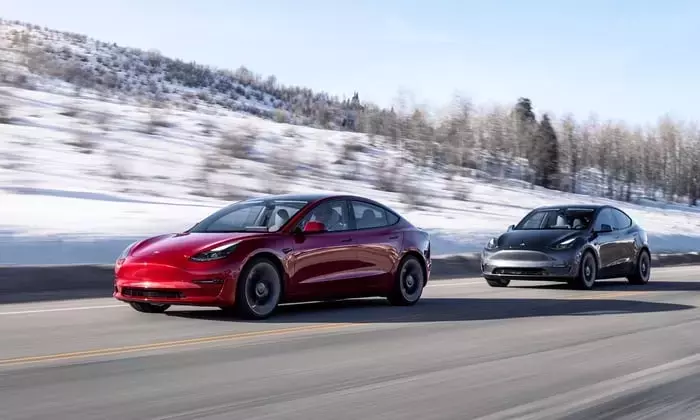
Tesla's latest strategic move involves introducing more accessible versions of its Model Y and Model 3. This initiative is seen not merely as a reactionary step but as a calculated response to current market dynamics, including the discontinuation of federal electric vehicle (EV) tax credits. While these new, lower-priced models are expected to bolster sales, the truly revolutionary advancements for Tesla are anticipated with the full realization of its autonomous driving technologies.
Despite a robust third quarter, partly boosted by customers accelerating purchases before the end of the federal EV tax credit, Tesla's overall vehicle deliveries for the first nine months of 2025 experienced a slight year-over-year decline. The introduction of these more affordable variants in the fourth quarter, coupled with the eventual rollout of fully autonomous robotaxis and advanced full self-driving (FSD) software, are critical components of the company's future growth strategy. These lower-cost options are particularly well-timed to help Tesla navigate a more competitive landscape and adapt to the absence of previous tax incentives.
These new models are expected to build on Tesla's recent sales momentum and help it overcome current market challenges, especially in the United States. While they may not individually be "game-changers," their contribution is significant in expanding the fleet of Tesla vehicles on the road. The real disruptive potential for the company and its investors lies in the widespread adoption of fully autonomous robotaxis and publicly available FSD software, which, once achieved, would fundamentally transform the automotive industry and reinforce Tesla's position as a leader in innovation.
Tesla's continued pursuit of innovation, particularly in autonomous technology, holds immense potential. By expanding accessibility to its vehicles and relentlessly pushing the boundaries of self-driving capabilities, the company exemplifies how visionary technological advancements can drive progress and create a more sustainable and efficient future for transportation. This forward-thinking approach, focused on long-term transformative goals, inspires confidence in the ongoing evolution of the automotive industry.
