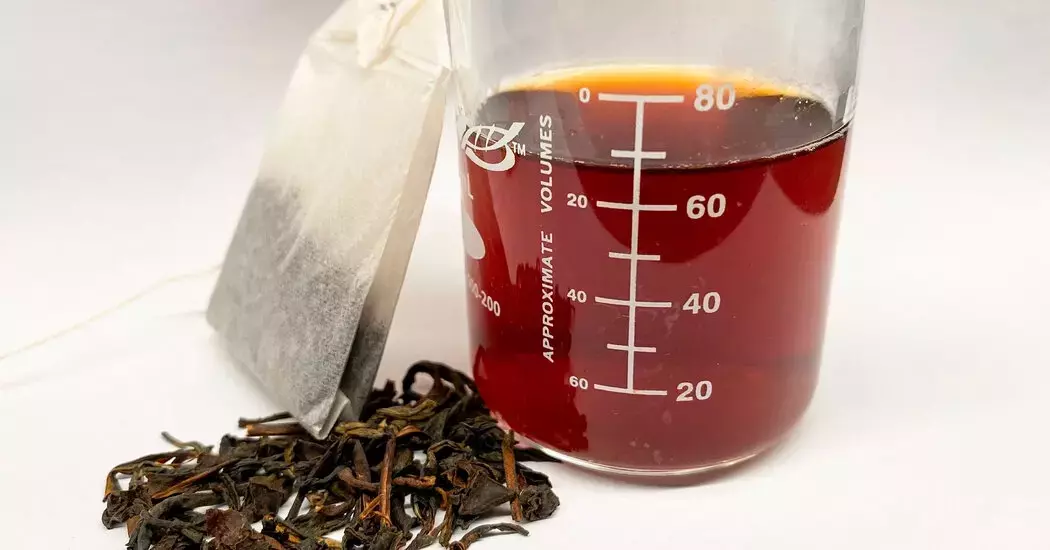
A groundbreaking study has revealed that tea leaves possess remarkable properties that can significantly reduce the presence of lead and other harmful substances in water. Researchers discovered that compounds within both black and green tea leaves act as microscopic hooks, effectively binding to lead molecules. This discovery opens up new possibilities for addressing water contamination issues, especially in regions where aging infrastructure poses a risk. With billions of cups of tea consumed daily worldwide, this natural method could have far-reaching public health benefits.
The research team, led by materials scientist Vinayak Dravid from Northwestern University, conducted extensive tests on various types of tea leaves, including black, white, oolong, green, rooibos, herbal, loose leaf, and even popular brands like Lipton. The experiment involved steeping these teas in water containing different concentrations of lead. After allowing the tea to steep for varying durations, the scientists measured the remaining lead levels in the water. The results were striking: tea leaves demonstrated an impressive ability to extract lead from water, offering a simple yet effective solution to a widespread problem.
In many parts of the world, water supplies are compromised by lead contamination from outdated plumbing systems. In the United States alone, millions of homes rely on pipes that contain lead, posing serious health risks, particularly to children. Exposure to lead can lead to developmental delays and behavioral challenges. The findings of this study suggest that the daily ritual of brewing tea could inadvertently protect countless individuals from these dangers. The simplicity of using tea leaves as a filtration method makes it an accessible solution for communities facing contaminated water sources.
The potential applications of this discovery extend beyond personal health benefits. The researchers noted that this method could be scaled up for broader use in water treatment facilities. Moreover, the study highlights the versatility of used tea leaves, which have previously been explored for applications such as biofuels and gluten-free food products. As the global population continues to grow, finding innovative ways to purify water will become increasingly critical. The humble tea leaf may hold the key to a cleaner, healthier future for millions around the world.
