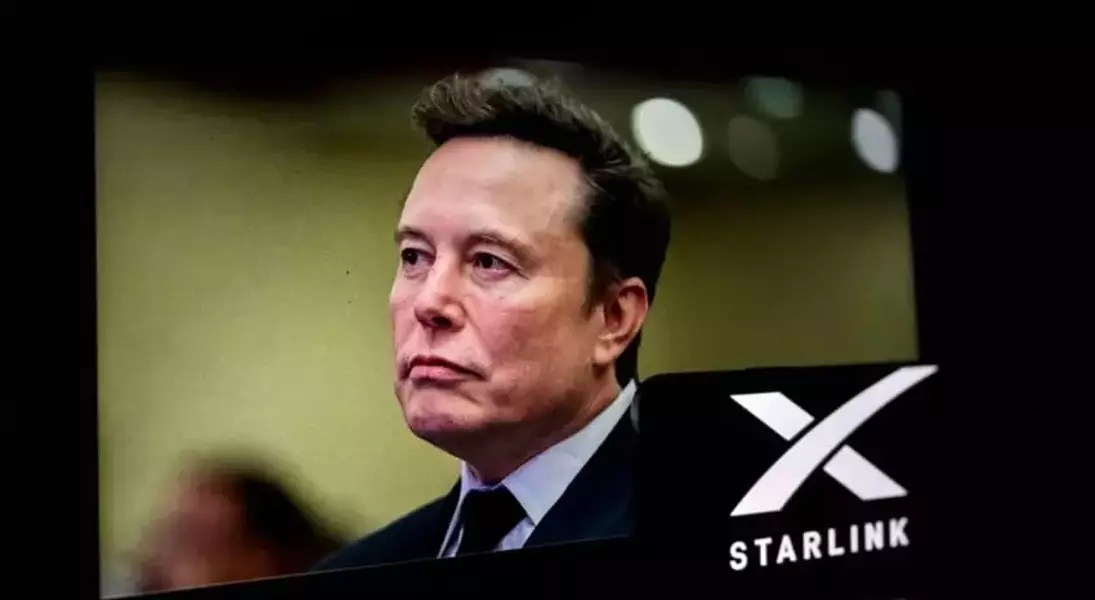
Starlink, the pioneering satellite internet service developed by Elon Musk's SpaceX, is poised to bring its innovative direct-to-cell technology to the European Union. This strategic expansion follows a significant agreement with MasOrange, a leading Spanish telecommunications provider, setting the stage for initial trials in Spain. This move signifies a broader push to enhance global connectivity, extending beyond traditional satellite internet to direct mobile phone integration. The company's commitment to widespread accessibility is further demonstrated by its growing partnerships in the aviation sector and its ambitious long-term vision, underscored by the recent integration of SpaceX and xAI.
Starlink's European Expansion and Connectivity Innovations
In a landmark development on February 4, 2026, Elon Musk's SpaceX announced that its Starlink direct-to-cell technology is slated for its European Union debut, facilitated by a new partnership with the Spanish telecom giant, MasOrange. The initial trial phase is scheduled to commence in the picturesque province of Valladolid, Spain. This initiative positions Spain as the inaugural EU nation to host Starlink's cutting-edge direct-to-cell services, promising enhanced connectivity for mobile users across the region. This collaboration mirrors a similar agreement with Kyivstar Group Ltd. in Ukraine, which previously established direct-to-device satellite connectivity, marking a significant step in the evolution of European telecommunications. Concurrently, Starlink is also expanding its reach in the aviation industry. United Airlines Holdings Inc. has announced plans to extend its Starlink Wi-Fi services to over 300 aircraft, with an ambitious target of equipping more than 800 planes by the end of the year. This expansion comes amidst ongoing discussions within the airline industry regarding the implementation of in-flight Wi-Fi, including a notable exchange between Elon Musk and Ryanair Holdings PLC CEO Michael O'Leary concerning the practicalities and challenges of satellite internet on flights. Furthermore, the broader strategic landscape for Musk's ventures includes the recent merger of his artificial intelligence company, xAI, with SpaceX. This consolidation, involving entities valued at approximately $250 billion and $1 trillion respectively, is expected to accelerate Musk's vision for orbital data centers and the establishment of human presence on other planets.
This bold expansion by Starlink, particularly its direct-to-cell technology, marks a pivotal moment for global connectivity. It highlights the increasing convergence of satellite communication and mobile networks, promising to bridge digital divides and offer unprecedented access in remote or underserved areas. The initiative in Europe, following the Ukrainian precedent, demonstrates a clear commitment to fostering a more interconnected world. From a broader perspective, the integration of SpaceX and xAI underscores a visionary approach to technological advancement, suggesting a future where seamless global communication and ambitious space exploration projects are deeply intertwined. This trajectory could redefine our understanding of digital infrastructure and humanity's potential beyond Earth.
