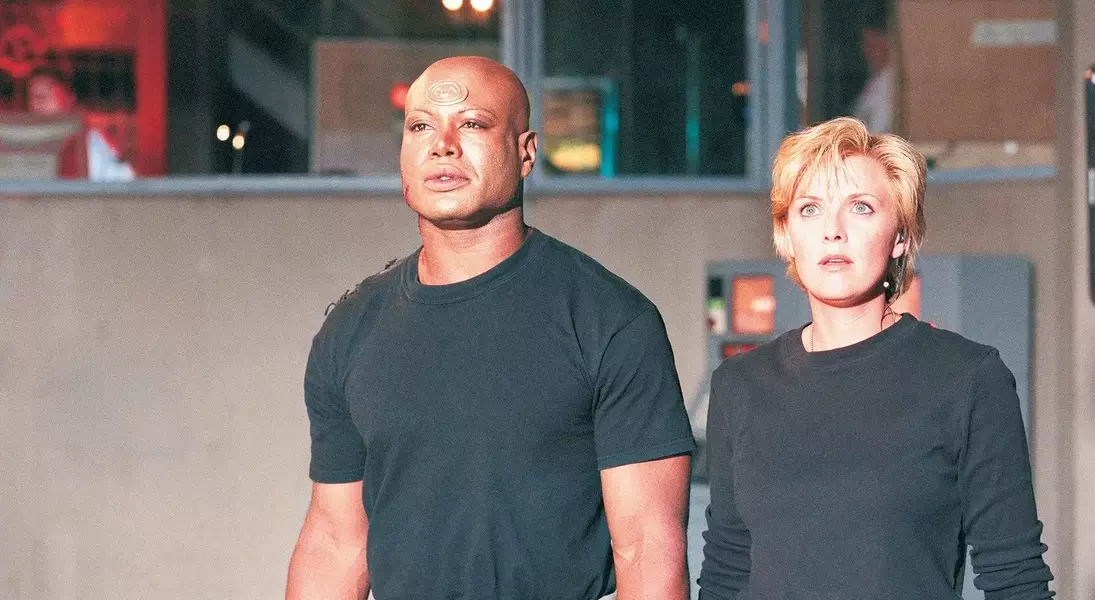
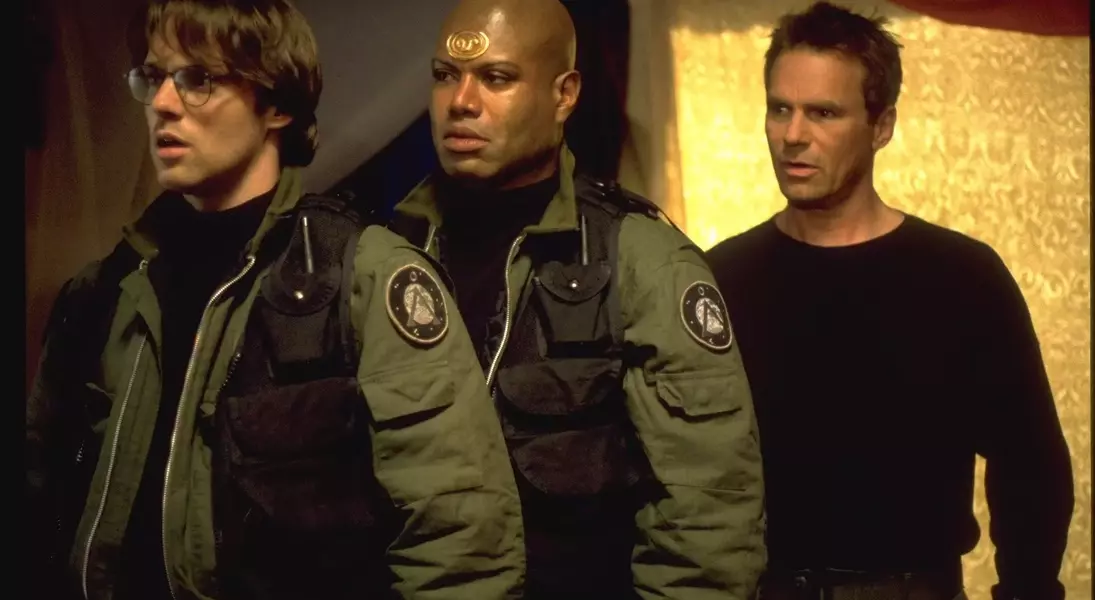
"Stargate SG-1" successfully carved out a unique space within the science fiction television landscape of the 2000s. Emerging during a period of audience fatigue for established giants like "Star Trek" and preceding the acclaimed "Battlestar Galactica" reboot, "SG-1" expertly combined adventurous storylines, profound mythological elements, and a cast of memorable characters. Its innovative approach and dedicated online fanbase were instrumental in establishing a lasting legacy that continues to influence contemporary sci-fi productions. The series skillfully balanced respecting the original film's essence with evolving its characters and narrative, proving that pulp sci-fi could offer intricate world-building and resonant storytelling.
The Genesis of a Sci-Fi Phenomenon: From Film to Television
Initially envisioned as a cinematic trilogy by director Roland Emmerich and his collaborator Dean Devlin, the "Stargate" universe first debuted on the big screen in 1994. Despite its box office success, critical reception was mixed, leading to the cancellation of planned sequels. However, the franchise found new life and unparalleled success on television with "Stargate SG-1" in 1997. This transition allowed for a deeper exploration of its rich mythological foundations and the development of a sprawling narrative that captivated audiences for over a decade. The television series expanded upon the film's premise, transforming a single cinematic adventure into a vast universe ripe for exploration.
Roland Emmerich’s original 1994 film introduced audiences to the titular Stargate, an ancient device capable of creating wormholes for instantaneous interstellar travel. The movie followed linguist Daniel Jackson and Colonel Jack O'Neil as they ventured to a distant planet, Abydos, encountering an alien deity and fundamentally altering humanity’s future. "Stargate SG-1" picked up a year after these events, with new iterations of O’Neil (Richard Dean Anderson) and Jackson (Michael Shanks) leading a team from Stargate Command. The series significantly enriched these characters, allowing their personalities to evolve while retaining the core elements that made them compelling. Anderson’s O’Neill, for instance, brought a signature dry humor, distinguishing his portrayal from Kurt Russell's more cynical original. Alongside them, characters like the capable Air Force officer Samantha Carter (Amanda Tapping) and the fiercely loyal Teal'c (Christopher Judge) quickly became fan favorites, contributing to the show's broad appeal despite occasional inconsistencies in pacing or world-building.
Expanding Horizons: Lore, Legacy, and Future Revivals
"Stargate SG-1" excelled in its ability to craft a universe that was both unpredictable and deeply engaging. The series continuously pushed the boundaries of its lore, sending its protagonists across the galaxy to encounter diverse alien species, such as the serpentine Goa'uld, and unraveling the ancient mysteries of humanity's predecessors, the Ancients. The Stargate devices were more than mere plot devices; they facilitated journeys through time and into alternate dimensions, leading to dramatic narrative possibilities, including the "deaths" of beloved characters in parallel realities. While this chaotic approach occasionally veered into camp, it consistently maintained a sincere and imaginative spirit, which, when viewed through a nostalgic lens, remains one of the show's most cherished qualities.
The immense popularity of "Stargate SG-1" paved the way for successful spin-offs and sequels, solidifying its status as a major science fiction franchise. "Stargate Atlantis," launched in 2004, embraced a more trope-heavy, endearing tone, exploring new galaxies and captivating fans with its compelling blend of adventure and character-driven storytelling. Later, 2009’s "Stargate Universe" offered a darker, more philosophical narrative, catering to an audience seeking deeper intellectual engagement. The unwavering loyalty of its fanbase, especially during the concurrent airing of "SG-1" and "Atlantis" on the Syfy Channel, demonstrated the franchise's capacity to create an expansive, futuristic sandbox of limitless possibilities. More recently, Amazon MGM’s greenlighting of a "Stargate" revival signals ongoing hope for the franchise's resurgence, promising an updated vision for the 2020s that will undoubtedly draw from "Stargate SG-1"’s foundational influence on contemporary sci-fi television.
