



The Premier League's transfer market is undergoing a profound transformation, characterized by an increasing focus on acquiring younger talent. This strategic shift, driven by a desire for long-term success and potential resale value, is reshaping how clubs approach squad construction. While the pursuit of immediate impact remains a factor, particularly for teams at the top, a growing number of clubs are prioritizing the development of promising young players, fundamentally altering the age profile of new signings across the league.
Premier League Clubs Embrace Youth in Transfer Strategies
In the vibrant summer of 2025, the Premier League's transfer landscape witnessed a striking trend: a decisive pivot towards youthful acquisitions. While Arsenal made a significant move for the 27-year-old Viktor Gyokeres, signalling a pursuit of immediate offensive power, this acquisition emerged as an exception in a market increasingly captivated by rising stars. Illustrating this burgeoning preference for youth, Liverpool, a titan in European football, secured the highly sought-after Florian Wirtz from Bayer Leverkusen. This transfer underscored a growing willingness among elite Premier League clubs to invest substantial sums in players aged 22 or younger, mirroring Chelsea's previous, high-profile captures of midfield dynamos Moises Caicedo and Enzo Fernandez.
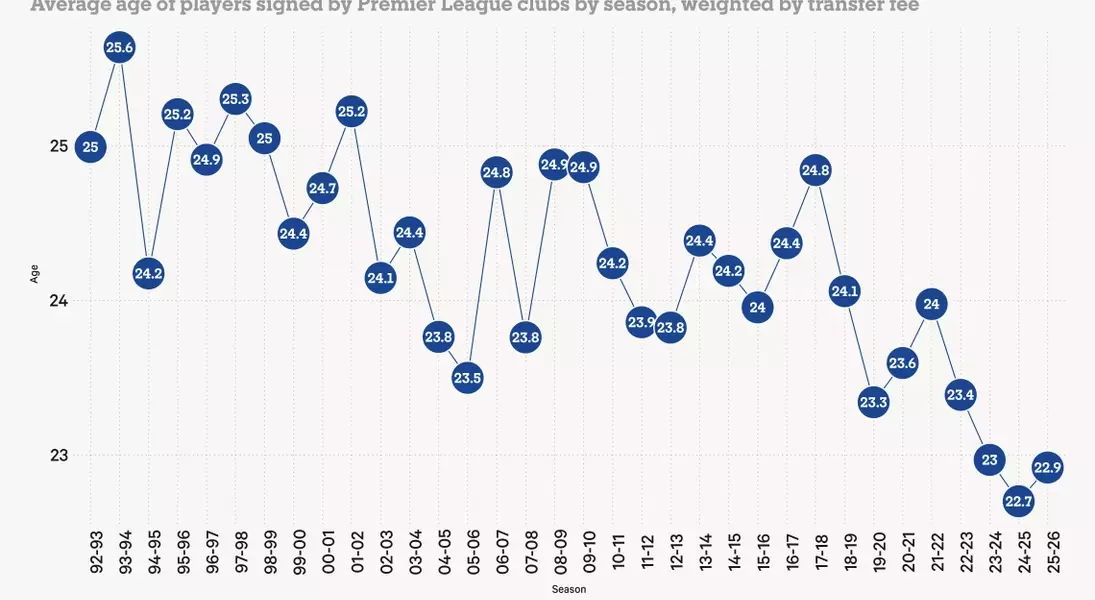
This evolving strategy extends beyond the mere average age of new recruits. Instead, a more sophisticated analysis, weighting player age by transfer fee, reveals a deeper commitment to youth. This methodology highlights that the more a club spends on a player, the more likely that player is to be in the younger age brackets, thereby minimizing the impact of less significant, stopgap signings. The weighted average age of new Premier League arrivals dipped below 23 for the first time in recent memory during the previous season, a trend that early indications suggest will continue into the 2025-26 summer window. Historically, financially dominant clubs, such as Chelsea, have led this charge, pouring hundreds of millions into players aged 21 or younger, far outpacing rivals like Manchester City.
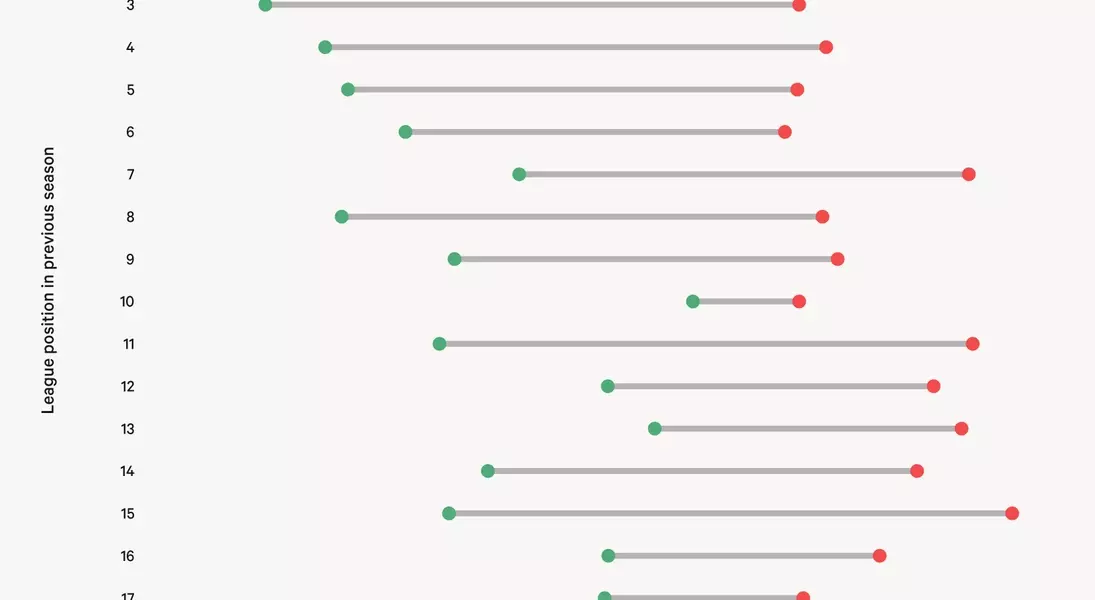
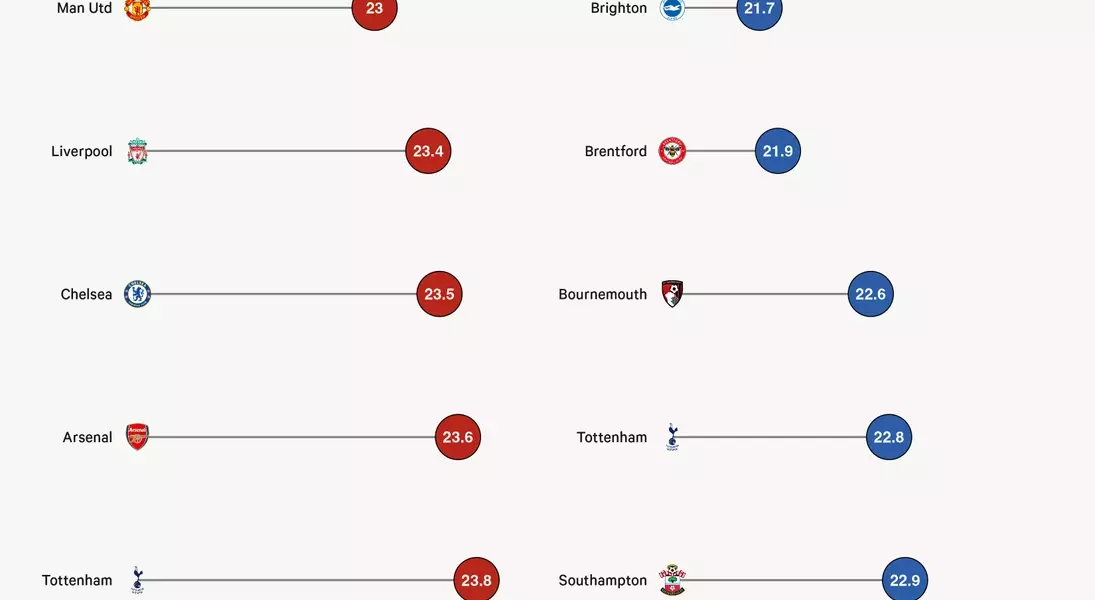
Furthermore, an intriguing pattern emerges when examining club positions within the league table. Reigning champions typically recruit the youngest talent, around 23 years old, leveraging their strong standing to refresh and evolve their squads for sustained success. Conversely, teams battling relegation often prioritize immediate survival, opting for more experienced players, who are, on average, two years older than those signed by the league's top contenders. However, this established dynamic is experiencing a subtle yet significant shift. The wisdom imparted by legendary figures such as Sir Alex Ferguson, who championed the dual benefits of youth—talent pipeline and robust ancillary business—is now being reinterpreted. While Manchester United under Ferguson's tenure had the youngest transfer-weighted average age, followed by other traditional powerhouses, the current era sees clubs like Brighton & Hove Albion and Brentford emerging as pioneers of data-driven recruitment, focusing on a 'sign-young, sell-high' model. These clubs, operating without the vast commercial revenues of the 'Big Six,' have masterfully leveraged player trading to fuel their ascent, consistently acquiring younger talent with the aim of maximizing future resale value, a stark contrast to the traditional elite's approach of retaining young stars for prolonged periods. Bryan Mbeumo's recent £71 million transfer from Brentford to Manchester United serves as a prime example of this successful strategy, demonstrating Brentford's astute ability to identify and develop talent before selling at peak value.
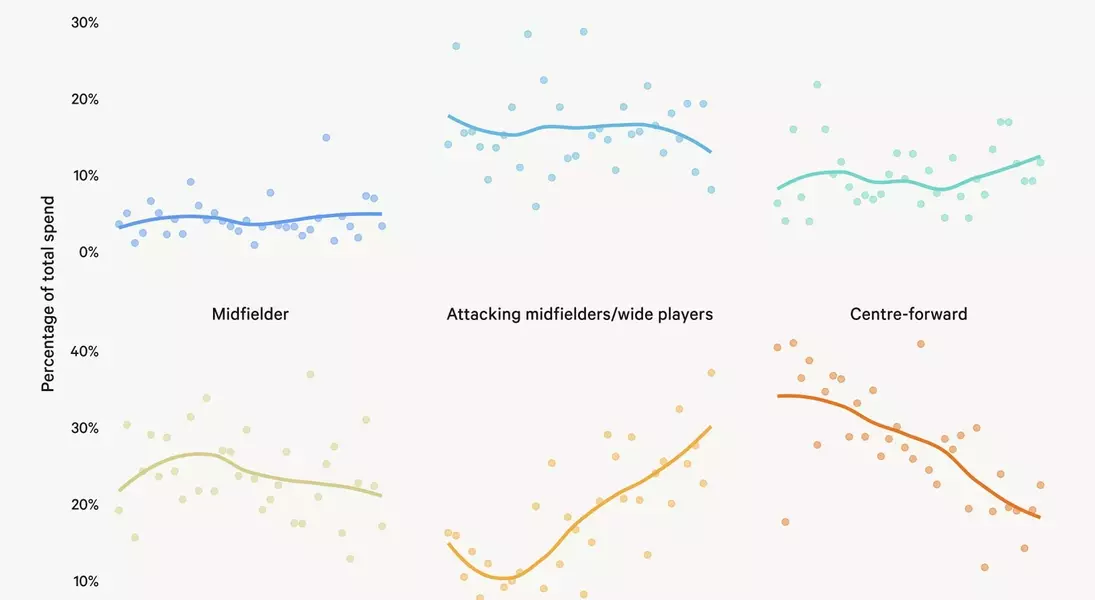
The shift is also influencing positional spending. Unlike the 1990s, when clubs heavily invested in traditional strikers, the modern game's emphasis on intense pressing and positional fluidity has led to a decline in spending on conventional centre-forwards. Instead, versatile, high-energy attacking midfielders and wide forwards, such as Wirtz, have become the preferred targets. This summer, however, might signal a resurgence for strikers, with notable transfers like Hugo Ekitike to Liverpool and Gyokeres to Arsenal, hinting at renewed interest in the number nine position. While centre-forwards typically reach their peak later, around 27 years old, signing younger attacking midfielders offers both immediate on-pitch impact and significant resale potential. Ultimately, clubs like Arsenal, in their pursuit of immediate glory, may still opt for proven, albeit older, goalscorers, showcasing the ongoing tension between short-term aspirations and long-term sustainability that defines the dynamic world of Premier League transfers.
From a journalist's perspective, this seismic shift in Premier League transfer strategies is truly fascinating. It highlights a maturing understanding within football clubs regarding player development, market dynamics, and sustainable financial models. The rise of data-driven recruitment, particularly exemplified by clubs like Brighton and Brentford, underscores a crucial evolution: success is no longer solely the domain of the wealthiest. Their 'sign-young, sell-high' approach offers a compelling blueprint for how strategic planning and analytical insight can challenge the established order. This evolving landscape not only promises more competitive leagues but also fosters a more fluid and exciting player market, where talent identification and cultivation are increasingly valued commodities. It's a clear signal that the future of football lies with foresight, adaptability, and a bold embrace of youth.
