This review delves into Chris Stuckmann's directorial debut, 'Shelby Oaks,' critically examining its attempt to merge found-footage horror with mockumentary elements. The article highlights the film's initial compelling premise and its subsequent decline into a predictable and unoriginal horror narrative, ultimately suggesting it fails to carve out a unique identity within the genre.
Shelby Oaks: An Uninspired Journey into Familiar Terrors
An Unsettling Premise: The Vanishing at Shelby Oaks
More than two decades have passed since the emergence of found-footage horror, a subgenre arguably pioneered by 'Cannibal Holocaust' in 1980 and popularized by 'The Blair Witch Project.' Many films have since explored this narrative style, with varying degrees of success. 'Shelby Oaks' is the latest contender, aiming to combine the visceral frights of found-footage with the immersive realism of a mockumentary, before eventually transitioning into a conventional narrative film.
Initial Intrigue: A Documentary's Allure
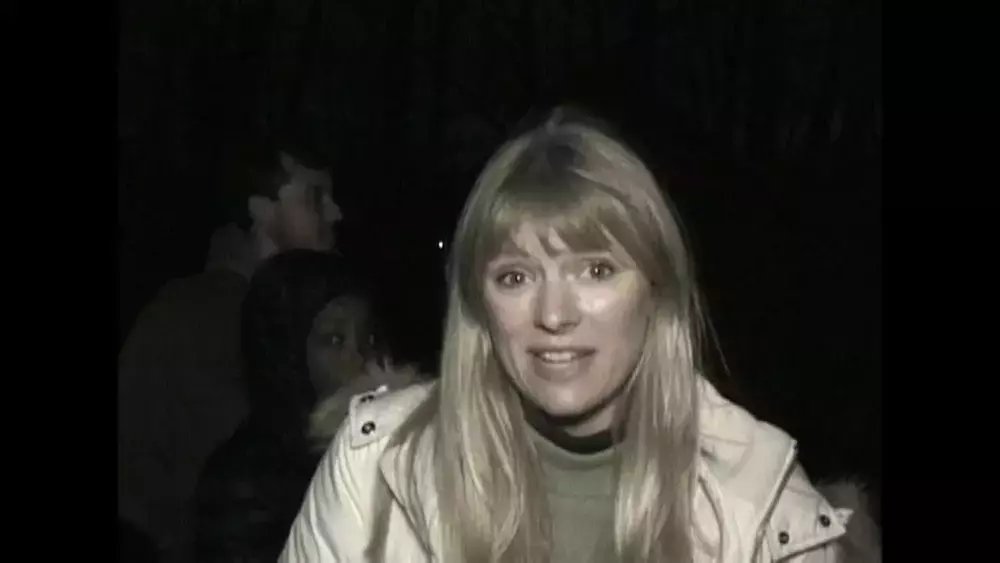
From its opening sequences, 'Shelby Oaks,' written and directed by YouTube film critic Chris Stuckmann, adopts the format of an unsolved mystery documentary, a style that has gained significant traction on streaming platforms. The plot centers on Riley (Sarah Durn), a YouTuber specializing in supernatural investigations, who disappears while exploring the desolate town of Shelby Oaks in rural Ohio. A decade later, a documentary crew interviews Riley's sister, Mia (Camille Sullivan), who remains steadfast in her determination to uncover the truth.
A Promising Start: Echoes of Classic Horror
The case's details are genuinely chilling: Riley's ghost-hunting companions were brutally murdered in a secluded cabin, and ghostly apparitions subtly appear in the final known footage of Riley. This sets up an atmosphere that is both eerie and captivating. Stuckmann skillfully emulates the stylistic nuances of a genuine documentary. While the film doesn't promise groundbreaking originality, its initial promise of a robust and engaging ghost story, cleverly told in a contemporary manner, is undeniable. Adding to its credibility, the film boasts renowned horror expert Mike Flanagan as an executive producer.
The Narrative Shift: A Descent into the Derivative
However, this promising beginning takes a sharp turn when a traumatic event occurs during the documentary's filming, prompting Stuckmann to abruptly alter the film's direction. The mockumentary framework collapses, replaced by a superficial imitation of the unsettling, elegant horror style epitomized by 2018's 'Hereditary.' A deeply shaken Mia embarks on a solitary quest for answers, delving into the enigmatic history of Shelby Oaks and the surrounding region, which Stuckmann has named Darke County.
The Peril of Familiarity: Overused Tropes and Uninspired Execution
The name Darke County raises an eyebrow, hinting at a potential ambition to establish a cinematic universe, a venture reminiscent of Universal's ill-fated attempt with the 2017 reboot of 'The Mummy.' While Stuckmann has not explicitly stated such plans, his background as a fan of franchise films on YouTube suggests the possibility of future explorations within the Darke County world. However, the film's increasing reliance on genre clichés makes a return to this world a less appealing prospect. As 'Shelby Oaks' deviates further from its original concept, it becomes increasingly cumbersome and unoriginal. Stuckmann's dialogue feels forced and generic, and his narrative and world-building lack depth. While there are occasional stylistic flourishes, such as a smoothly tracking camera or sudden shifts between day and night, these moments merely echo techniques seen in other recent horror films. It becomes evident that 'Shelby Oaks' is less a product of a unique creative vision and more a patchwork of elements admired by a dedicated film enthusiast.
A Hodgepodge of Influences: Homage or Pastiche?
The film's influences are overt, spanning both contemporary and classic horror. A witch-like elderly woman, skillfully portrayed by Robin Bartlett, brings to mind characters like Ann Dowd in 'Hereditary' and Ruth Gordon in 'Rosemary’s Baby.' A spooky prison resonates with the atmospheric dread of 'Session 9,' the MTV series 'Fear,' and countless video games. 'Paranormal Activity'-esque jump scares are abundant, so much so that they become predictable and lose their impact. (Compounding this issue, Stuckmann frequently telegraphs their arrival.) There is a subtle distinction between respectful homage and uninspired imitation; 'Shelby Oaks' predominantly leans towards the latter. As the film progresses towards its convoluted and underwhelming conclusion, it becomes clear that the initial concept lacked substantive development. The film’s most unsettling aspect is its uncanny resemblance to what a movie entirely generated by AI might feel like: a collection of worn-out clichés haphazardly assembled into something vaguely cinematic.
Unrealized Potential: A Critic's Missed Opportunity
It has been noted that Stuckmann drew some inspiration from his personal life, particularly his sister's separation from the Jehovah's Witnesses. Yet, any personal motivations behind the film are imperceptible in the final product—neither in its formulaic portrayal of grief nor in its clichéd depictions of the occult. The numerous underdeveloped and clumsy elements of 'Shelby Oaks' are all the more frustrating given the film's promising beginning, a distinct viewpoint that slowly gives way to Stuckmann's laborious rehash of tired horror conventions. While it is commendable for a critic to venture into creative expression, Stuckmann might have benefited from applying his critical discerning abilities to his own work. Had he done so, he might have discovered methods to differentiate his film from the many he has reviewed. Instead, 'Shelby Oaks' stands as a ponderous creation, built upon exaggerated praise for the works of other
