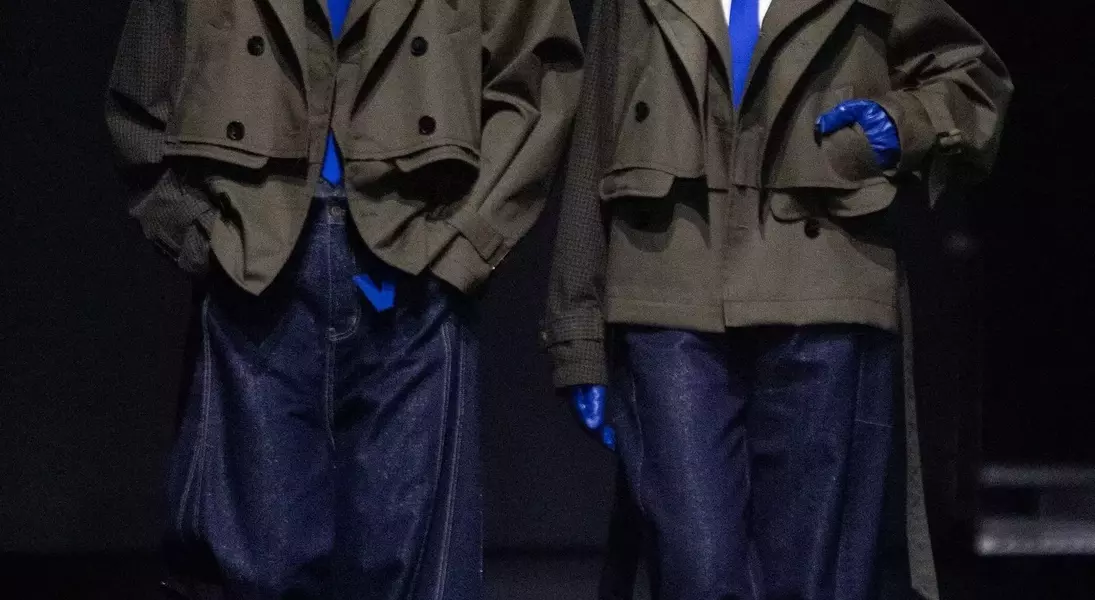
Shanghai Fashion Week's Fall/Winter 2026 season signals a pivotal moment for the Chinese fashion industry, moving beyond a period of cautious minimalism to embrace a more mature, refined, and commercially strategic identity. This transition reflects a deeper understanding of both global and local market dynamics, positioning Shanghai as a crucial player in the international fashion landscape.
Shanghai Fashion Week FW26: Where Creativity Meets Commerce
The Grand Finale and Shifting Tides
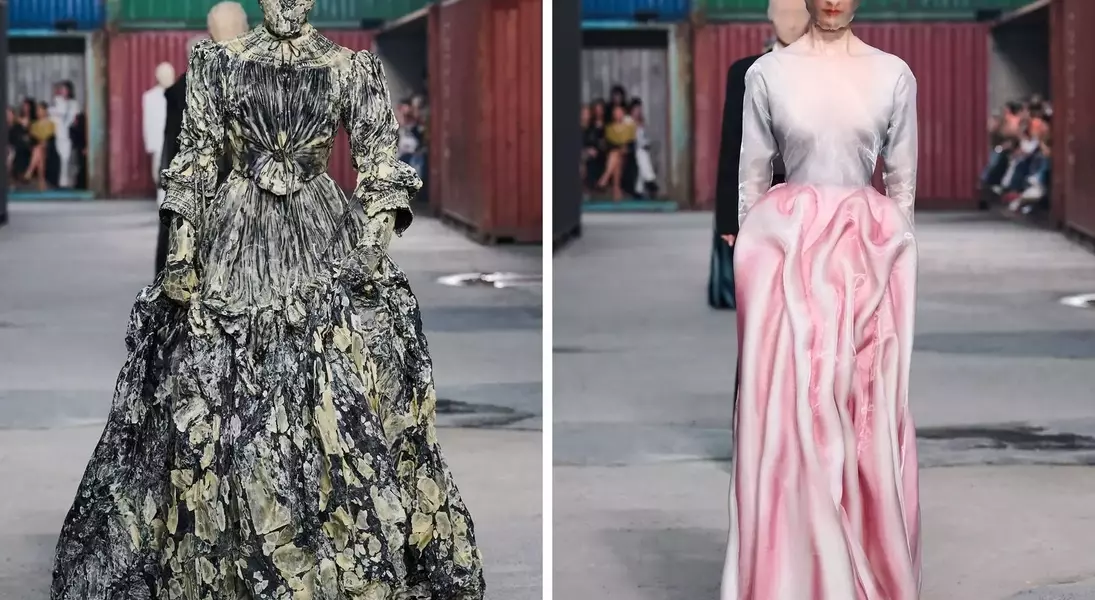
The recent Shanghai Fashion Week for Fall/Winter 2026 concluded with a memorable presentation by Glenn Martens for Maison Margiela, underscoring his increasing impact in China and the broader evolution within the fashion sector. Despite a challenging economic climate, the general sentiment was notably optimistic and forward-looking. Shanghai is progressing into a phase of consolidation, characterized by clearer artistic visions, more disciplined acquisition strategies, and a distinct articulation of indigenous design aesthetics.
An Evolving Ecosystem: Local Talent and Global Engagement
This transformation is also evident in the surrounding fashion ecosystem. A greater number of Chinese designers showcased more developed and sophisticated collections. Concurrently, the increasing presence of international buyers and media highlights Shanghai's growing reputation as a significant creative and commercial center on the global stage. This season marks a departure from minimalist aesthetics, ushering in an era of intentional elegance, emotional expression, and culturally specific designs that resonate with both domestic preferences and global fashion dialogues. Shanghai is actively shaping its role within the global fashion system with enhanced clarity and self-definition, rather than merely reacting to it.
Beyond Minimalism: The Resurgence of Refined Femininity
After several seasons dominated by a "clean fit" minimalist aesthetic and subtle luxury, FW26 signals a clear directional shift. The prevalence of "clean fit" in China was driven by economic prudence, the influence of global luxury trends, and the algorithmic aesthetics of platforms like Xiaohongshu and Douyin. However, this uniformity has begun to wane. Industry experts, like Yeli Gu of Ontimeshow, note a renewed desire for more expressive styles, with femininity, romanticism, and emotional depth returning to the forefront of design. Marine Humeau of Printemps echoes this sentiment, observing a similar shift in Paris and highlighting the unique position of Chinese designers to interpret these trends with a personal touch that blends cultural background with modern elegance.
Femininity as a Cultural Narrative
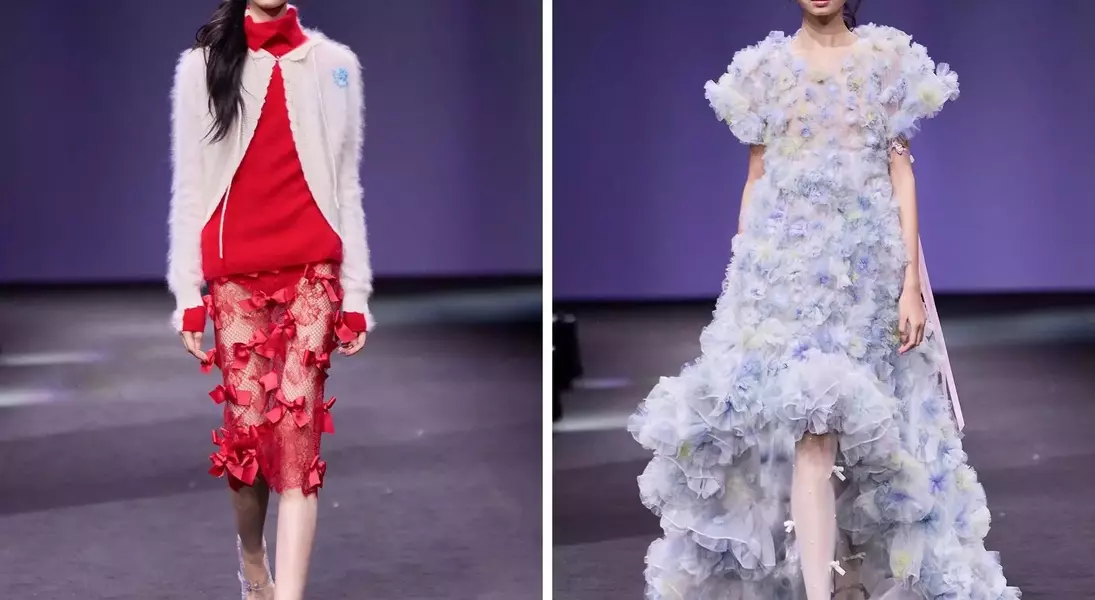
In Shanghai, femininity is not just a passing trend but a re-imagined cultural expression. Designers such as Susan Fang and Mark Gong integrate emotional depth, intricate craftsmanship, and narrative into their collections without abandoning refinement. Susan Fang's Air Infinity collection, for instance, translates personal stories into delicate yet conceptually rich visual forms. Markgong explores contemporary femininity through a stylized lens, blending sensuality, precise tailoring, and pop-cultural references to construct a performative and coded femininity. Humeau emphasizes the strong connection between femininity, elegance, and romanticism in Chinese culture. This evolution, as noted by SND's Will Zhang, signifies a cyclical progression beyond visual uniformity rather than a complete rejection of minimalism, allowing for both additive design elements and continued minimalist approaches, balancing commercial appeal with artistic intent.
Strategic Buying and Real-Time Sales: A New Business Model
Beyond aesthetic changes, this season also demonstrated a more pragmatic business approach. Buyers are engaging with clearer intentions, leading to increased purposeful ordering and higher conversion rates at showrooms, as reported by MODE Shanghai Fashion Trade Show. The focus has shifted from ephemeral "hero products" to brand consistency across design language, product cycles, and sustained vision. This is reflected in pricing, with a significant portion of orders falling within the RMB 1,000–3,000 range, indicating a balanced and realistic market. A notable development is the accelerated conversion of runway attention into sales. Brands like Xi Xiang Jin and Northbutsouth transitioned directly from runway shows to live sales via Taobao's "Super Fashion Release," generating substantial revenue within minutes. This redefines the runway's role, transforming it from a mere showcase to an integral part of a transactional system, connecting designers, buyers, and digital channels more directly, with the ultimate goal of driving brand growth.
China Chic's Evolving Identity: From Overt to Understated
The Fall/Winter 26 season clearly indicates that "China Chic" is entering a more intricate phase. Once a dominant force in the early 2020s, characterized by visible heritage motifs and historical references, its expression is now softening as cultural confidence has become more deeply ingrained. The shift is not a rejection of "China Chic," but a move beyond its most literal interpretations. Cultural references are now subtly woven into collections through material choices, tailoring, proportion, or pacing, rather than being overt statements. Designers like Feng Chen Wang and Shuting Qiu exemplify this transition, incorporating Chinese contexts without explicit declarations. Samuel Gui Yang’s work, which has long favored subtlety over overt symbolism, aligns perfectly with this season's direction of controlled, precise, and understated elegance. Consequently, "China Chic" is fragmenting into diverse individual perspectives shaped by shared cultural conditions, moving away from a unified aesthetic.
The Rise of the System-Building Designer: Beyond Collection Creation
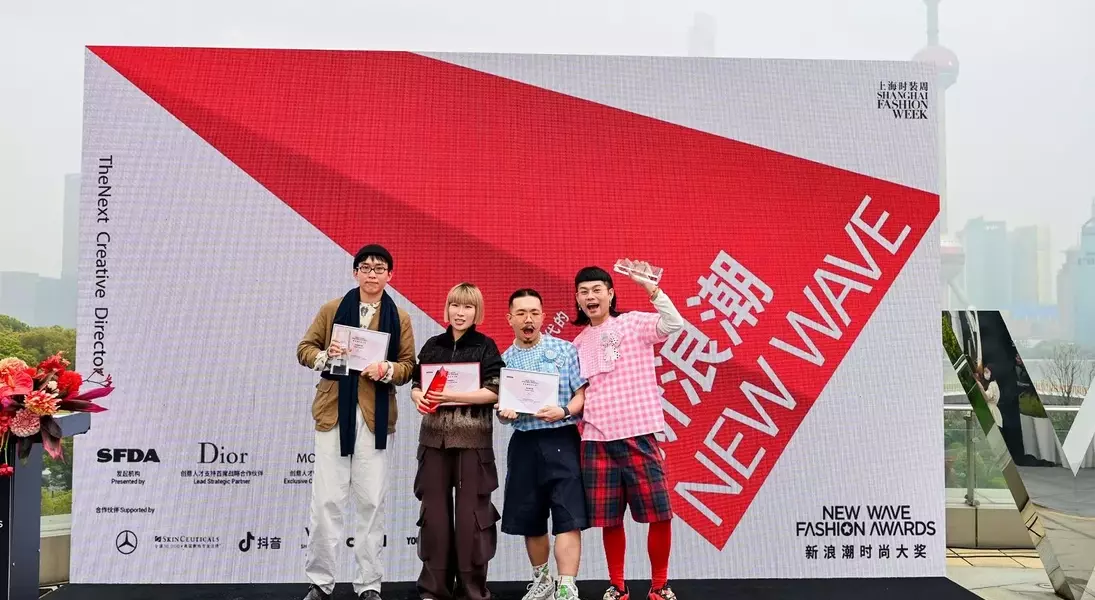
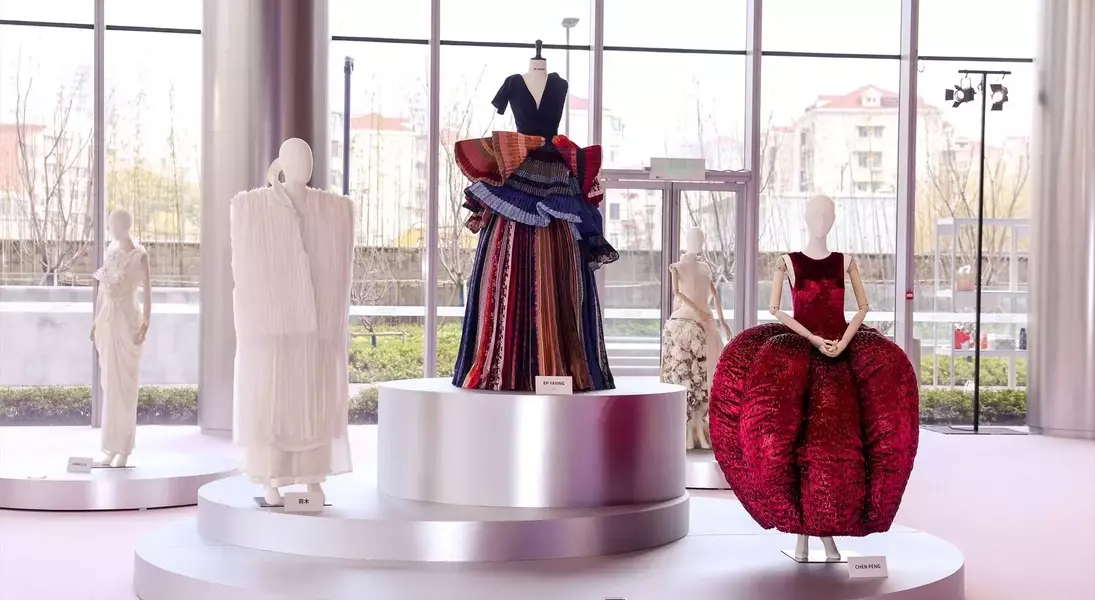
A significant structural shift emerging from Shanghai Fashion Week is the redefinition of a designer's role from a seasonal collection creator to a creative director overseeing an evolving brand system. This transition is well underway in the West, driven by ongoing leadership changes in major luxury houses. Creative direction now encompasses maintaining brand coherence across product, image, retail environments, and cultural narratives, extending beyond aesthetic authorship to system design and brand governance. Talent development now focuses on assessing a designer's ability to construct a recognizable and scalable brand universe. In China, a similar framework is developing. The inaugural New Wave Fashion Awards, initiated by the Shanghai Fashion Designers Association (SFDA), evaluates designers not just on collections but on their capacity to integrate ideas into spatial installations and brand environments. This institutional change within Shanghai Fashion Week, while still exploratory, reflects a market where brand infrastructures are rapidly consolidating. This global trend, unfolding at different speeds, redefines the designer as an architect of continuity, responsible for a brand's presence across various formats, spaces, and time, with China actively developing its own unique approach to this evolution.
