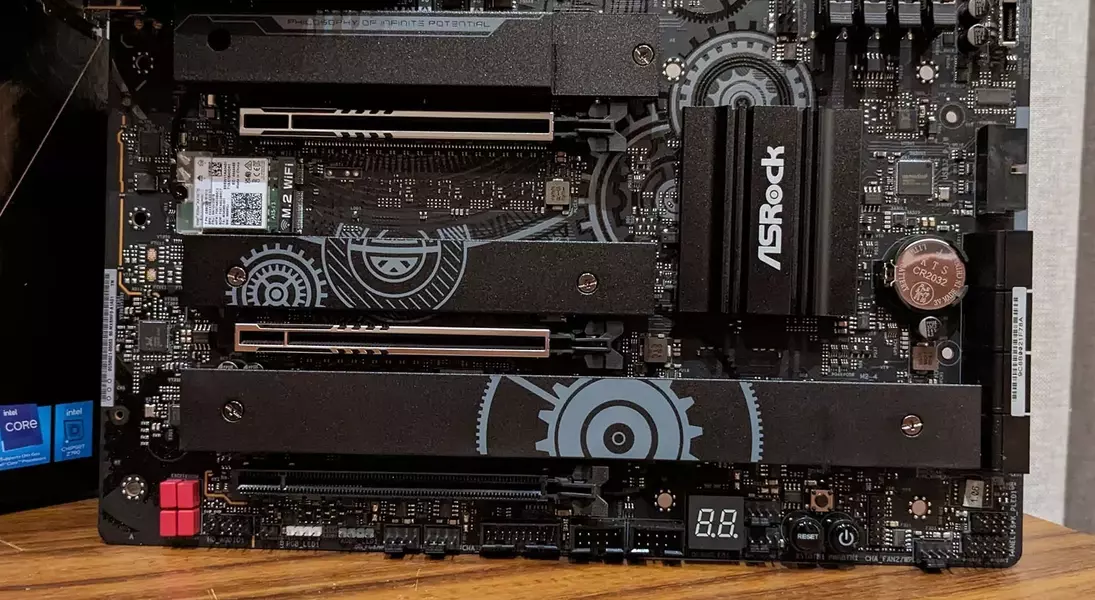

Intel is reportedly partnering with Samsung for the production of its forthcoming motherboard chipsets, also known as Platform Controller Hubs (PCHs). This collaboration marks a significant strategic move, as these critical components, responsible for orchestrating data flow between the central processing unit and various peripheral devices, do not necessitate the cutting-edge and often prohibitively expensive process nodes utilized for main processors or graphics cards.
This strategic alliance will see Samsung employing its established 8nm fabrication process, a technology that has already proven its mettle in producing components like NVIDIA's RTX 30 series GPUs and the System-on-Chip (SoC) for the Nintendo Switch 2. The decision to opt for Samsung's mature 8nm technology is largely influenced by considerations of manufacturing efficiency and cost optimization. While advanced CPUs and GPUs demand the most sophisticated and intricate process nodes to accommodate billions of transistors, PCHs can effectively function on slightly older, more cost-effective nodes.
Historically, Intel's PCHs have been fabricated on nodes ranging from 22nm to 14nm. However, with the continuous evolution of computing architecture, particularly the increasing number of PCIe lanes integrated into modern CPUs, the demands on PCHs are growing. This evolution necessitates more robust and capable chipsets, making the transition to an 8nm process a logical step for Intel's next-generation offerings.
Industry reports from sources such as The Korean Economic Daily (Hankyung), relayed through publications like Tom's Hardware, indicate that Samsung is on the verge of finalizing a substantial order for these 8nm Intel chips. The focus of this deal is specifically on PCHs, not Intel's core CPU or GPU offerings. These motherboard chipsets play a vital role in managing the intricate web of control signals and data transfers that connect the CPU to essential components such as PCIe slots, M.2 slots, and USB ports.
While Intel has typically been reticent about the precise manufacturing details and locations of its chipset production, the current industry landscape points towards an external foundry for these components. The fact that future mobile processors from Intel, like Panther Lake and Wildcat Lake, are integrating PCH functionalities directly into the main chip further supports the notion that the Samsung-produced 8nm chipsets are intended for desktop platforms.
All indications suggest that these new 8nm PCHs are destined for Intel's highly anticipated Nova Lake desktop CPUs. Rumors surrounding Nova Lake processors hint at a substantial increase in PCIe lanes compared to their predecessors, such as Arrow Lake. This architectural enhancement will undoubtedly require a more advanced and capable PCH to effectively manage the expanded data pathways and maintain optimal system performance. With Nova Lake CPUs projected to launch in 2026, Samsung will need to commence large-scale production of these crucial PCHs well in advance to meet the anticipated demand.
Reports from The Korean Economic Daily affirm that the preparations for this manufacturing undertaking are already well underway, ensuring that this particular segment of the chip package will be ready in due course. For enthusiasts who prioritize a purely "Team Blue" ecosystem, this collaboration might introduce a minor deviation, as a core component of their future Intel-powered systems will be manufactured by an external partner. Nevertheless, this strategic partnership underscores the intricate and collaborative nature of modern semiconductor manufacturing, where specialized expertise across different fabrication processes can lead to optimized performance and cost efficiencies for the entire computing industry.
