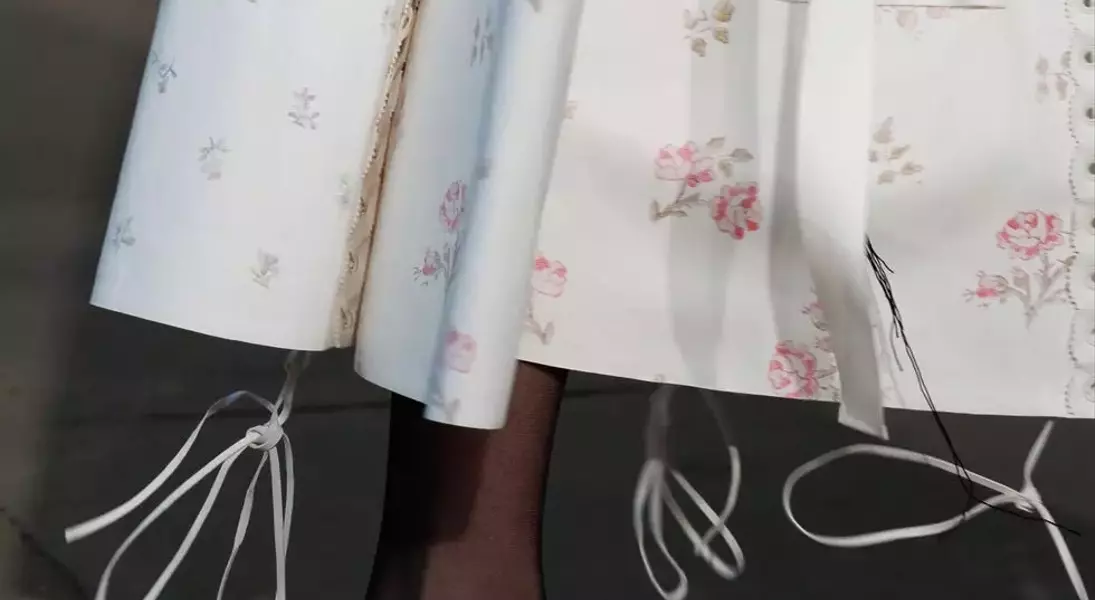
Contemporary fashion is currently experiencing a vibrant resurgence of Rococo aesthetics, moving away from minimalist trends towards the opulent and ornate styles reminiscent of 18th-century France. Leading designers are embracing elaborate silhouettes, intricate embellishments, and dramatic forms, echoing the rebellious and decadent spirit of the original Rococo movement. This shift is transforming runways into showcases of historical romanticism, blending classical craftsmanship with modern sensibilities and reflecting a cultural yearning for expressive and visually rich attire.
The influence of the 18th-century Rococo period is prominently featured in recent collections from several renowned designers. Jonathan Anderson, for example, made a striking debut with designs that fused grunge elements with demi-couture, incorporating padded hips, military-inspired jackets, and unique bicorne hats. Similarly, Catherine Holstein of Khaite explored rigid bodices, while Simone Rocha continued her exploration of modern romanticism through drop waists and luxurious fabrics. Nicolas Ghesquière chose the historic setting of the Louvre to present his spring collection, further emphasizing the connection to historical grandeur.
This renewed interest in historical fashion is not only evident on the runways but also mirrored in popular culture. Period dramas such as "The Gilded Age" and "Bridgerton" have captivated audiences, fostering a romanticized view of historical eras. The 20th anniversary of Sofia Coppola's "Marie Antoinette," known for its anachronistic yet visually stunning Rococo interpretations, further highlights this cultural fascination. These influences contribute to a collective appreciation for historical aesthetics, making them ripe for modern reinterpretation.
New York-based designer Meruert Tolegen draws deep inspiration from Rococo craftsmanship, frequently visiting institutions like the Metropolitan Museum of Art and the Frick Collection to study the period's intricate details. She admires the lost techniques evident in Rococo paintings and garments, finding inspiration in the expertise behind elaborate embroideries and beadwork. While Tolegen doesn't envision modern women wearing historically accurate panniers for everyday tasks, she aims to create updated interpretations that honor the skilled design of the past.
Erdem Moralıoğlu, who recently celebrated two decades in fashion, also champions the return of structured and detailed dressing. His spring collection, inspired by 19th-century medium Hélène Smith's belief in past lives within the French court, emphasizes the "presence" that intricate garments provide. Moralıoğlu sees value in finely crafted pieces that showcase immense attention to detail, contrasting with an era of hyper-minimalism. Whether it's an homage to 80s rock 'n' roll, the early 2000s, or a Rococo revival, the visible ornamentation and meticulous artistry are unmistakably making a comeback in high fashion.
The current fashion landscape is undergoing a notable transformation, marked by a strong embrace of elaborate and decorative styles. This movement sees designers drawing extensively from historical periods, particularly the Rococo era, to create garments that are rich in detail, texture, and form. The emphasis is on exquisite craftsmanship and distinctive silhouettes that challenge contemporary minimalist trends, ushering in an era where opulent and expressive clothing is once again at the forefront of design.
