
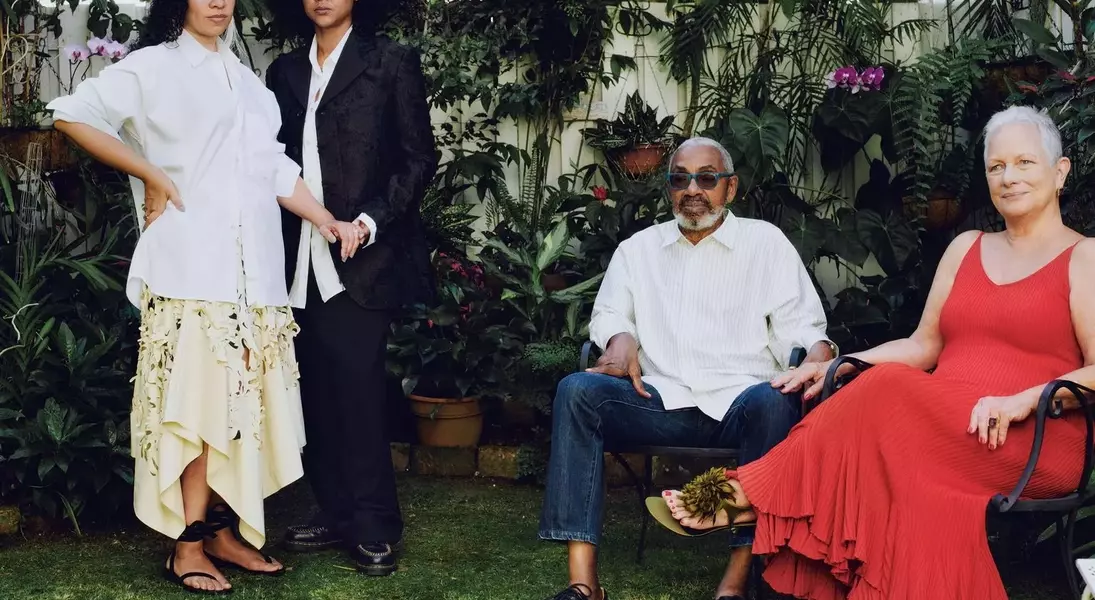



Rachel Scott's rise in the fashion industry is a compelling narrative of balancing two distinct yet interconnected design philosophies. As the inaugural Black woman creative director for Proenza Schouler, she simultaneously nurtures Diotima, her personal label, which serves as a powerful expression of her activism and identity. Her approach masterfully intertwines the sophisticated aesthetic of a renowned fashion house with the rich cultural heritage and artisanal traditions of Jamaica, her homeland. This duality not only showcases her extraordinary talent but also redefines the boundaries of high fashion by infusing it with profound cultural commentary and a commitment to authentic craftsmanship.
Scott's journey is a testament to resilience and an unwavering vision, navigating the complexities of the global fashion landscape while staying true to her roots. Her story is one of innovation and cultural affirmation, demonstrating how personal heritage can profoundly shape and enrich a universal creative language, ultimately earning her significant accolades and a place at the forefront of contemporary design.
The Dual Creative World of Rachel Scott
Rachel Scott, holding the groundbreaking position of creative director at Proenza Schouler, successfully manages this high-profile role alongside her personal brand, Diotima. Diotima, established during a period of global upheaval and social change, serves as Scott's protest and autobiography, passionately advocating for and showcasing the intricate artistry of hand-stitched crochet from Jamaica. This focus not only celebrates the island's often-overlooked cultural richness beyond its scenic beauty but also challenges the fashion industry's historical tendency to generalize Black culture. By highlighting the intergenerational knowledge and individual expression of Jamaican artisans, Scott carves out a unique space that is both personal and globally resonant, demonstrating that activism and artistry can coexist powerfully within the realm of fashion.
Her work at Diotima is a deliberate "belowground" effort, distinct from the visible "aboveground" nature of mainstream fashion. This strategic positioning allows her to subtly yet effectively inject meaningful cultural messages into her designs, proving that fashion can be a medium for social commentary without being overtly political. This delicate balance is evident in her daily life, where she juggles the demands of a major fashion house with the practicalities of running a smaller, purpose-driven label, even attending to mundane issues like a malfunctioning heater in her Diotima showroom. This commitment to both enterprises underscores her dedication to promoting Jamaican craftsmanship and challenging established norms, all while cultivating a brand that, despite its modest scale, achieves remarkable success and maintains financial viability.
Rachel Scott's Cultural Heritage and Industry Impact
Rachel Scott's Jamaican heritage profoundly shapes her artistic vision and career trajectory, infusing her designs with a unique perspective. Her upbringing in a predominantly Black society fostered a deep sense of belonging and confidence, empowering her to pursue ambitious goals globally. Yet, her experiences as an international student in the United States, particularly at Colgate, brought into sharp focus the complex dynamics of race and class in American society. This exposure broadened her understanding of cultural nuances and societal structures, significantly influencing her design philosophy. Esteemed art figures like Thelma Golden and artist Simone Leigh recognize Scott's exceptional ability to weave cultural narratives and artisanal techniques into her work, praising her authentic portrayal of Jamaican traditions that extends beyond superficial stereotypes, thereby enriching the global conversation on craft and identity.
Scott's unique journey to the helm of Proenza Schouler, a significant fashion house, involved a deliberate detour from conventional design education, opting instead for a broad liberal arts background. This diverse academic foundation, coupled with invaluable work experiences at leading fashion labels, equipped her with a distinctive perspective that prioritizes deep textual understanding and cultural sensitivity. Her recent, historic recognition as the first Black woman to win the CFDA Womenswear Designer of the Year award underscores her profound impact. This achievement not only celebrates her individual success but also highlights the ongoing challenges faced by women, particularly Black women, in the fashion industry. Scott's leadership signals a shift towards a more inclusive and nuanced understanding of design, where personal history and cultural identity are celebrated as central to creative expression, ensuring that her work at Proenza Schouler will resonate with confidence and authenticity.
