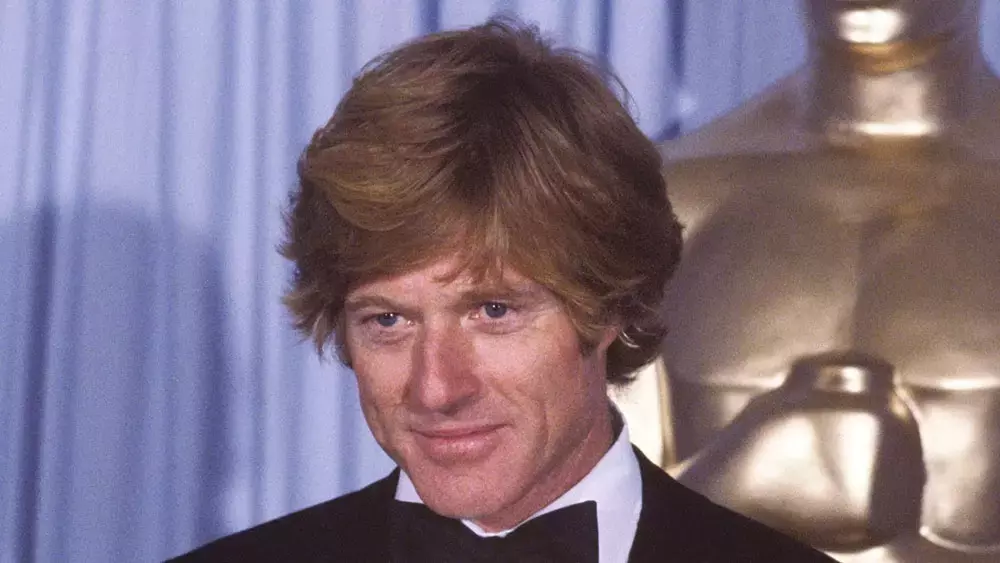
Hollywood mourns the loss of Robert Redford, a cinematic legend whose career profoundly shaped both mainstream and independent cinema. The acclaimed actor and director, celebrated for his captivating performances in classics like 'Butch Cassidy and the Sundance Kid' and 'All the President's Men,' passed away at 89. Beyond his on-screen magnetism, Redford was a visionary who championed independent filmmaking through the Sundance Film Institute, leaving an indelible mark on the industry. His passing signifies the end of an era for a true icon whose influence transcended his golden-boy image, advocating for environmental causes and artistic integrity.
Born Charles Robert Redford Jr. in Santa Monica, California, in 1936, his early life was marked by a rebellious spirit that saw him expelled from the University of Colorado Boulder. A journey through Europe with aspirations of becoming a painter eventually led him to New York, where he discovered his passion for acting. He began his career on television and the New York stage, making notable appearances in shows like 'Perry Mason' and 'The Twilight Zone,' and starring in Neil Simon's 'Barefoot in the Park' before transitioning to film.
Redford's breakthrough came with 1969's 'Butch Cassidy and the Sundance Kid,' where his chemistry with Paul Newman solidified his status as a leading man. The 1970s saw him reach superstardom with a string of hits, including 'The Sting,' for which he received an Oscar nomination, and 'The Way We Were,' opposite Barbra Streisand. He further cemented his legacy with politically charged thrillers like 'Three Days of the Condor' and 'All the President's Men,' the latter of which he also executive produced, demonstrating his growing interest in impactful storytelling.
Beyond his acting prowess, Redford's directorial debut, 'Ordinary People' (1980), earned him an Academy Award, showcasing his talent behind the camera. However, it was his dedication to nurturing independent voices in film that truly set him apart. In 1981, he founded the Sundance Film Institute in Utah, an initiative that would grow into the world-renowned Sundance Film Festival. This pioneering effort provided a crucial platform for emerging filmmakers and fundamentally altered the landscape of independent cinema, often at the expense of his own acting career at its peak.
Throughout his later career, Redford continued to explore diverse roles, from the stoic baseball player in 'The Natural' to the complex character in 'Out of Africa.' He also used his platform for environmental advocacy, speaking out on critical issues and bringing his political convictions to his directorial work, as seen in films like 'Lions for Lambs' and 'The Conspirator.' Even in his final years, he delivered powerful performances, notably in 'All Is Lost' and 'Captain America: The Winter Soldier,' proving his enduring versatility and charisma. His colleagues consistently praised his intuitive acting style and his consistent drive to challenge expectations.
Robert Redford's multifaceted contributions to film, from his iconic performances and award-winning direction to his instrumental role in fostering independent cinema and his unwavering activism, cement his status as an unparalleled figure in entertainment history. His legacy is not just etched in the films he made but in the countless artists he inspired and the causes he passionately championed, ensuring his influence will resonate for generations to come.
