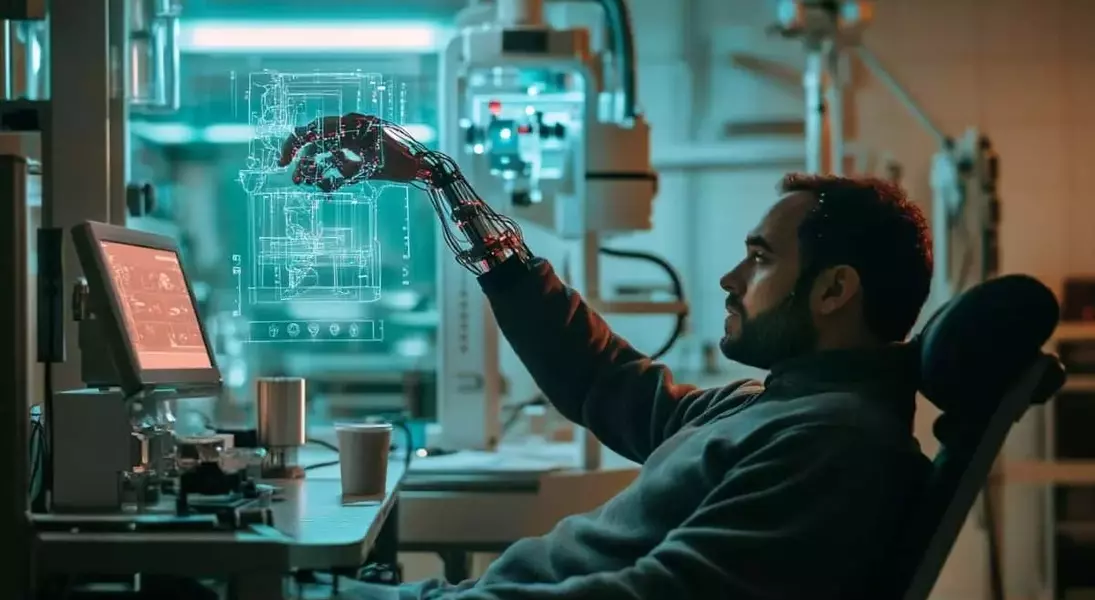
A groundbreaking brain-computer interface (BCI) has achieved a significant milestone by enabling a paralyzed individual to control a robotic arm using only their thoughts. This advanced technology, powered by adaptive artificial intelligence, maintained consistent performance over an unprecedented seven-month period. Unlike previous BCI systems that functioned for mere days, this innovation adapts to the subtle changes in brain activity, ensuring long-term reliability and accuracy. The participant successfully manipulated real-world objects after initial training with a virtual model. Researchers are now focused on enhancing the system's fluidity and preparing it for practical use in everyday settings.
Unprecedented Longevity and Adaptability of the AI-Enhanced BCI
The novel BCI technology marks a major advancement in neuroprosthetics, offering prolonged functionality and adaptability. By incorporating an AI model that adjusts to daily fluctuations in neural patterns, this device remains effective for extended periods without recalibration. This breakthrough addresses a critical limitation of earlier BCIs, which typically ceased working after a short duration. The sustained operation of the interface signifies a significant leap toward achieving reliable, long-term assistance for individuals with paralysis.
The key to this success lies in the AI’s ability to learn from the brain's natural shifts. As the participant repeatedly imagined specific movements, the AI continuously refined its understanding of these neural signals. This dynamic learning process ensures that the BCI remains accurate even as brain activity changes over time. The result is a system that can maintain its effectiveness for months, far surpassing previous limitations. This adaptability not only enhances the user experience but also opens new possibilities for integrating BCIs into daily life, providing hope for those who have lost motor functions.
From Virtual Practice to Real-World Applications
After mastering the virtual environment, the participant transitioned seamlessly to controlling a physical robotic arm. The initial challenges were overcome through dedicated practice, leading to precise and controlled movements. The participant demonstrated the ability to grasp, move, and manipulate objects with increasing proficiency. This progression highlights the potential of BCIs to restore meaningful movement for paralyzed individuals, significantly improving their quality of life.
The journey from virtual to real-world applications involved meticulous training sessions. Initially, the participant practiced with a simulated robotic arm, receiving feedback to refine his mental commands. Over time, these skills transferred to the actual robotic arm, allowing him to perform complex tasks such as opening cabinets, retrieving items, and operating a water dispenser. The participant's continued success after several months underscores the robustness of the BCI system. Researchers are now refining the technology to achieve smoother and faster movements, aiming to bring this transformative tool into home environments where it can provide continuous support for daily activities. This development promises to revolutionize how we assist individuals with paralysis, offering them greater independence and dignity.
