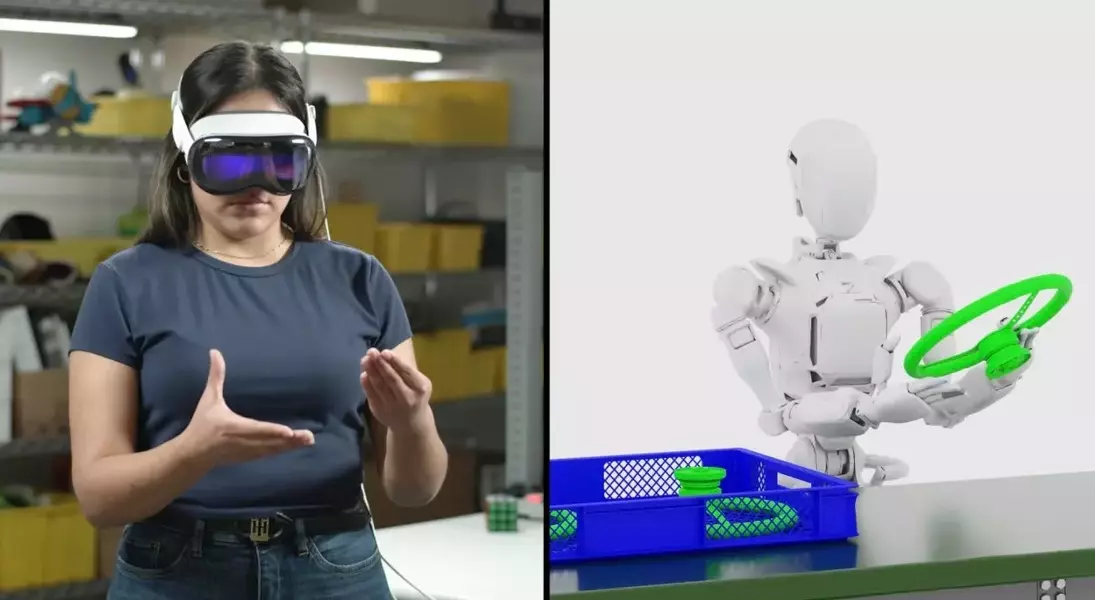
In a significant leap forward, Nvidia’s latest innovation, Blueprint, is set to redefine how humanoid robots learn and adapt. Unveiled at CES by CEO Jensen Huang, this cutting-edge technology leverages imitation learning to bridge the gap between human actions and robotic execution. By harnessing advanced tools like Apple’s Vision Pro, Blueprint enables the seamless transfer of skills from humans to machines, opening new possibilities in industries ranging from manufacturing to healthcare.
Transforming Industries with Cutting-Edge Imitation Learning Technology
The Dawn of Advanced Humanoid Robotics
The integration of robotics into various sectors has seen unprecedented growth, particularly since Nvidia introduced GR00T last year. This milestone marked a turning point for humanoid robotics, attracting leading innovators such as 1X Technologies, Agility Robotics, Apptronik, Boston Dynamics, Figure AI, Fourier Intelligence, Sanctuary AI, and Unitree Robotics. These companies have been pivotal in shaping the future of automation, focusing on creating robots that can perform tasks traditionally handled by humans.Humanoid robots are not just machines; they are sophisticated entities designed to mimic human movements and behaviors. The introduction of GR00T was a critical step in this direction, setting the stage for more advanced capabilities. With its ability to interact with complex environments, GR00T represents a paradigm shift in how we perceive and utilize robotics in everyday life. The collaboration between Nvidia and these industry leaders has paved the way for innovations that promise to revolutionize multiple sectors.The Power of Imitation Learning
Imitation learning stands out as a cornerstone of teaching robots new skills. This method involves a human performing an action, which the robot then replicates. It is especially crucial for humanoid robots, whose design mirrors human anatomy, making them ideal candidates for learning from human demonstrations. In environments like factories and warehouses, where precision and efficiency are paramount, imitation learning ensures that robots can seamlessly integrate into existing workflows.Teleoperation plays a vital role in this process. By allowing operators to guide robots remotely, teleoperation bridges the gap between physical and digital realms. Actions performed in real-time are instantly digitized, creating an accurate representation of the environment. This capability enhances the learning process, enabling robots to acquire skills faster and more accurately. The result is a more adaptable and versatile workforce, capable of handling a wide range of tasks with minimal supervision.Blueprint: A New Era of Digital Twins
At the heart of Nvidia’s latest breakthrough is Blueprint, a system that utilizes Apple’s Vision Pro to capture human actions as digital twins. These digital replicas serve as templates for robots to follow, ensuring consistent and reliable performance. The use of digital twins in simulation allows for extensive testing and refinement before deployment, reducing the risk of errors and improving overall efficiency.The benefits of using digital twins extend beyond initial training. Robots can continuously learn and improve through repeated simulations, adapting to new challenges and environments. This iterative process fosters a level of proficiency that surpasses traditional methods, making robots indispensable in industries that demand high levels of accuracy and consistency. Moreover, the integration of digital twins streamlines the development process, accelerating time-to-market for new robotic applications.Impact on Industry and Society
The implications of Nvidia’s advancements in humanoid robotics are far-reaching. Industries such as manufacturing, logistics, and healthcare stand to gain significantly from the enhanced capabilities of robots. Automation can lead to increased productivity, reduced operational costs, and improved safety standards. In healthcare, for instance, robots can assist in surgeries, patient care, and administrative tasks, freeing up valuable time for medical professionals.Society as a whole will also benefit from these innovations. As robots take over routine and hazardous tasks, humans can focus on more creative and strategic endeavors. The potential for job creation in fields related to robotics and artificial intelligence cannot be overstated. Furthermore, the integration of humanoid robots into daily life promises to enhance quality of life, providing assistance and support in ways previously unimaginable.Looking Ahead: The Future of Robotics
As Nvidia continues to push the boundaries of humanoid robotics, the future holds exciting possibilities. The convergence of technologies like imitation learning, teleoperation, and digital twins is reshaping the landscape of automation. Companies and researchers are exploring new frontiers, aiming to create robots that can not only perform tasks but also interact meaningfully with their surroundings and human counterparts.The journey toward fully autonomous humanoid robots is ongoing, with each advancement bringing us closer to this vision. Nvidia’s Blueprint represents a significant milestone in this endeavor, showcasing the potential of human-machine collaboration. As we move forward, the impact of these innovations will be felt across all aspects of society, heralding a new era of technological progress and human achievement.