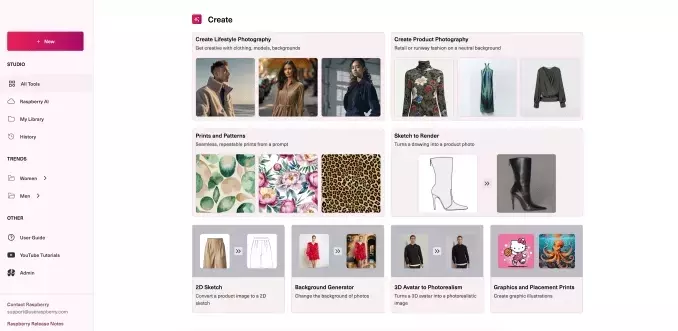
In today's rapidly evolving fashion industry, brands are constantly seeking ways to stay ahead of trends. Retailers introduce new styles seasonally, while fast-fashion giants like Shein, H&M, and Zara update their collections almost daily. To meet this demand, many companies have turned to technology for faster design processes. One standout solution is Raspberry AI, a startup that leverages text-to-image platforms to expedite product development. Founded by Cheryl Liu, a former private equity analyst at KKR and an alumna of Amazon and DoorDash, Raspberry has quickly gained traction among major fashion houses and manufacturers. With its advanced AI capabilities, the company enables designers to visualize and iterate on ideas instantly, transforming sketches into photo-realistic images. This innovation has not only accelerated design but also attracted significant investment, including a $24 million Series A round led by Andreessen Horowitz.
A New Era in Fashion Design: How Raspberry AI is Changing the Game
In the vibrant world of fashion, where trends change as swiftly as the seasons, staying ahead requires cutting-edge solutions. In the heart of this transformation stands Raspberry AI, a tech startup founded just two years ago. The company’s founder, Cheryl Liu, identified a unique opportunity to integrate generative AI into fashion design after noticing the potential of image models like OpenAI’s DALL-E and Stability AI’s stable diffusion. Liu recognized that these tools could revolutionize how designers conceptualize and refine their creations. Traditionally, designers would spend weeks waiting for physical samples or rely on outdated software. Now, with Raspberry’s platform, they can instantly generate lifelike images from simple sketches, allowing brands to explore multiple design iterations without the need for costly prototypes. This capability has been a game-changer for companies like Under Armour, Groupo Teddy, and MCM Worldwide, which have embraced Raspberry’s technology to streamline their design processes.
The rapid adoption of Raspberry’s technology has fueled impressive growth. Within a short span, the company has amassed 70 clients across various segments of the fashion industry. This success caught the attention of venture capitalists, leading to a substantial $24 million Series A funding round led by Andreessen Horowitz. Bryan Kim, a partner at the firm, praised Liu’s leadership and the company’s ability to serve large, influential clients. Despite competition from other AI image generators, Raspberry stands out due to its specialized understanding of fashion terminology and its ability to create designs from sketches. As the company looks to expand into home decor, furniture, and cosmetics, it aims to hire more professionals in engineering, sales, and marketing to support its ambitious growth plans.
From a journalist's perspective, Raspberry AI represents a pivotal moment in the fusion of technology and creativity. By eliminating the time-consuming process of physical prototyping, Raspberry empowers designers to experiment more freely and efficiently. This shift not only accelerates product development but also opens up new possibilities for innovation in fashion and beyond. As AI continues to evolve, we can expect even more groundbreaking advancements that will reshape industries worldwide.
