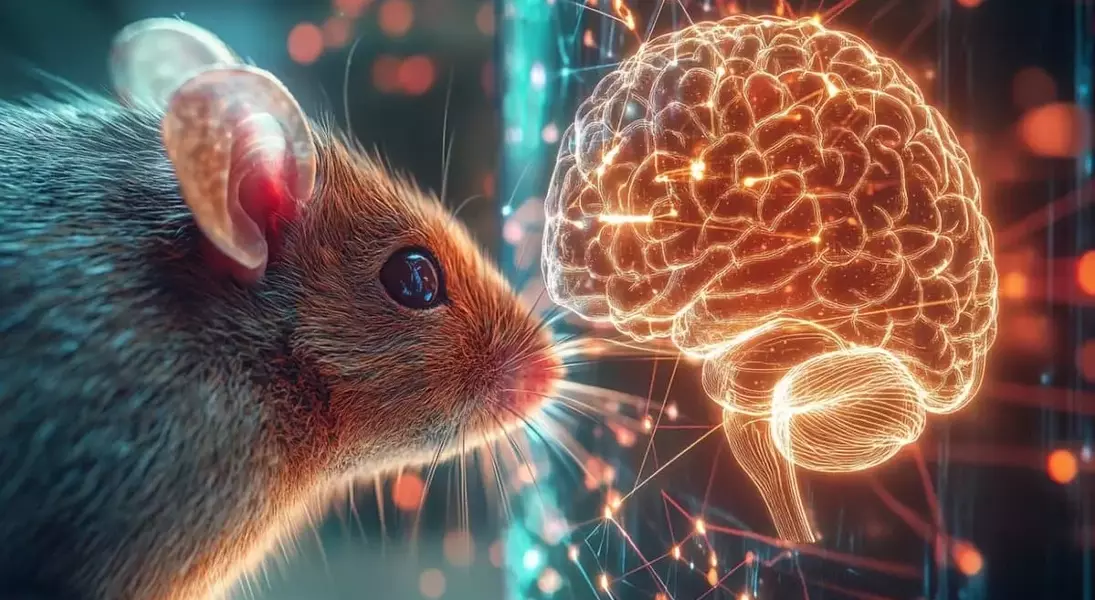
In a groundbreaking advancement, scientists have developed an artificial intelligence-driven digital twin capable of simulating the mouse visual cortex with unprecedented accuracy. This model not only predicts neural responses to various visual stimuli but also generalizes beyond its training data, offering insights into neuron behavior and structure. Trained on extensive brain activity recordings, this innovation allows researchers to conduct virtual experiments at unparalleled speed and efficiency, potentially transforming how we study intelligence, neurological disorders, and eventually, the human brain.
Unveiling the Potential of AI in Neuroscience
In the realm of neuroscience, a significant leap has been made through the creation of an AI-powered digital twin that mirrors the functionality of the mouse visual cortex. In a project led by Stanford Medicine, researchers utilized advanced artificial intelligence techniques to craft a simulation capable of predicting the reactions of tens of thousands of neurons to novel visual inputs. The process began with collecting over 900 minutes of neural activity from mice watching action-packed movie clips. These recordings were then used to train a core model which could be further tailored into individualized digital twins for each mouse.
The success of these digital twins hinges on their ability to accurately replicate neural activity in response to diverse visual stimuli, including both videos and static images. A pivotal aspect of this research is the model's capacity to generalize beyond its initial training parameters. It can even forecast anatomical details such as neuron type and location, verified through high-resolution electron microscope imaging. This capability was demonstrated in one specific mouse where predictions matched actual findings in the MICrONS project, mapping the structure and function of the mouse visual cortex.
Beyond mere simulation, these digital twins enable endless experimentation without the constraints of time or biological limitations. Experiments that would traditionally take years can now be completed within hours, accelerating the pace of discovery in understanding how the brain processes information and encodes intelligence. Furthermore, the models are already yielding new revelations about neuronal connectivity preferences, showing that neurons prioritize connecting based on shared stimulus responses rather than spatial proximity.
Implications for Future Research
This pioneering work opens up exciting possibilities for expanding such modeling efforts into other areas of the brain and across different species, including primates. The ultimate vision is to construct digital replicas of parts of the human brain, marking just the beginning of what could become a revolutionary approach in neuroscience. Such advancements not only deepen our comprehension of the brain’s intricate workings but also pave the way for innovative treatments for neurological conditions. As larger and more diverse datasets become available, foundation models will continue to uncover underlying patterns, facilitate rapid adaptation to new tasks, and propel scientific inquiry forward at an accelerated rate.
From a journalist's perspective, this breakthrough signifies a monumental shift in how we approach complex biological systems. By harnessing the power of AI, researchers can transcend traditional boundaries, gaining deeper insights into the mechanisms of intelligence and cognition. This development serves as a beacon of hope for advancing medical science and improving quality of life through enhanced understanding of the human brain. It exemplifies the potential of interdisciplinary collaboration between technology and biology, setting a precedent for future explorations into the mysteries of the mind.
