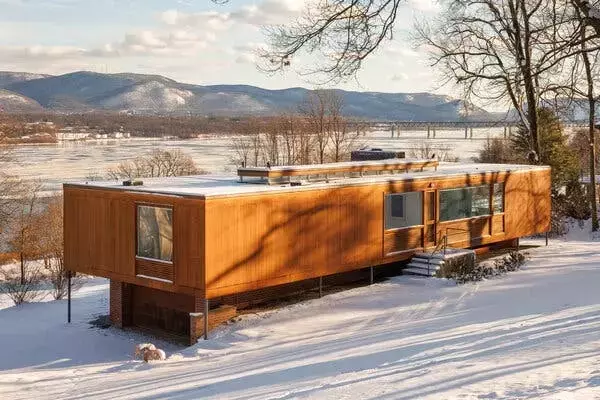
The discovery of an overlooked architectural treasure in Newburgh, N.Y., sparked an ambitious restoration project. Jeremy Parker and Jiminie Ha, driven by their passion for midcentury design, embarked on a journey to breathe new life into the neglected Wolfhouse, a structure designed by renowned architect Philip Johnson.Transforming Neglect into a Timeless Icon
In the heart of Newburgh, nestled atop a gently sloping hill, lies a testament to midcentury modern architecture—a hidden gem that was almost lost to time. When Jeremy Parker and Jiminie Ha stumbled upon this property, they were immediately captivated by its potential. What initially seemed like an unverified listing soon revealed itself as a rare opportunity to restore a piece of history.
A Serendipitous Discovery
The moment Parker and Ha set foot inside the Wolfhouse, they knew they had found something extraordinary. Built in the late 1940s, this two-story residence bore the unmistakable hallmarks of Philip Johnson's innovative design philosophy. Though time and neglect had left their mark, the core elements remained intact. The house, perched majestically on 1.4 acres, boasted a strikingly minimalist exterior that echoed the simplicity and elegance of Johnson’s other works, such as the iconic Glass House in Connecticut.Johnson, a pioneer of modernist architecture, designed only 25 houses throughout his career, making each one a rarity. This particular home, known as the Wolfhouse, stood as a lesser-known yet equally significant contribution to his legacy. Its unique placement on the hillside created an unparalleled vantage point, offering breathtaking views of the surrounding landscape.
Unveiling the Authenticity
Upon closer inspection, Parker and Ha realized that despite alterations made by previous owners, the essence of Johnson’s vision was still present. The original framework, characterized by clean lines and geometric precision, remained untouched. However, it was clear that substantial work would be required to restore the house to its former glory.The duo meticulously documented every aspect of the property, from its structural integrity to the materials used in its construction. They discovered that the original Cypress wood siding had been replaced with less authentic alternatives. Recognizing the importance of preserving the building’s authenticity, they decided to reinstate the original siding, ensuring that every detail aligned with Johnson’s original design.
Navigating Challenges and Embracing Innovation
Restoring the Wolfhouse was no small feat. The process involved not only repairing physical damages but also addressing the changes that had detracted from the home’s original aesthetic. Parker and Ha faced numerous challenges, from sourcing period-appropriate materials to navigating regulatory hurdles. Yet, they remained committed to honoring Johnson’s intent while incorporating modern innovations to enhance the living experience.One of the most significant transformations occurred when they reintroduced Cypress wood siding, which not only restored the house’s visual appeal but also improved its durability and energy efficiency. The team also focused on preserving the interior spaces, ensuring that each room retained its midcentury charm while offering contemporary comforts. The result was a harmonious blend of past and present, creating a space that felt both timeless and relevant.
A Legacy Reborn
Today, the Wolfhouse stands as a testament to the power of preservation and dedication. Through their efforts, Parker and Ha have not only revived a forgotten masterpiece but have also contributed to the broader conversation about the importance of safeguarding architectural heritage. The restoration has garnered attention from historians, architects, and enthusiasts alike, highlighting the enduring influence of midcentury modern design.The Wolfhouse now serves as a living museum, showcasing the ingenuity and vision of Philip Johnson. Visitors can explore its carefully restored interiors, marvel at its seamless integration with the natural surroundings, and gain a deeper appreciation for the principles that defined this era of architecture. As a result, the Wolfhouse continues to inspire future generations, bridging the gap between the past and the present.