
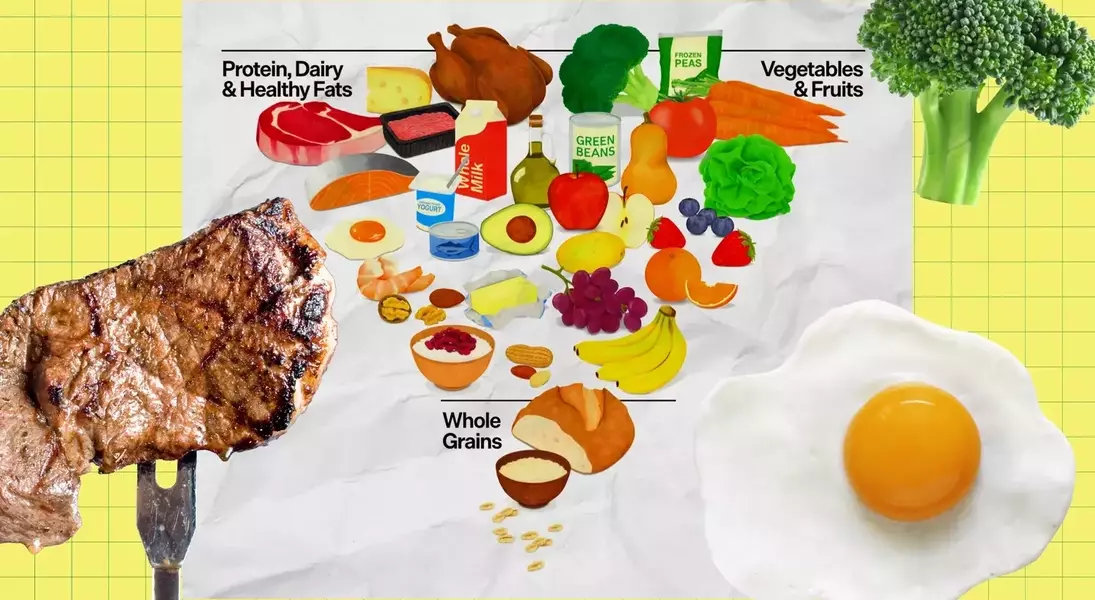
The U.S. Department of Health and Human Services, alongside the Department of Agriculture, has unveiled the 2025-2030 Dietary Guidelines for Americans, featuring a revised food pyramid. This new iteration dramatically reconfigures nutritional priorities, placing protein, dairy, and healthy fats at the top, a notable departure from previous guidelines. According to the official resource, a significant emphasis is placed on consuming 0.54 to 0.73 grams of high-quality, nutrient-dense protein per pound of body weight daily, sourced from both animal and plant origins, alongside fats from foods like eggs, seafood, meats, full-fat dairy, nuts, seeds, olives, and avocados. Fruits and vegetables, though acknowledged as 'essential,' are relegated to a secondary position, with specific recommendations for three servings of vegetables and two servings of fruit daily, yet lacking the precise per-serving guidance provided for protein. Whole grains occupy the base, with advice to avoid refined carbohydrates and consume two to four servings of whole grains each day.
However, the shift in emphasis has raised concerns among nutrition professionals. Our nutrition editor and registered dietitian, Madeline Peck, points out that positioning saturated fat-rich foods like cheese and red meat prominently at the top contradicts established dietary wisdom that advises limiting saturated fat to less than 10% of total caloric intake. This could lead to adverse health outcomes such as fatigue, cognitive impairment, and digestive issues. Furthermore, the revised pyramid minimizes the importance of gut-healthy fermented foods and crucial fiber sources like legumes and whole grains, despite statistics indicating that a staggering 95% of Americans do not consume adequate fiber. Fiber is indispensable for gut health, cholesterol management, energy levels, and overall longevity, making its de-prioritization a significant concern.
While the latest dietary guidelines aim for simplicity in promoting healthy eating habits, their current formulation does not fully align with comprehensive nutritional science. Prioritizing protein is undoubtedly important, but this should not come at the expense of fiber-rich foods that are vital for our digestive, cardiovascular, and cognitive well-being. A balanced approach that integrates both animal and plant-based proteins, coupled with a generous intake of fruits, vegetables, legumes, and whole grains, is far more beneficial. Ultimately, a personalized dietary strategy, developed in consultation with a qualified dietitian, remains the most effective way to address individual nutritional needs and foster optimal health, moving beyond a one-size-fits-all approach that may overlook critical components of a truly healthful diet.
