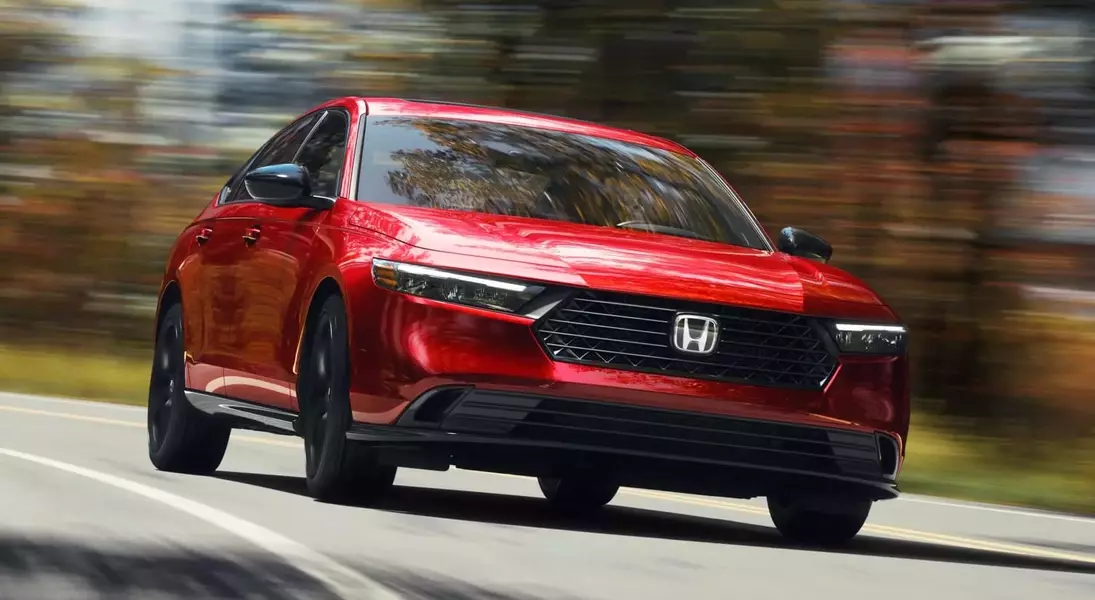
In a rapidly evolving automotive landscape, the Honda Accord continues to hold its ground despite facing challenges. While sales figures for 2024 showed a decline, this dip was strategically orchestrated by Honda as part of its broader plan to transition towards electric vehicle (EV) production. The company’s decision to consolidate production lines at its Marysville, Ohio facility has set the stage for future growth and innovation.
Discover How Honda's Proactive Strategy is Redefining the Mid-Size Sedan Segment
Navigating Production Changes with Purpose
The mid-size sedan market has seen significant shifts over the past few years, with several models experiencing declines in sales. However, Honda's approach to the Accord's reduced production was anything but passive. By consolidating production lines at the Marysville Auto Plant, Honda aimed to streamline operations and prepare for the upcoming introduction of electric vehicles. This strategic move allowed the company to focus on increasing production capacity for other models like the Civic, which saw a substantial increase in sales. The consolidation also paved the way for the introduction of the Civic hybrid, ensuring that overall sales remained robust.Honda's spokesperson confirmed that the decrease in Accord volume was anticipated due to the production line changes. Despite this, the company remains committed to maintaining the Accord's position as one of the top-selling passenger cars in the United States. The proactive measures taken by Honda demonstrate a forward-thinking approach to adapting to market demands while preparing for the future of automotive technology.A Market in Transition: The Shrinking Mid-Size Sedan Segment
The mid-size sedan segment has faced mounting pressure from the rise of crossovers and SUVs, leading to a decline in overall sales. Models such as the Chevrolet Malibu, Nissan Altima, and Kia K5 have all experienced decreases in sales, with the Kia K5 seeing the most significant drop. However, not all mid-size sedans are struggling. The Toyota Camry and Hyundai Sonata have managed to buck the trend, with the Camry posting a modest increase and the Sonata achieving a remarkable 53% growth in 2024.These diverging trends highlight the changing preferences of consumers, who are increasingly drawn to vehicles offering more space and versatility. Despite these challenges, the Honda Accord still managed to secure the fourth-best selling car spot in the US market for 2024, underscoring its enduring appeal and reliability. Honda's ability to maintain the Accord's popularity amidst a shrinking segment speaks to the brand's strength and resilience.Looking Ahead: Preparing for an Electric Future
As the automotive industry moves toward electrification, Honda's strategic decisions regarding the Accord's production serve as a precursor to its broader EV ambitions. The consolidation of production lines at the Marysville plant is part of a larger plan to introduce electric vehicles later in the year. This shift not only aligns with global trends toward sustainability but also positions Honda as a leader in the transition to cleaner transportation.The company's investment in EV infrastructure and production capabilities will likely pay off in the long run, as consumer demand for electric vehicles continues to grow. By reducing Accord production temporarily, Honda has freed up resources to focus on developing and scaling its electric offerings. This forward-looking strategy ensures that the brand remains competitive in an increasingly electrified market.The Broader Impact: Rising Sales Across Other Models
While the Accord's sales may have dipped, Honda's overall performance in 2024 was strong, with total sales increasing by 11% year-over-year. This growth was driven by increased sales of popular models like the HR-V, CR-V, and Pilot. The success of these vehicles demonstrates Honda's ability to diversify its portfolio and cater to evolving consumer preferences.The rise in Civic sales, particularly with the introduction of the hybrid variant, further illustrates Honda's adaptability. By expanding production capacity for the Civic, Honda has been able to offset the temporary decrease in Accord volumes. This balanced approach to managing production across multiple models has allowed the company to maintain steady growth and meet the diverse needs of its customer base.You May Like