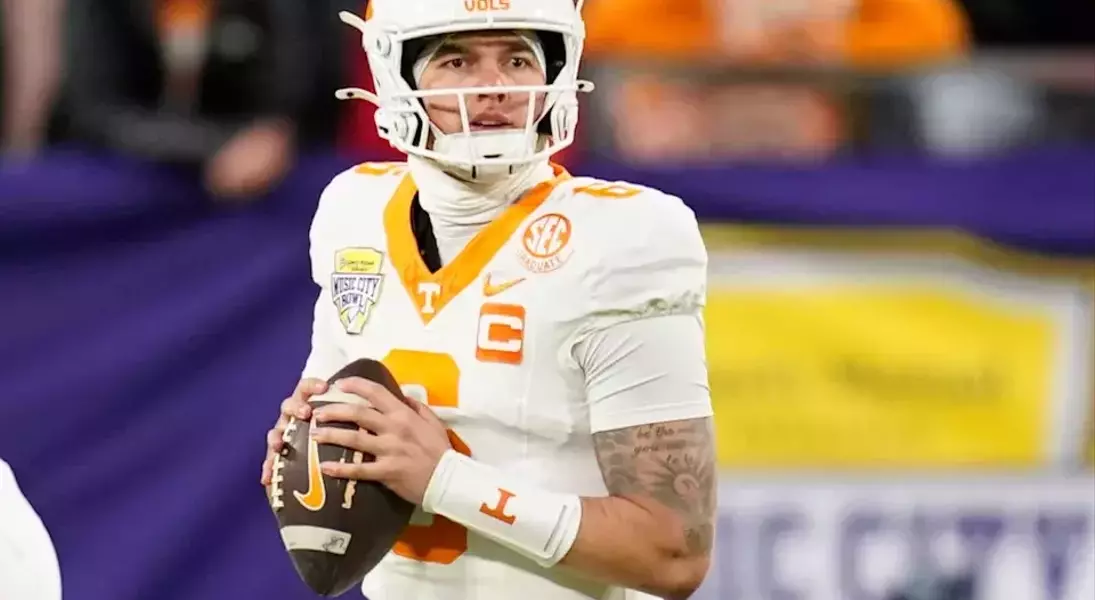
Tennessee Volunteers' senior quarterback, Joey Aguilar, finds himself embroiled in a legal challenge concerning his athletic eligibility. On February 4, he successfully obtained a temporary restraining order against the NCAA, initiating a complex legal process.
Following this, a preliminary injunction hearing was held in the Knox County Chancery Court. The outcome of this hearing, presided over by Chancellor Christopher D. Heagerty, is eagerly awaited, as his decision will significantly impact Aguilar's future with the team. Aguilar's journey to Tennessee has been circuitous; after transferring from Appalachian State post-2024 season, he briefly joined UCLA but did not play a game before moving to the Vols after their 2025 spring practices. In his debut 2025 season with the Vols, he demonstrated his capability by completing 272 of 404 passes for 3,565 yards, scoring 24 touchdowns against 10 interceptions, and adding four rushing touchdowns with 101 yards on the ground. The Tennessee football season for 2026 is set to commence on September 5, with a game against Furman at Neyland Stadium, marking head coach Josh Heupel’s sixth season at the helm.
This ongoing legal dispute underscores the persistent issues surrounding player transfers and the NCAA's eligibility rules, reflecting a broader conversation about athlete welfare and the bureaucratic hurdles within collegiate athletics. The resolution of Aguilar's case could set a precedent for future eligibility challenges, influencing how similar situations are handled across the nation. It highlights the importance of fair and transparent processes in sports, ensuring that athletes have the opportunity to pursue their passions while adhering to established regulations.
The pursuit of justice and fair play is fundamental to the spirit of competitive sports. Every athlete deserves a clear path to showcase their talents, free from undue administrative burdens. This situation serves as a poignant reminder that integrity, transparency, and the well-being of student-athletes should always be at the forefront of collegiate sports governance.
