
Qualcomm has recently introduced its latest Snapdragon X2 Plus range of processors at CES, aiming to build upon the foundation laid by its Arm-based predecessors. Positioned as a more accessible option compared to the premium X2 Elite, these new chips are designed to expand Qualcomm's presence in the computing landscape, particularly within Microsoft's Copilot+ AI PC ecosystem.
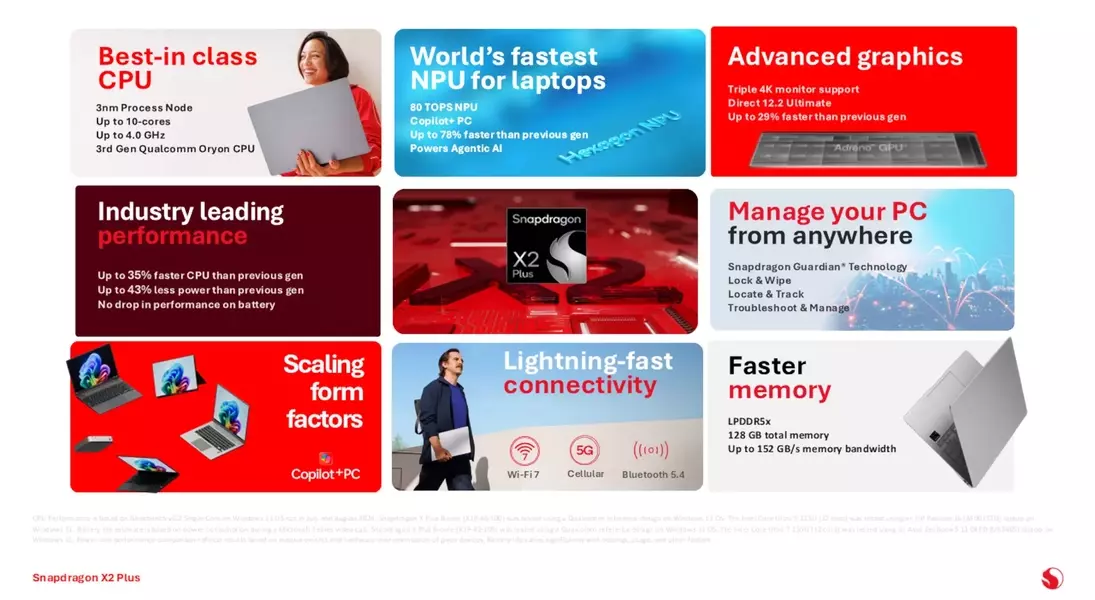
While the Snapdragon X2 Plus processors appear to be derivations of the X2 Elite, featuring a configuration with certain cores and cache elements deactivated, they still promise substantial performance improvements. Qualcomm highlights a significant 35% increase in single-core CPU performance, attributing this uplift to architectural refinements and clock speed optimizations. Additionally, the X2 Plus models boast impressive power efficiency, consuming up to 43% less power than their X Plus counterparts, a benefit largely stemming from internal design changes and the adoption of TSMC's advanced N3P manufacturing process. The integrated Adreno GPUs in the X2 Plus series are fully compatible with modern graphics APIs like DirectX 12 and Vulkan, featuring dedicated hardware for ray tracing and a specialized cache similar to AMD's Infinity Cache, which helps reduce DRAM traffic and provides a scratchpad for shaders.
These new processors, particularly their GPU capabilities and an estimated operating power window of 10 to 20 Watts, position them as compelling candidates for handheld gaming PCs. The competitive landscape in the portable PC sector is intensifying, with Intel also making strides with its Core Ultra 300 series. This heightened competition is seen as a positive development for the industry, fostering innovation and offering consumers more diverse choices. However, despite the promising specifications, the market awaits the actual deployment of devices featuring these new Snapdragon X2 chips, as prior Elite models have yet to appear in consumer products. Potential delays due to the global DRAM supply situation could further impact their availability.
The continuous innovation in processor technology underscores a relentless pursuit of greater efficiency and performance, ultimately empowering users with more capable and versatile computing devices. This drive not only pushes technological boundaries but also opens up new possibilities for portable computing, making advanced performance accessible in an ever-growing array of form factors.
