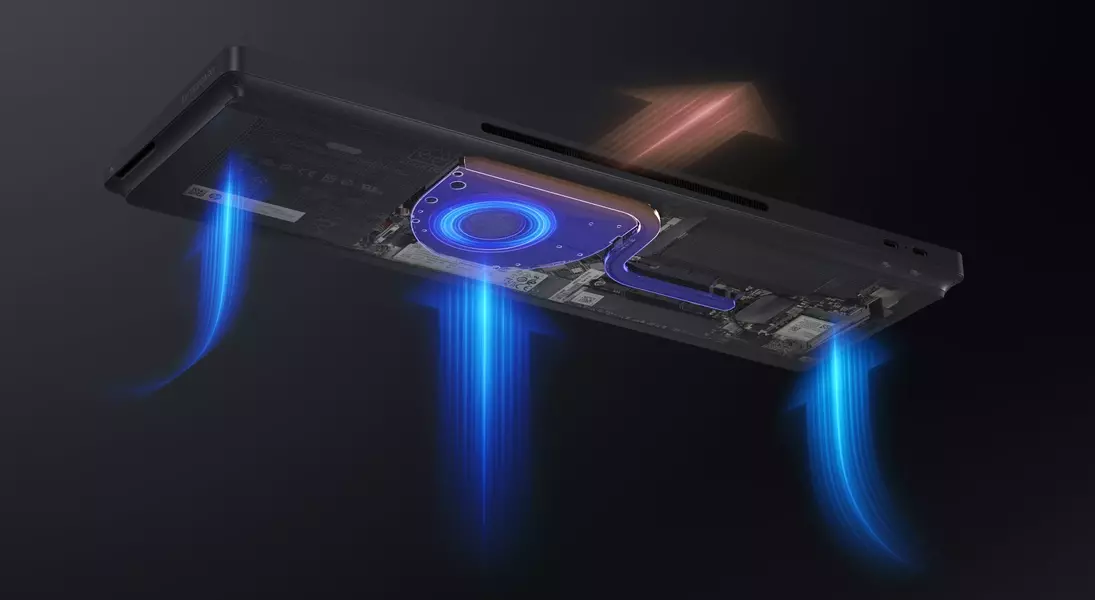
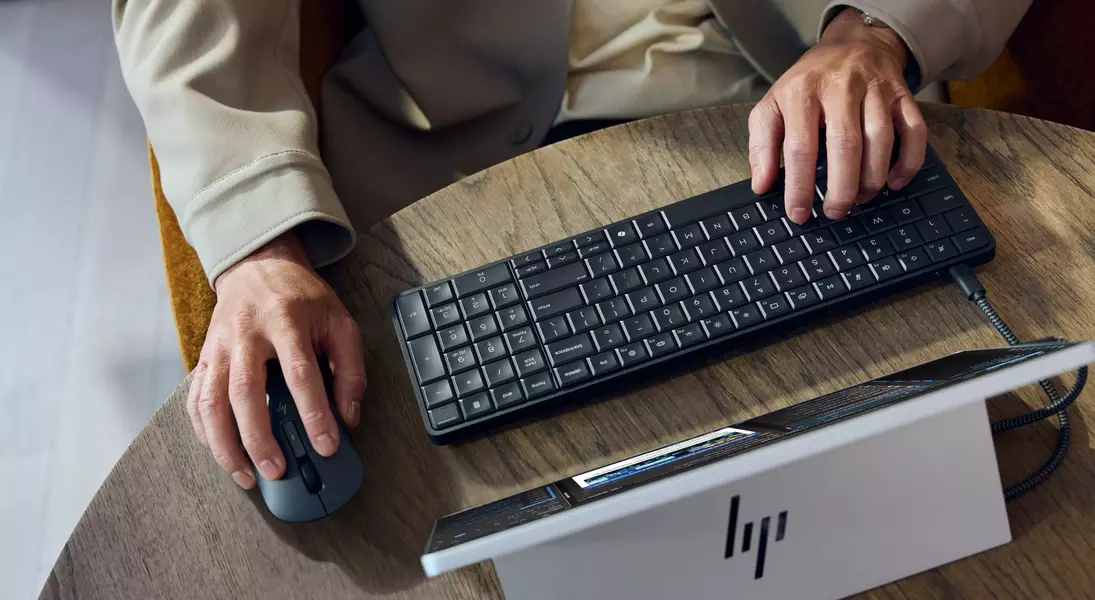
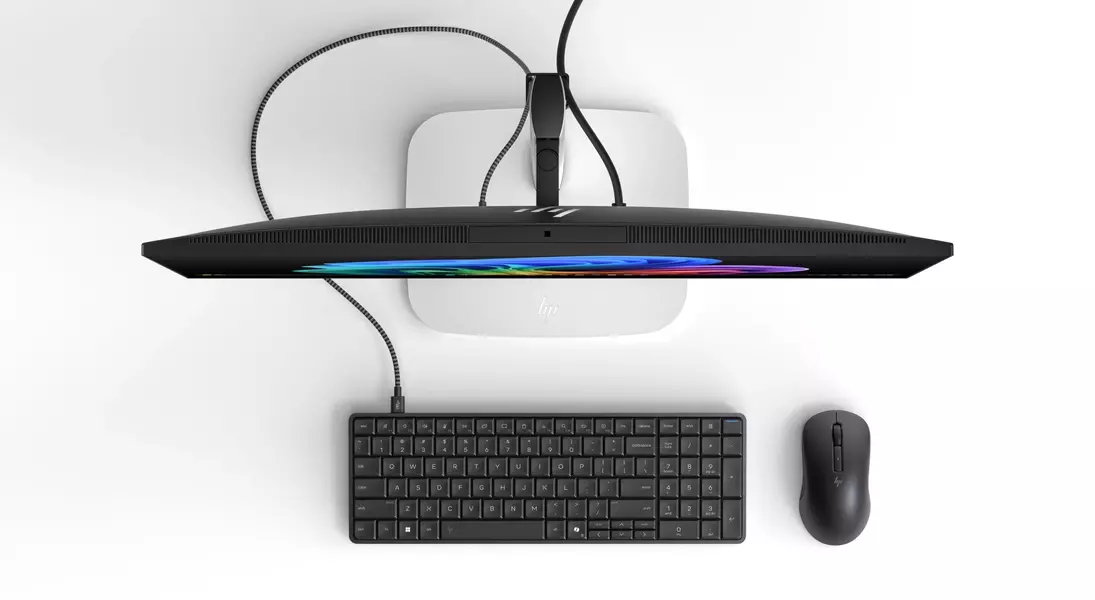
HP has introduced the EliteBoard G1a, a revolutionary AI PC that challenges conventional desktop designs by emphasizing portability and a minimal footprint. This device, weighing less than 780 grams and spanning just 36 cm, integrates core computing power into a compact unit that evokes the simplicity of a keyboard-centric computer.
Despite its business-centric design, which includes a dedicated Copilot button for AI functions, the EliteBoard G1a's specifications hint at unexpected versatility. It features AMD Ryzen AI processors, with the top-tier configuration including an AMD Ryzen AI 7 350 Pro APU. This chip boasts eight Zen 5 cores and a Radeon 860M integrated GPU, providing graphical capabilities comparable to handheld gaming devices like the Steam Deck. This suggests that while optimized for productivity, the EliteBoard G1a can also handle light gaming, making it a surprisingly adaptable machine for users who might blend work with leisure.
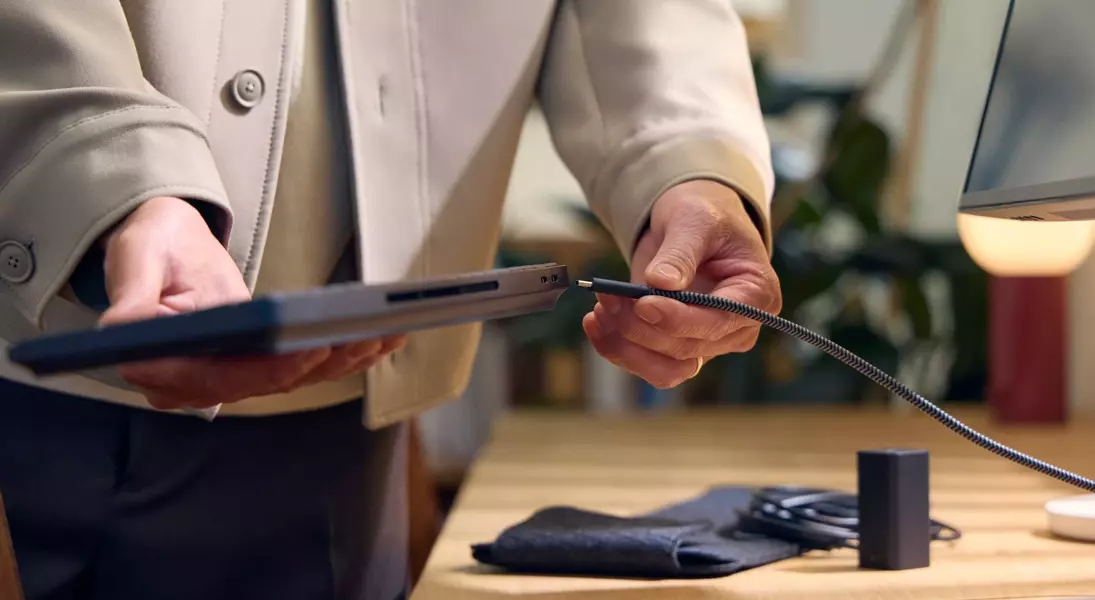
Connectivity on the EliteBoard G1a is streamlined, featuring two USB Type-C ports (USB4 and USB 3.2 10 Gbps) and options for Wi-Fi 6E or Wi-Fi 7, along with Bluetooth 5.3 or 6. While it lacks traditional ports like LAN or an SD card reader, its modern USB-C interface supports both data and display signals, and it can be optionally equipped with a 32 Wh battery for enhanced portability. The design mirrors early home computers, which similarly integrated processing into the keyboard, showcasing a return to elegant simplicity. Although its retail availability is set for March, the EliteBoard G1a offers an intriguing blend of past and future computing, appealing to both business professionals and those who appreciate innovative, space-saving technology.
In a world increasingly dominated by expansive and complex technology, HP's EliteBoard G1a serves as a refreshing reminder that powerful innovation can still be delivered in a concise and efficient package. Its sleek form factor and integrated AI capabilities symbolize progress, showing that cutting-edge technology doesn't always require a bulky presence. This design philosophy empowers users with advanced functionality without sacrificing convenience, paving the way for more intuitive and accessible computing experiences.
