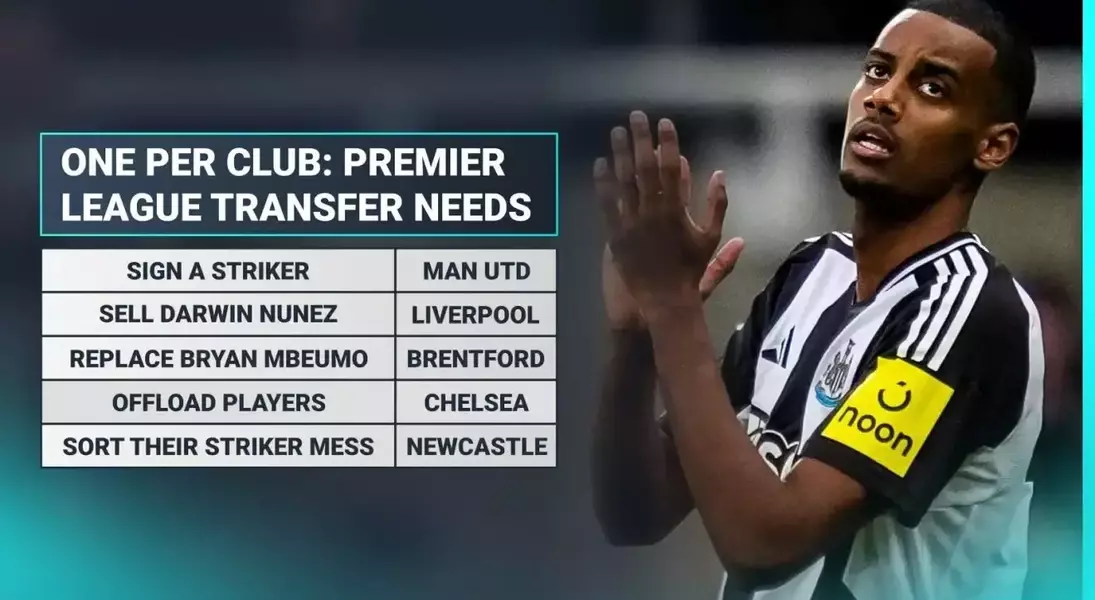
As the summer transfer window rapidly approaches its conclusion, Premier League clubs are intensely focused on bolstering their rosters. This period, characterized by a blend of urgency and strategic planning, sees teams addressing critical positional gaps, offloading surplus players, and making ambitious bids to secure top talent. The narrative of this transfer season is largely shaped by the financial fair play rules, the quest for competitive advantage, and the inherent desire to climb or maintain positions within the league's hierarchy.
Premier League Transfer Dynamics: Key Club Strategies and Player Movements
With merely five weeks left until the transfer deadline, Premier League clubs are navigating a complex landscape of player acquisitions and sales. Each team faces unique challenges and opportunities in their pursuit of squad optimization.
At the forefront, Arsenal is prioritizing the acquisition of an elite left-sided attacker. Despite recent significant investments in players like Noni Madueke and Viktor Gyokeres, the Gunners aim for a substantial upgrade in this crucial area. Real Madrid's Rodrygo emerges as a dream target, a move that could potentially be financed by selling Gabriel Martinelli, whose development has somewhat stagnated. This strategic pivot highlights Arsenal's ambition to compete at the highest level by bringing in proven, high-caliber talent.
Meanwhile, Liverpool finds itself in a fascinating position, having already made considerable investments. The Reds' potential pursuit of Alexander Isak, who has reportedly expressed a desire to leave Newcastle, could trigger a series of significant departures, including Darwin Nunez and possibly Luis Diaz. This scenario underscores Liverpool's readiness to reshuffle their attacking options to accommodate a player of Isak's caliber, indicating a clear intent to maintain their competitive edge.
Chelsea, on the other hand, is primarily focused on streamlining its excessively large squad. Following a period of aggressive recruitment, the club is now in a phase of divestment, aiming to offload numerous players through sales or loans. This necessary clear-out reflects the challenges of managing a bloated roster and the importance of financial sustainability under strict league regulations.
Newcastle United faces a pressing issue with Alexander Isak's transfer request, which has cast a shadow over their summer plans. While retaining him is ideal, the club must prepare for his potential departure by identifying a high-profile replacement, such as Benjamin Sesko, to maintain their attacking prowess and appease an increasingly demanding fanbase. The situation poses a significant test for Newcastle's management in upholding the team's ambitions.
Aston Villa is constrained by financial regulations, leading to a quiet transfer window despite a strong previous season. Their urgent need for a right-back, alongside additional attacking and goalkeeping reinforcements, highlights the tightrope clubs walk between ambition and compliance. Similarly, Bournemouth is scrambling to secure defensive recruits after losing key players, underscoring the constant need for vigilance in squad planning.
Brentford is tasked with replacing Bryan Mbeumo's significant goal contribution, demonstrating their reliance on smart recruitment to maintain their surprising competitiveness. Brighton continues its successful strategy of identifying and developing young talent, proving that shrewd market operations can yield impressive results regardless of massive spending.
Burnley seeks clarity on their goalkeeper situation, while Everton is desperate for creative attacking support for Iliman Ndiaye, emphasizing the challenges newly promoted or struggling teams face in securing impactful players. Fulham remains surprisingly inactive, urging a significant move—any move—to shake up their stagnant transfer approach.
Leeds United's priority lies in securing a new first-choice goalkeeper, addressing a long-standing vulnerability. Manchester City's focus is on reinforcing their right-back position, seeking a long-term solution beyond temporary fixes. Manchester United continues its perennial quest for a top-tier No.9, highlighting the persistent struggle to find a consistent goalscorer. Nottingham Forest is battling to secure attacking reinforcements after losing a key player, showcasing the difficulties in attracting top talent when not offering European football.
Sunderland, newly promoted, aims to secure a midfield anchor like Granit Xhaka, recognizing the need for experienced leadership. Tottenham Hotspur is striving to enhance their midfield creativity, essential for supporting their star players and competing in European competitions. Finally, West Ham United seeks to inject more pace and technical flair into their squad, particularly in the attacking third, to overcome a perceived lack of dynamism.
The current transfer window serves as a stark reminder of the multifaceted challenges and strategic intricacies involved in modern football club management. Each decision, from securing a marquee signing to offloading a surplus player, has far-reaching implications for a club's performance, financial health, and long-term trajectory. As the deadline looms, the pressure intensifies, revealing the true priorities and adaptive capabilities of Premier League teams.
