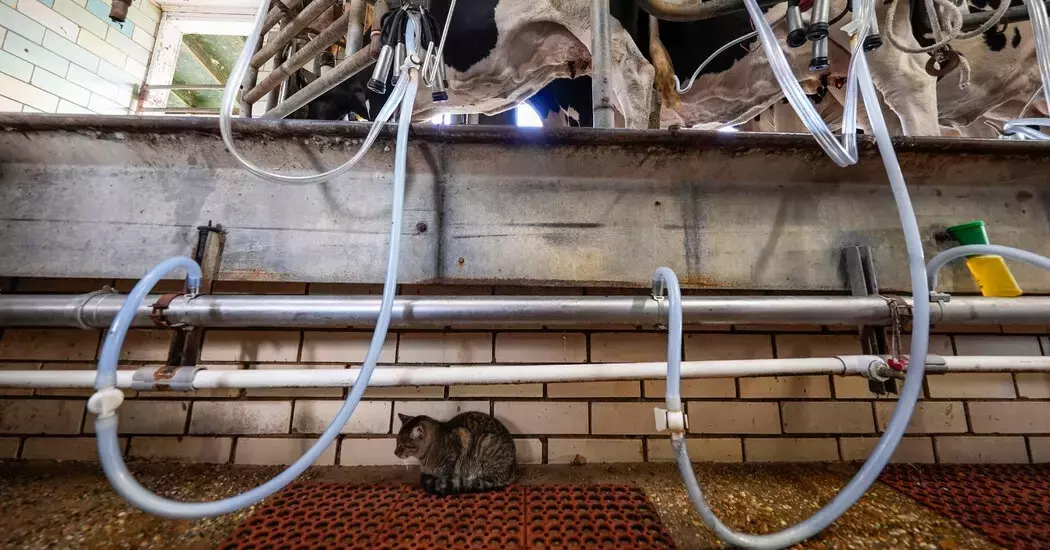
A recent study published by the Centers for Disease Control and Prevention (CDC) suggests a possible transmission of avian influenza from two dairy workers in Michigan to their pet cats last May. The findings also hint at potential secondary transmission within households, although limited evidence complicates definitive conclusions. This report was initially scheduled for January but faced delays due to communication restrictions imposed by the previous administration. Despite its release, several critical questions remain unanswered regarding the infection's origin and transmission pathways.
Investigating Potential Cross-Species Infection
The study focuses on an incident involving dairy workers in Michigan who may have inadvertently transmitted avian flu to their pets. While this possibility is suggested, the exact mechanism remains unclear. The research indicates that infected cats might have further spread the virus to other household members, though the evidence supporting this claim is inconclusive. The delayed publication has raised concerns among public health experts about transparency and timely dissemination of crucial information.
In May of the previous year, two individuals working in the dairy industry reported symptoms consistent with avian influenza. Subsequent tests revealed their cats were also infected. This scenario presents a concerning possibility of cross-species transmission. However, experts emphasize the need for caution in interpreting these results. Jennifer Nuzzo, director of the Pandemic Center at Brown University, highlighted the ambiguity surrounding the infection source. "We cannot conclusively determine if the transmission occurred from human to cat, cat to human, or through another vector," she stated. The lack of clear evidence leaves room for multiple interpretations and underscores the complexity of such cases.
Challenges in Confirming Transmission Pathways
The study acknowledges significant challenges in confirming the exact pathways of virus transmission. Limited data and incomplete evidence make it difficult to establish a definitive link between the infected workers and their pets. Additionally, the brief appearance of a data table from the report in an unrelated context further complicates the narrative. Public health experts have called for more transparent and timely releases of such critical information to better understand and manage potential outbreaks.
Despite the publication of the study, many questions remain unresolved. How did the cats initially become infected? Was the transmission from humans to animals, or could there have been another source? Experts like Nuzzo stress the importance of continued investigation into these incidents. The uncertainty surrounding the transmission routes highlights the need for rigorous scientific inquiry and robust public health measures. Ensuring rapid and transparent communication of research findings is crucial for addressing public health concerns effectively. The study serves as a reminder of the ongoing challenges in understanding and mitigating zoonotic diseases.
