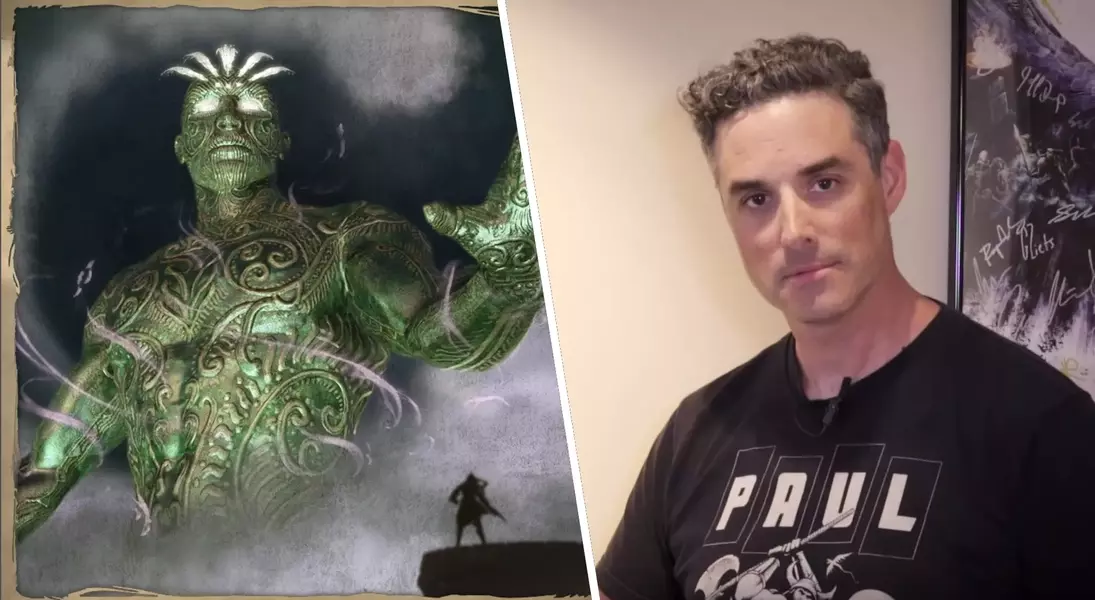
Obsidian Entertainment's critically acclaimed RPG, Pillars of Eternity 2: Deadfire, has garnered significant attention, not least for its divisive ending. Despite its high ranking among PC Gamer's top 100 titles and personal praise from many, a faction of players expressed dissatisfaction with the game's concluding narrative, particularly regarding their inability to overcome the formidable god Eothas.
Deadfire's narrative centers on the reawakening of the deity Eothas and the protagonist's mission to thwart his destructive plans. However, players ultimately discover that their efforts are futile against a being of divine power, leading to an ending where Eothas cannot be physically defeated. This lack of a decisive victory challenged the conventional expectations of many RPG players, who are accustomed to protagonists with the power to overcome any obstacle.
Challenging Player Expectations in RPG Narratives
Pillars of Eternity 2: Deadfire's ending, which prevents players from defeating the god Eothas, directly confronts the common RPG trope of the all-powerful protagonist. Game director Josh Sawyer intentionally designed this outcome to highlight the limitations of individual power, even for a highly capable hero. He noted that many RPG players are “conditioned to think they’re built different,” expecting to surmount any challenge presented. However, Deadfire’s narrative deliberately subverts this expectation, presenting Eothas as an insurmountable force. This decision sparked considerable debate, with some players finding it frustrating, while others lauded it as a bold and realistic approach to storytelling within a fantasy setting.
Sawyer's vision for Deadfire's conclusion aimed to explore different facets of power and its inherent boundaries. The game consistently portrays gods as self-serving and manipulative, even when their actions appear benevolent, often using mortals as pawns. By making Eothas unstoppable, Sawyer reinforced this theme, demonstrating that even a powerful Watcher is subject to divine will. This narrative choice forces players to confront the reality that not all problems can be solved through brute force or conventional heroism, echoing real-world complexities where many societal issues cannot be simply “punched away.” This exploration of power dynamics and limitations ultimately contributes to Deadfire's unique appeal and its enduring legacy as a thought-provoking RPG experience.
The Intent Behind Deadfire's Divisive Conclusion
Josh Sawyer's decision to craft an ending where players cannot triumph over Eothas was not merely to antagonize the player base, but to delve into deeper thematic territory regarding power and its constraints. He aimed to dismantle the ingrained belief among RPG players that their character, as the protagonist, is inherently capable of overcoming any challenge. The game explicitly communicates the futility of directly confronting Eothas, positioning him as a force beyond conventional physical deterrence. This narrative choice forces players to grapple with the understanding that while they can mitigate harm and make impactful decisions, outright victory against a god is beyond their reach, a stark contrast to typical RPG resolutions.
Furthermore, Sawyer underscored that this design reflects the nature of the gods within the Pillars of Eternity universe, portraying them as fundamentally self-interested entities that manipulate mortals. The ending serves as a powerful demonstration of this manipulation, with Eothas using the player character for his own ends. This subversion of player agency, while initially jarring for some, was intended to explore the idea that even in a fantastical world, certain forces remain unconquerable. Sawyer likened this to real-world challenges, explaining that some problems, like mass starvation, cannot be solved by simply "punching your way out of them." For many, this mature and unconventional approach to narrative closure elevates Deadfire from a mere game to a profound exploration of philosophical themes, solidifying its place as a cherished RPG.
