
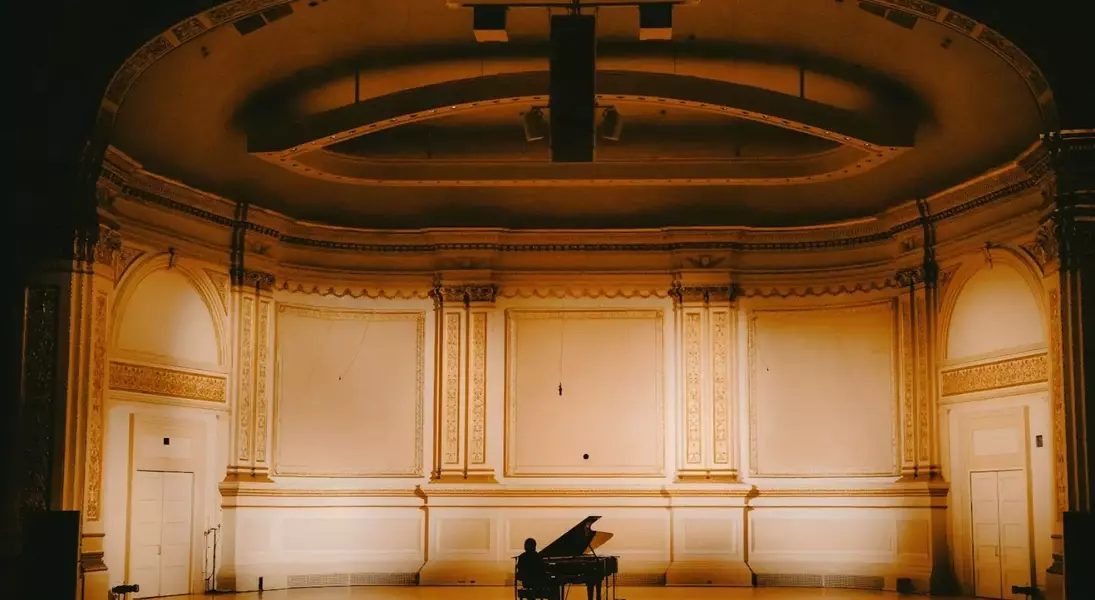
Filmmaker Paul Thomas Anderson once again demonstrates his profound connection to music with his latest documentary, an intimate portrayal of Cameron Winter's solo performance at the iconic Carnegie Hall. The 72-minute feature captures the essence of the Geese frontman's emotionally charged set, where he reinterprets his songs through hauntingly minimalist piano arrangements. This cinematic endeavor, released by Janus Films after its premiere at the New York Film Festival, stands as a testament to Anderson's ability to translate live musical artistry into a deeply moving visual experience. The film is a delicately crafted piece, highlighting the raw vulnerability and artistic brilliance of Winter, whose stage presence, though seemingly reserved, crackles with a quiet intensity that draws viewers into his musical world. It’s a work that celebrates both the musician’s talent and the director’s unique vision, creating an unforgettable fusion of sound and imagery.
Anderson's history of blending visual storytelling with musical narratives is well-documented, from his early work on music videos for artists like Fiona Apple to his collaborations with Radiohead's Jonny Greenwood on acclaimed film scores. This latest project continues that legacy, with Anderson personally handling the Panavision camera to capture Winter's performance. The result is a profoundly tender and honest concert film, steering clear of any excessive sentimentality, yet resonating with a palpable sense of emotional fragility. The documentary showcases Winter's evocative vocal glissando and intricate piano artistry, weaving together folk ballads that evoke comparisons to musical legends such as Harry Nilsson and Van Morrison, while simultaneously affirming Winter's distinctive artistic identity.
The setting itself, a sold-out Carnegie Hall with over 2,700 attendees, lends an almost sacred atmosphere to the performance. Winter, then only 23 years old—remarkably, the same age Bob Dylan was when he first headlined the venue—is depicted at a pivotal moment, on the cusp of significant recognition. Anderson's dynamic camerawork, utilizing a mobile rig that glides and sweeps across the stage, expertly captures the interplay of light and shadow, highlighting the expressive contours of the singer’s face. This visual style underscores the emotional depth of each song, transforming the concert into a series of spellbinding incantations, a lonely yet powerful vigil. The film’s immersive quality, devoid of any conventional interlude except for a brief introduction and a poignant conclusion, pulls the audience into a profound and visceral encounter with the music.
Key tracks, such as the popular single “$0,” gain an even more profound, melancholic resonance in their stripped-down form. The lyrics, exploring themes of exploitation in relationships, like “You’re making me feel like a dollar in your hand / You’re making me feel like I’m a zero dollar man,” strike a particularly somber chord without the full band production. Similarly, the indie hit “Love Takes Miles” is elevated in this minimalist presentation. While the compositions subtly blend into one another, often sharing a similar tonal palette, this stylistic choice contributes to the film’s overall hypnotic effect. The continuity fosters an uninterrupted journey into Winter’s musical psyche, creating an experience that is deeply felt and innately understood by the audience, even if difficult to fully articulate.
This concert documentary stands as a masterful addition to the genre, offering a poignant and captivating glimpse into the creative soul of Cameron Winter. It underscores Paul Thomas Anderson's exceptional skill in capturing musical performances with both artistic sensitivity and technical brilliance, providing a cinematic experience that is both mesmerizing and deeply resonant. The film is a powerful and intimate portrait, cementing Winter’s place as a remarkable artist and Anderson’s enduring legacy as a visionary director.
