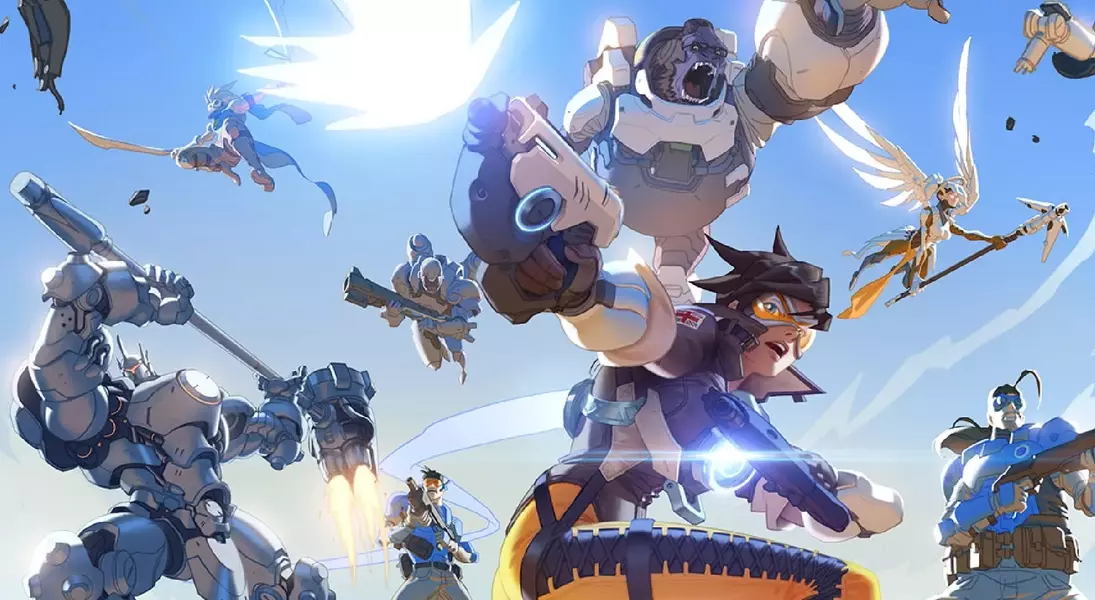
Former Overwatch director Jeff Kaplan has openly shared his retrospective thoughts on the foundational design of the popular hero shooter, specifically its deep reliance on team coordination. Kaplan, while acknowledging the initial rationale behind this design choice, now believes that a contemporary hero shooter would benefit from a greater emphasis on individual player contributions. This shift in perspective highlights the inherent challenges of fostering seamless teamwork among disparate players, often leading to frustration when a single member's performance impacts the entire team's success.
The Core Design Dilemma: Team vs. Individual in Overwatch
In a recent discussion with Lex Fridman, Jeff Kaplan articulated a key design consideration he would approach differently if developing a hero shooter today. He lamented Overwatch's profound dependence on synchronized team play, noting that player tendencies often lean towards individual impact rather than collective effort. This design philosophy, while aiming to create a highly collaborative experience, inadvertently introduces significant hurdles. A game's outcome can hinge on the weakest link within a team, as opposed to a single exceptional player's ability to "carry" the match, a phenomenon more common in titles like CS2 or Valorant. For instance, a struggling tank player can compromise the team's front line, an ineffective support can lead to premature eliminations, and a lacking damage-per-second (DPS) player can result in insufficient offensive pressure. This dynamic often compels other players to overcompensate, adding undue stress to the gameplay experience.
Kaplan further explained that the original Overwatch design intentionally downplayed individual achievements, focusing instead on overall team victory. The in-game medal system, rather than clearly highlighting personal impact, sometimes became a tool for frustrated players to criticize teammates after a loss. While efforts have been made, such as the implementation of ping mechanics, to facilitate communication for uncoordinated teams, these often fall short when compared to the strategic advantages of dedicated voice communication. Although moments of perfect team synergy with strangers can occur, they are, by Kaplan's admission, a rare exception to the prevalent challenges of relying heavily on spontaneous group cohesion.
Kaplan's reflections on Overwatch's team-focused design offer valuable insights into the complexities of multiplayer game development. His candid assessment underscores the ongoing debate within the gaming community about the balance between team synergy and individual agency. Moving forward, game developers may increasingly consider player psychology and the desire for personal impact when crafting future competitive titles, potentially leading to hero shooters that offer a more forgiving and individually rewarding experience while still encouraging cooperative play.
