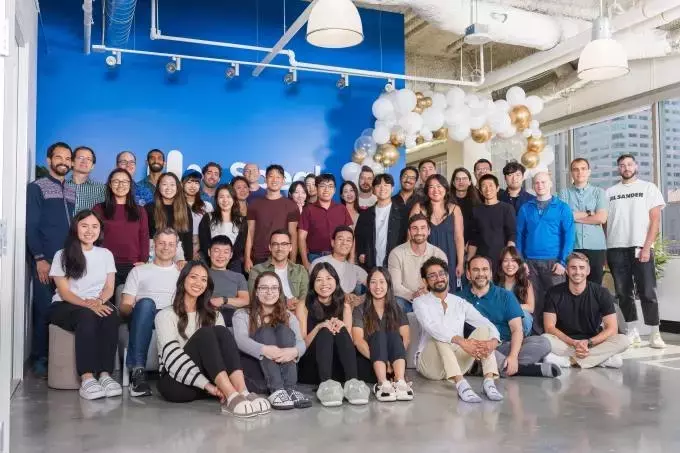
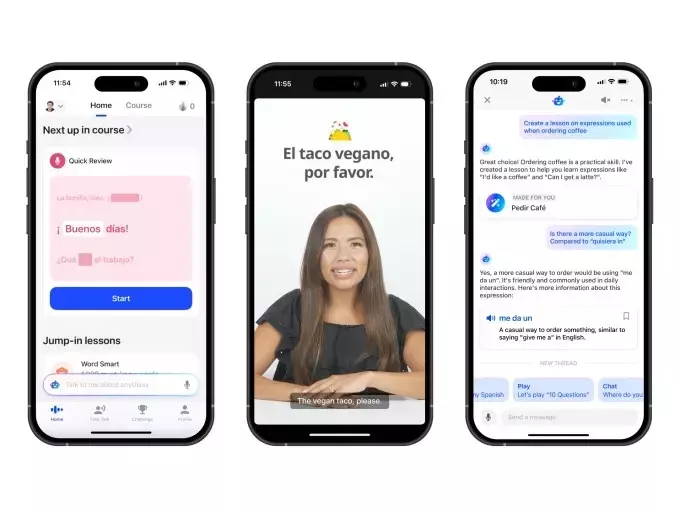
Languages are often introduced through reading and writing, yet native speakers begin by hearing and speaking. Speak has crafted a unique platform that focuses on native speakers' learning methods. By using AI, it generates audio conversations and listens to users' responses to enhance language comprehension.
Speak's Milestone Fundraise
Speak is announcing a significant milestone - a Series C funding of $78 million, which boosts its valuation to $1 billion. This round is led by Accel, with previous backers like OpenAI (via its Startup Fund), Khosla Ventures, and Y Combinator also participating. Just six months ago, Speak confirmed a Series B extension of $20 million at a $500 million valuation. This substantial investment shows the startup's rapid progress.How AI Powers Speak's Platform
OpenAI's technology powers Speak's platform, and it's an early partner in speech technology. This association proves one of the commercial opportunities for GenAI. Ian Hathaway, a partner at OpenAI's Startup Fund, emphasizes their shared vision of revolutionizing language learning with AI. Speak's 2022 investment was driven by this vision, and they aim to create transformative learning experiences for a growing user base worldwide.Expanding Target Languages
A significant part of the funding will be used to expand the number of target languages users can learn with Speak. Currently, it focuses on English, the most popular language for learning. But now, they plan to start with Spanish and French. This will increase their customer base and offer more learning options. Eight-year-old Speak has been providing learning and review materials around courses, complementing what users may have studied elsewhere. It lists eight originating languages for learning English based on popular language groups.Speak's Three-Step Learning Process
Speak is described as a part learning method and part tech platform. The three-step process begins with being thrown into listening and talking, an interesting approach as the founders met through Thiel Fellows. In the first step, no grammatical rules are explained in detail. Then, users are asked to apply new terms repeatedly through drills. Finally, the phrase is presented in a real-world context using AI to anchor it. This all uses speech recognition, natural language processing, and generative AI to tailor learning to each learner.No Human in the Loop
Interestingly, although the goal is to get learners speaking with humans, there are no humans directly involved. The entire process is crafted using various AI technologies. Currently, Speak doesn't have any integrations with standardized language learning qualifications. Zwick believes that tests are imperfect and people often game them instead of truly communicating. But he hints that in the long term, they may develop a true, accurate English fluency score or test.Gamification and Future Plans
Gamification is an area Speak has not explored yet, but with more funding and staff, there's room to introduce more consumer-driven models. Duolingo and other companies have leaned into gamification, turning learning into a game. New services like Eleven Labs' multilingual AI agents may open up more language-learning services. Zwick emphasizes that when there's a choice between gamification and efficacy, they will always choose efficacy.Accel's Investment and Future Board
Ben Quazzo, a partner at Accel who led the investment round, will join Speak's board of directors. He believes Speak has emerged as a standout in consumer AI, with exceptional growth and market potential.