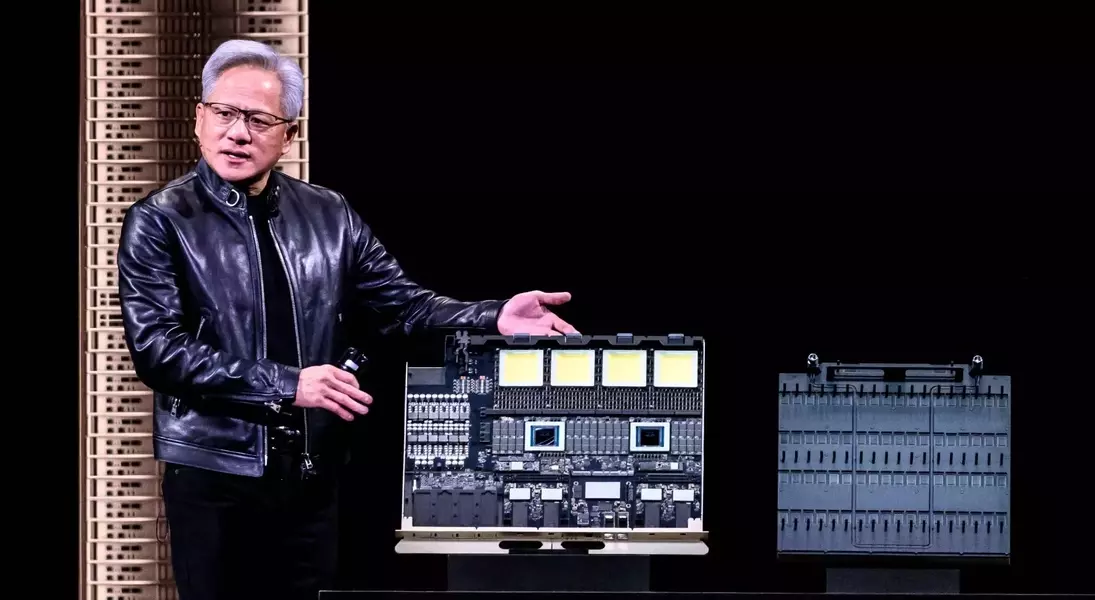
Recent reports indicate that NVIDIA's forthcoming Rubin servers, integrating a novel 'context memory storage' (CMX) system, are set to profoundly influence the global market for NAND flash memory. This advanced technology is designed to bridge the gap between high-bandwidth memory (HBM) and conventional storage within AI accelerators, offering faster data access via Spectrum-X Ethernet.
The CMX system, which includes 576 SSDs providing an impressive 9,600 TB of total storage capacity per server, is anticipated to cause a monumental surge in NAND demand. Industry experts predict that the total NAND requirement for CMX will skyrocket from 35 million TB this year to over 100 million TB in the coming year. This immense demand is comparable to adding an entirely new major consumer to the NAND market, akin to a company the size of Apple.
This development, while a boon for NAND producers like Samsung, who are actively positioning themselves to meet NVIDIA's needs, may create challenges for general consumers. The escalating demand from the AI sector, characterized by large-scale contracts and high priorities, could lead to increased prices and potential supply constraints for consumer-grade SSDs and other memory products. Despite some assurances from memory industry leaders regarding consumer pricing, it remains uncertain whether these sentiments will translate into tangible benefits for individual buyers.
The relentless innovation in AI hardware, exemplified by NVIDIA's Rubin servers and their CMX technology, is a powerful force driving technological advancement. While this progression is crucial for pushing the boundaries of artificial intelligence, it also underscores the importance of a balanced and adaptable supply chain. Ensuring that cutting-edge developments in one sector do not inadvertently create scarcity or inflate costs for another is vital for fostering widespread technological growth and accessibility. The future demands that we proactively address such market dynamics, striving for a future where innovation benefits all, rather than a select few.
