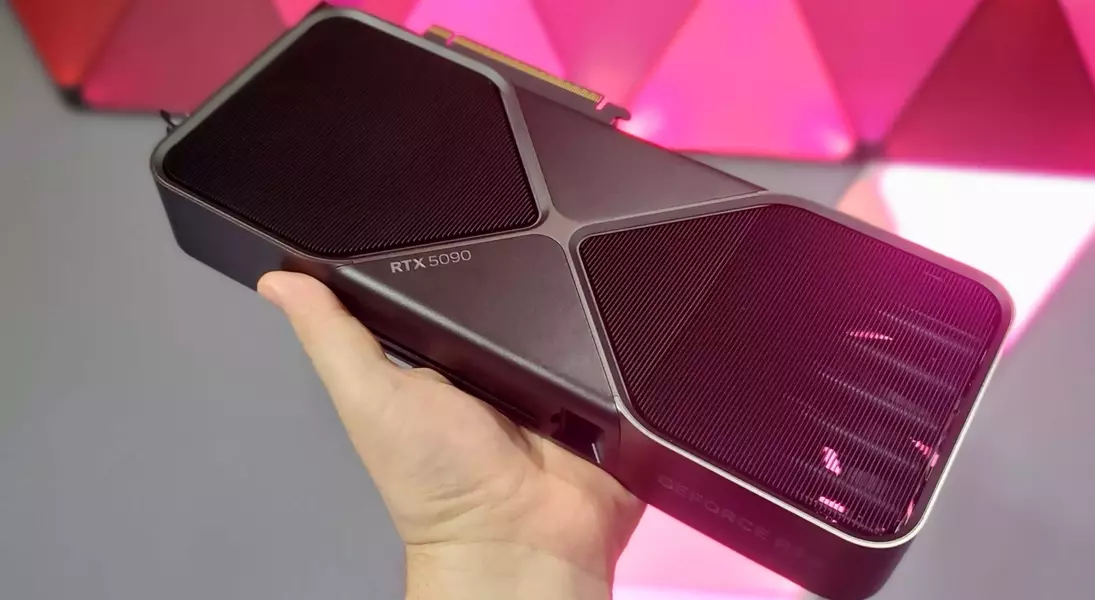
The persistent global memory chip shortage is poised to trigger another significant price increase in the hardware market, potentially affecting Nvidia's high-end RTX 5090 graphics card. Industry reports suggest a potential rise of up to $300, a move that would further burden PC gamers already contending with soaring component costs. This trend reflects a broader issue of constrained supply and escalating demand, largely fueled by the burgeoning artificial intelligence sector.
While an official consumer price adjustment has yet to be announced, sources indicate that add-in-card (AIC) partners in China have been notified of a 2,000 RMB (approximately $300) price increment. Should this materialize, it is expected to translate into higher retail prices for consumers worldwide. The reported increase extends to both the standard RTX 5090 and its China-exclusive variant, the RTX 5090D V2, both featuring substantial GDDR7 memory configurations.
The RTX 5090, especially its 32 GB GDDR7 version available in markets like the UK and US, is already a premium product. Therefore, news of a price hike is not entirely unexpected given the current market dynamics. This situation mirrors recent price increases observed in other gaming hardware, such as Sony's PS5 and Nintendo's upcoming Switch 2, both impacted by similar supply chain pressures. Even as the Steam Machine aims for a launch this year, its potential pricing remains uncertain amidst the ongoing memory crisis. Fortunately, there are no current indications of similar price adjustments for other cards in Nvidia's 50-series lineup.
The underlying cause of these escalating prices is the intense demand for memory chips from the AI industry. Companies like SK hynix, a major memory manufacturer, report near-zero available capacity due to the overwhelming orders. Despite ongoing efforts to expand production facilities, a meaningful improvement in supply is not anticipated until 2028 at the earliest. This imbalance between supply and demand has led to memory making up a significant portion of PC manufacturing costs, with HP reporting it accounts for around 35% of their PC costs. The scarcity has also regrettably given rise to convincing counterfeit DDR5 modules, adding another layer of complexity for consumers. For PC enthusiasts, gaming without sufficient RAM or a powerful GPU is largely impractical, making these price fluctuations a critical concern.
The current landscape of GPU pricing highlights a challenging environment for those considering a PC upgrade. The RTX 5090, with an initial MSRP of $1,999, has already been observed selling for closer to $3,500. This upward trajectory is a direct consequence of the memory supply crunch, leaving consumers to navigate an increasingly expensive market for essential PC components.
