Nutmeg, a football management game, transports players back to the vibrant era of 80s and 90s English football, evoking a strong sense of nostalgia from its initial loading screen. Designed for enthusiasts who grew up with Panini sticker albums and the early days of the Premier League, it cleverly integrates elements that resonate deeply with this demographic.
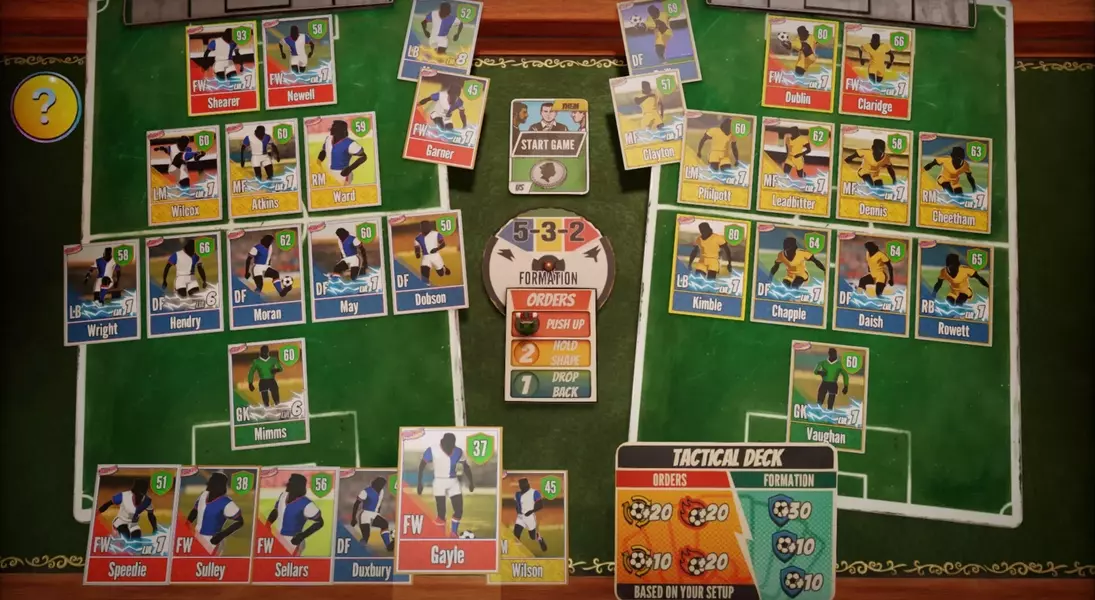
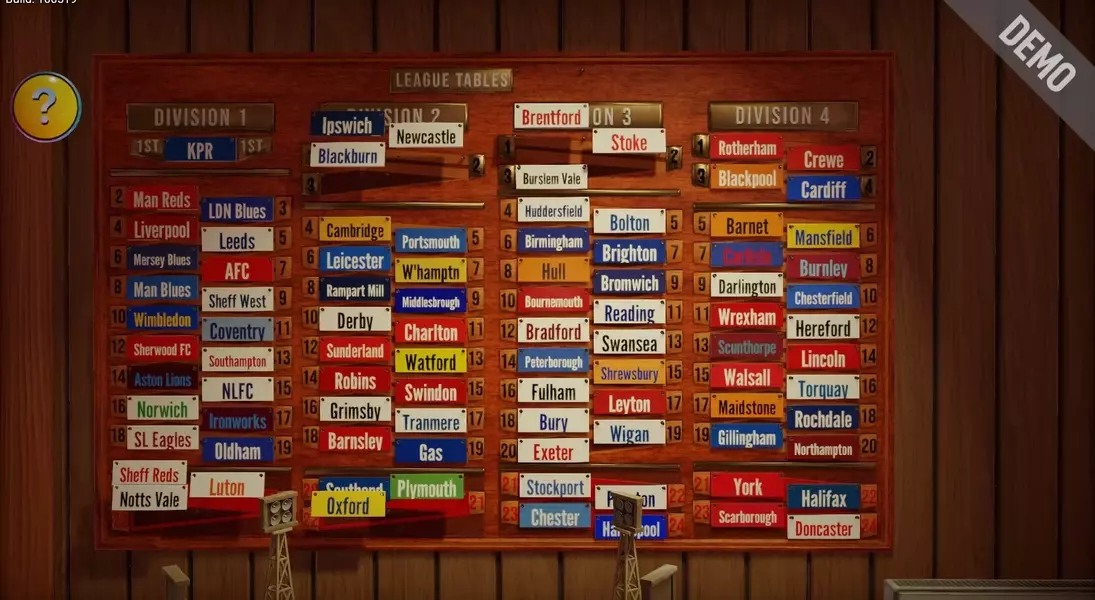
The game's charm lies in its unique approach to presentation, particularly how team information, staff, and transfer targets are accessed through a digital sticker album. This feature not only pays homage to a cherished part of football culture but also serves as a central hub for managing the club. While the player likenesses are intentionally generic, represented by silhouettes, this quirk surprisingly enhances the retro feel, reminiscent of classic football games that hinted at real players without explicit representation. The use of real club names alongside occasionally altered ones, like 'Mersey Blues' for Everton, further contributes to this distinct aesthetic.
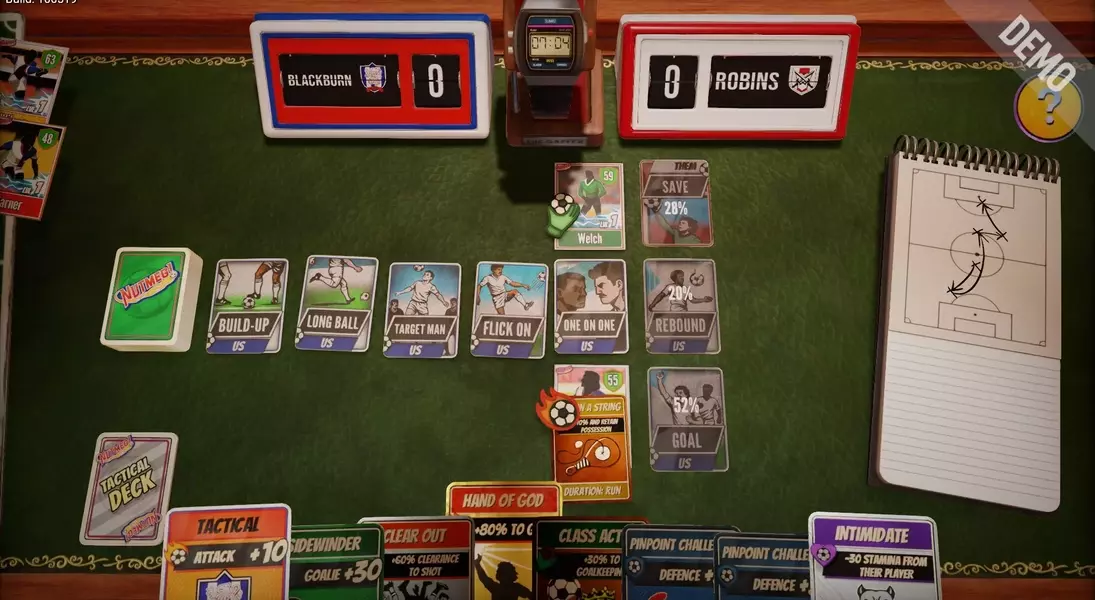
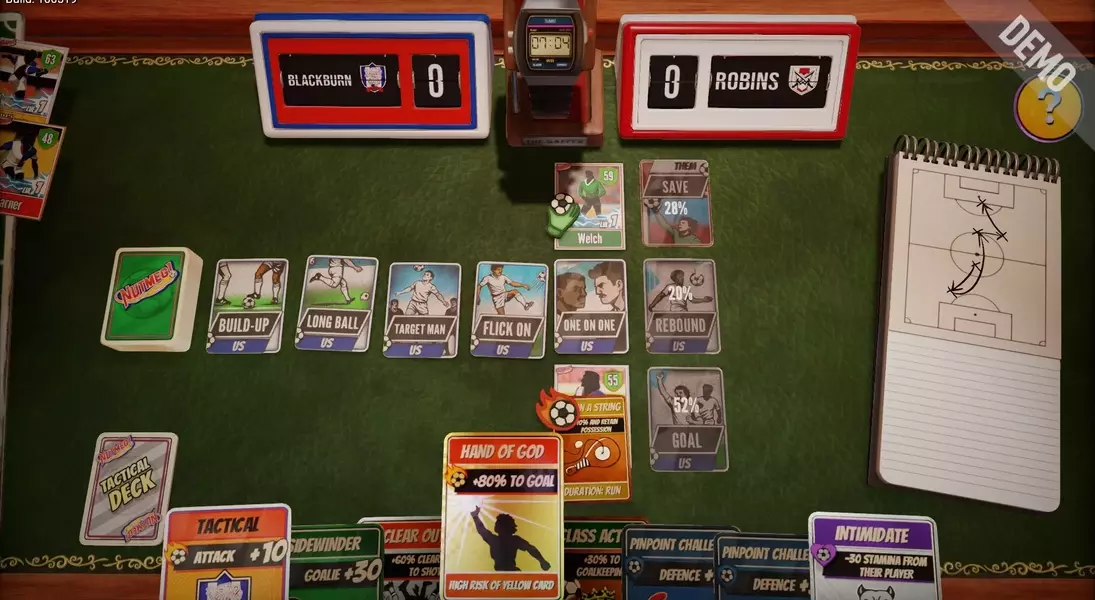
At its heart, Nutmeg is a deck-building game focused on strategy and chance during matches. Players strengthen their team with cards and deploy tactical cards to gain advantages in various in-game situations. Matches progress dynamically, with each play unfolding through several scenarios, such as a 'forward clash' or a 'loose ball.' Success hinges on a percentage chance, which players can influence by strategically using cards. For example, a defensive 'clearance' card is only effective in appropriate situations, adding a layer of realism and tactical depth. This card system, while not as intricate as some other games, fosters a compelling sense of consequence for each decision, akin to the engaging nature of games like Balatro.
Each game within Nutmeg presents roughly ten key situations, interspersed with a ticking match clock. Managers can make two substitutions and switch between three classic formations (4-4-2, 4-3-3, 5-3-2), along with basic tactical instructions such as 'press,' 'keep the shape,' or 'park the bus.' The squad management aspect is particularly well-executed, allowing players to upgrade cards before matches, although the crafting mini-game could benefit from more dynamic elements. The game also includes playful nods to football history, like a high-risk 'Hand of God' attacking card, adding character and humor to the experience.
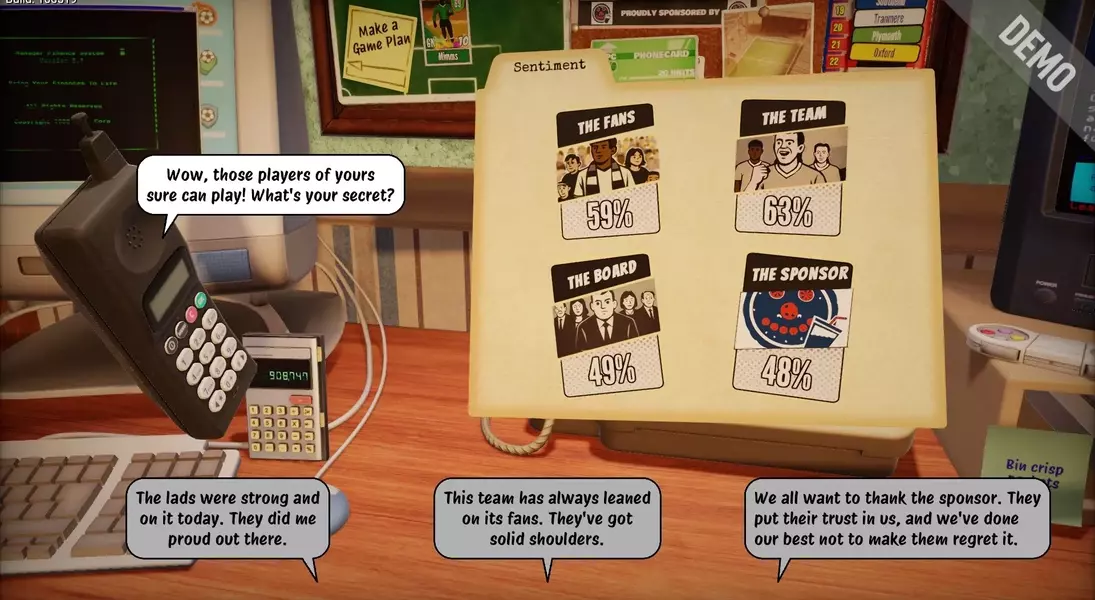
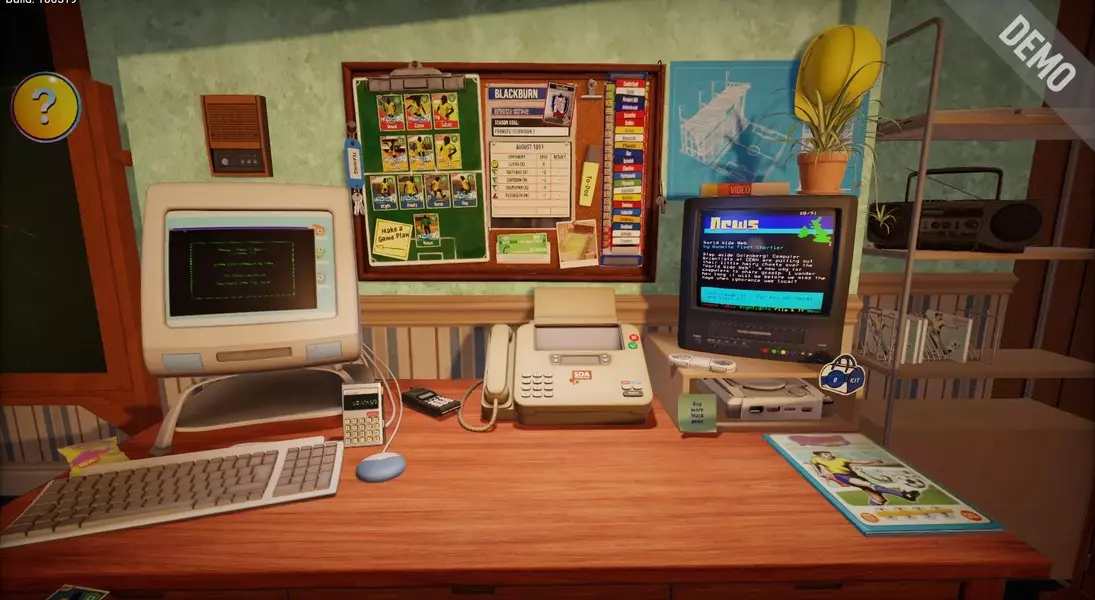
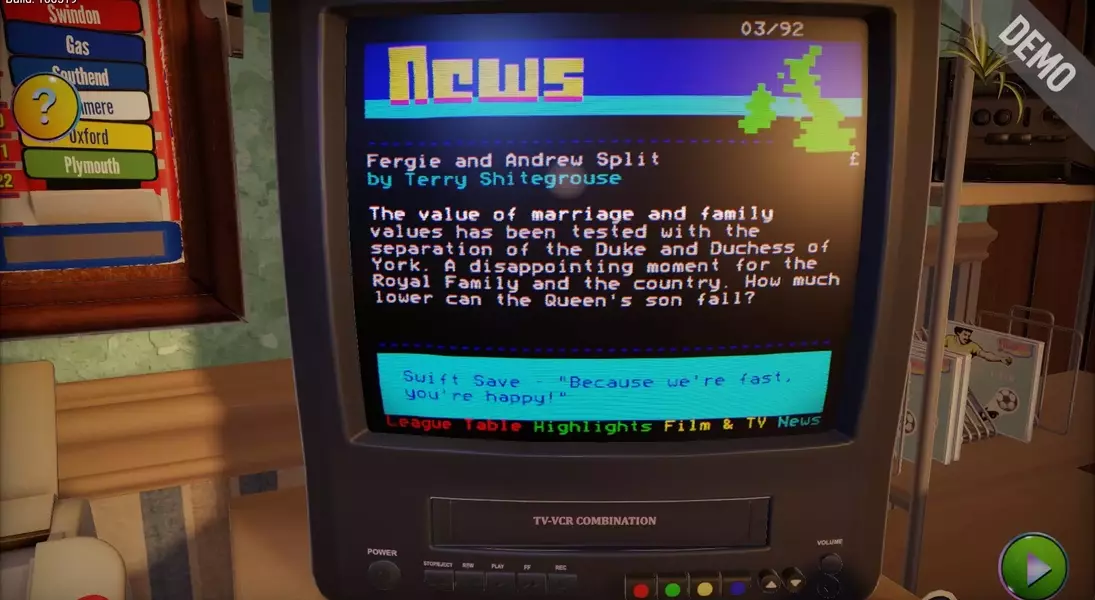
However, Nutmeg's ambition sometimes detracts from its core strengths. The game's hub, designed as a retro desk filled with various interactive objects like an old PC, a phone, and a tactics board, introduces numerous subsidiary management systems. While some, like stadium upgrades, are engaging, others, such as managing merchandise stock or hiring accountants, feel superfluous. This overabundance of minor tasks can pull players away from the more enjoyable match-day simulation and transfer market excitement, creating an experience that feels less streamlined than desired. The user interface, though functional, also contributes to a clunky navigation experience, with an often confusing mix of arrows and unclear signaling, which is hopefully refined in future updates.
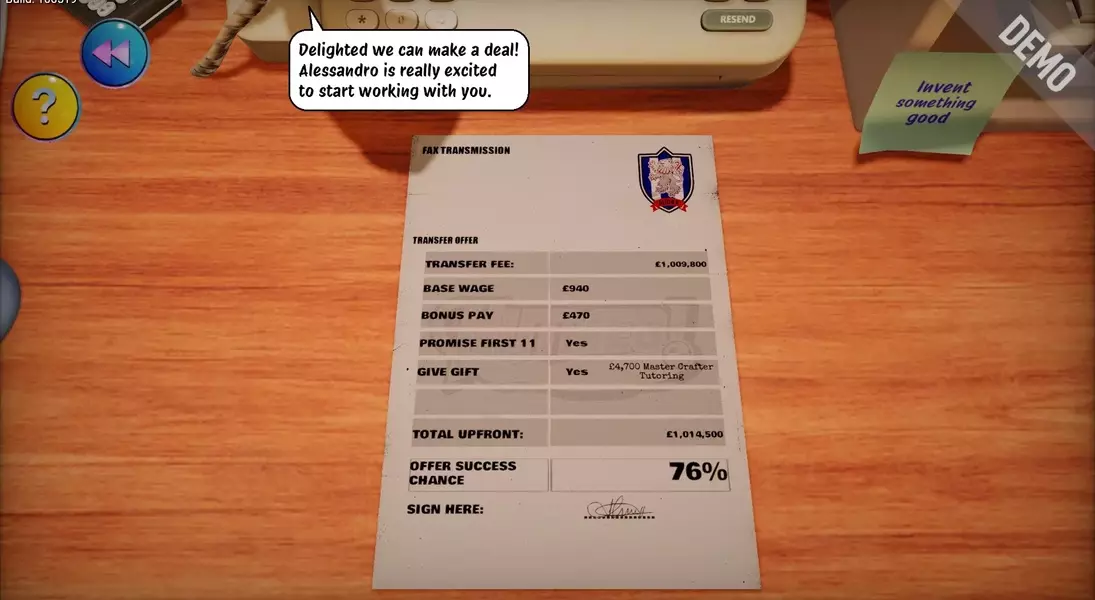
Despite these shortcomings, the game offers a rewarding challenge mode. Taking charge of a club like Blackburn, players aim for promotion, building a team from the ground up with historical figures like Alan Shearer and David Batty, and even unexpected stars like Rivaldo and Alessandro del Piero. The monthly increments, featuring five matches with one designated as a 'broadcast' game, allow for strategic prioritization, focusing efforts on winnable matches to maximize fan sentiment and gate receipts. The match commentary, however, sometimes lacks coherence with the on-field action, highlighting areas for improvement in conveying a consistent game narrative.
Ultimately, Nutmeg is a game of two distinct parts. Its match-day mechanics, transfer system, and nostalgic appeal are genuinely engaging, evoking the unique charm of late 80s and early 90s football. The card-based strategy adds a fresh dimension to football management. However, the excessive focus on peripheral club management tasks and a somewhat cumbersome interface detract from what could be a more focused and enjoyable experience. While the potential for a truly great football management game is evident, the current iteration struggles to fully integrate its various elements into a seamless and captivating whole.
