
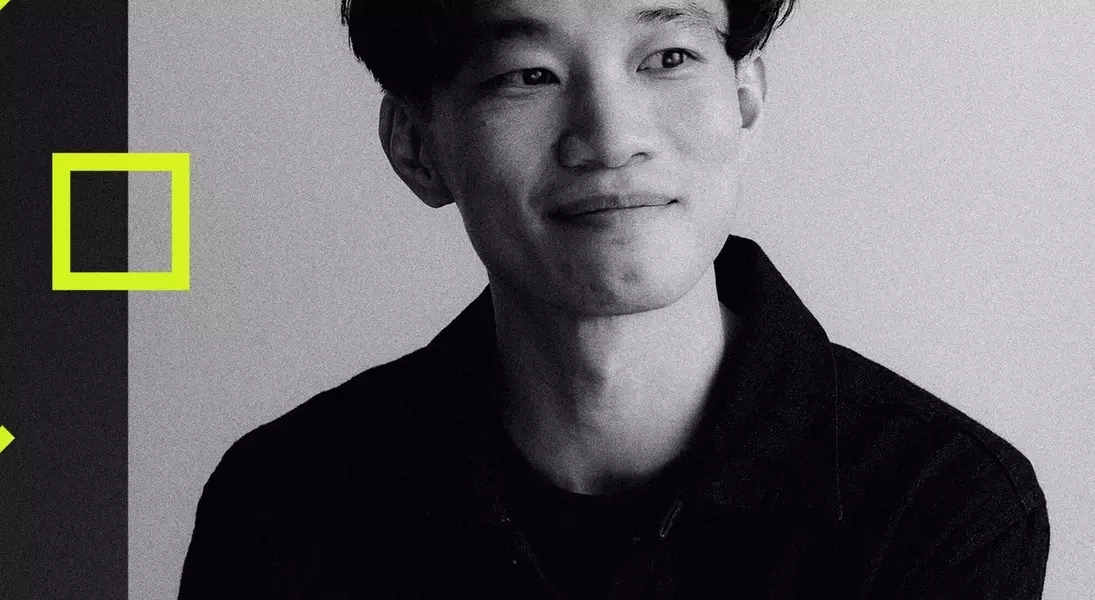
In an insightful conversation, Ivan Zhao, the visionary co-founder and CEO of Notion, delved into the transformative landscape of productivity software, advocating for a paradigm shift from rigid, specialized tools to highly adaptable, integrated platforms. He likened Notion's foundational design to LEGO bricks, enabling users to construct bespoke workflows rather than being confined by pre-defined applications. This core philosophy, emphasizing modularity and user-driven customization, has propelled Notion's growth and positioned it uniquely within the competitive software-as-a-service (SaaS) market. Zhao also illuminated Notion's strategic pivot towards artificial intelligence, describing AI not just as an added feature but as an integral teammate capable of amplifying human ingenuity and streamlining work processes, forecasting a future where AI empowers organizations to operate with unprecedented efficiency.
Zhao traced Notion's origins back to his college days, where he was inspired by early computing pioneers who envisioned software as a malleable medium, akin to reading and writing. He contrasted this with the subsequent 'application format' era, where software became rigid and compartmentalized, leading to a fragmented and often inefficient digital workspace. Notion's mission, he explained, is to reverse this trend by 'bundling' diverse functionalities into a unified platform, offering a comprehensive solution for knowledge work. This approach challenges the prevalent 'point solution' model, where numerous specialized tools are used for different tasks, often leading to compatibility issues and operational complexities.
A significant turning point for Notion was the early access to OpenAI's GPT-4 in late 2022, which revealed the immense potential of intelligent reasoning. This prompted Zhao and his co-founder, Simon Last, to rapidly develop and launch Notion AI, even before the public release of ChatGPT. This foresight allowed Notion to integrate AI capabilities into its platform ahead of competitors, transforming how users interact with the software. Features like AI-powered meeting notes and transcription, which Notion now offers, exemplify how AI can automate repetitive tasks, enabling users to focus on more strategic and creative endeavors. Zhao himself utilizes these features, particularly for drafting content, leveraging AI to enhance his writing efficiency as a non-native English speaker.
Notion's journey has been marked by a commitment to continuous innovation, including a pivotal decision in 2015 to overhaul its initial version and relaunch as Notion 2.0. This courageous move, undertaken by a lean team in Kyoto, Japan, underscored Zhao's unwavering dedication to his product vision, prioritizing long-term utility over short-term gains. He drew a parallel between Notion's design philosophy and the artisanal traditions of Kyoto, where craftsmen meticulously dedicate themselves to their creations. This deep-seated passion for design and functionality, combined with a strategic emphasis on talent density within the company, has been instrumental in Notion's sustained profitability and growth without needing additional external funding.
Looking ahead, Zhao foresees a future where Notion transcends its current role as a tool, evolving into a sophisticated ecosystem of AI teammates. These AI agents, specialized for various professional tasks, will work alongside human employees, augmenting their capabilities and transforming the very nature of work. He acknowledged the current limitations of AI, particularly concerning reliability and the learning curve, but expressed confidence that ongoing research into memory and learning techniques will overcome these challenges. The CEO emphasized that the rapid evolution of AI models demands a more experimental and iterative approach to software development, moving away from rigid waterfall methods to embrace the fluid and organic nature of AI. This shift, he believes, will require a workforce that embraces ambiguity and cross-functional collaboration, fostering a new generation of builders who can harness the power of AI to solve complex problems and drive unprecedented efficiency in the workplace.
