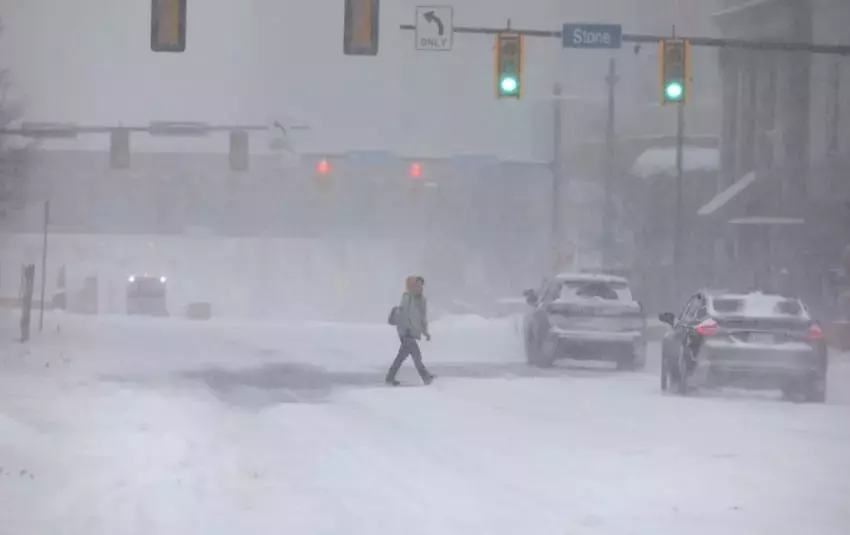
A formidable winter storm has cast a pall over the Northeastern United States, instigating states of emergency and extensive travel restrictions across major metropolitan areas, including New York City. This meteorological event has resulted in thousands of flight cancellations and considerable delays, placing significant strain on the airline industry, essential delivery services, and prompting a focused reevaluation of energy infrastructure and market resilience.
New York City Mayor Zohran Mamdani took preemptive action by declaring a state of emergency and implementing a travel ban, commencing Sunday evening and extending into Monday afternoon. Similar preventative measures were enacted in various other states and cities, including Rhode Island, Boston, Pennsylvania, and Philadelphia, all bracing for the impending severe weather. The National Weather Service issued warnings for blizzard conditions, forecasting accumulations of up to 20 inches of snow within a 24-hour period, with some localized regions in New Jersey, Rhode Island, and Massachusetts potentially experiencing as much as 25 inches.
The comprehensive travel ban in New York City brought all vehicular movement to a standstill across its extensive network of streets, highways, and bridges. Concurrently, DoorDash Inc., a prominent food delivery platform, announced a temporary cessation of its services on Sunday night, underscoring the broad impact of the storm on daily operations and logistical chains. The majority of flight disruptions were concentrated at key aviation hubs, notably John F. Kennedy International Airport and LaGuardia Airport in New York City, followed by Newark Liberty International Airport, Philadelphia International Airport, Logan International Airport, and Ronald Reagan Washington National Airport.
Adding to the complexity of the situation, the Department of Homeland Security had previously declared a suspension of TSA PreCheck and Global Entry services due to a partial government shutdown. However, major airports opted to maintain these expedited screening lanes on Sunday, with the Transportation Security Administration indicating that operational decisions would be made on a “case-by-case” basis. This storm's arrival closely follows an earlier severe winter event, dubbed 'Fern,' which previously impacted the U.S. Atlantic Coast with heavy snowfall, sleet, and freezing rain, leading to prior flight interruptions.
Winter storms invariably bring the energy sector into sharp focus, as they have the potential to significantly disrupt energy production and distribution networks. Companies such as Energy Transfer, OneOK Inc., Kinder Morgan Inc., Enterprise Products Partners, and Williams Companies are among those whose operations and stock performance often come under scrutiny during such challenging weather conditions.
The extensive disruptions caused by this blizzard underscore the profound influence of severe weather on transportation, commerce, and daily life, compelling authorities and industries to enhance preparedness and resilience strategies against future climatic events.
