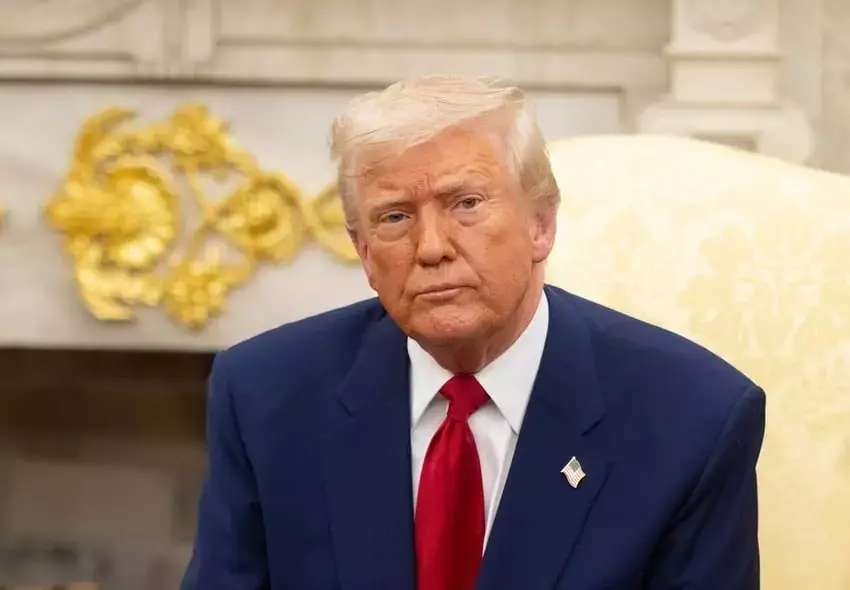
The recent decision by the U.S. Supreme Court to revoke tariffs previously enacted by former President Donald Trump has triggered a ripple effect across international trade landscapes. This development has prompted major global economic players, including the European Union, China, and India, to critically examine their existing and future trade engagements with the United States. The situation underscores a period of significant uncertainty and readjustment in global trade policies, with each nation navigating the implications of this abrupt shift.
The European Union has voiced its apprehensions regarding the consistency and fairness of transatlantic trade, emphasizing the necessity for clear and mutually beneficial agreements. Meanwhile, China is diligently assessing the broader economic repercussions of the tariff annulment, advocating for a multilateral approach to trade that prioritizes cooperation over confrontation. Concurrently, India has opted to defer crucial trade discussions with the U.S., indicating a cautious stance as it recalibrates its trade strategy. These reactions collectively highlight the intricate and often volatile nature of international trade relations, especially in response to sudden policy changes from a dominant economic power.
Global Reactions to Shifting US Tariff Policies
The recent Supreme Court decision to invalidate tariffs previously enacted under former President Trump’s International Emergency Economic Powers Act (IEEPA) has sent shockwaves through the global trade community. This ruling has prompted immediate reactions from key international partners, particularly the European Union, which has called for renewed clarity and adherence to established trade agreements. The EU, through the European Commission, emphasized that the current trade environment is not conducive to fostering balanced and mutually beneficial transatlantic commerce, a sentiment that aligns with the principles outlined in previous EU-US joint statements. The Commission reiterated the expectation for European products to maintain competitive treatment without additional tariff impositions beyond agreed-upon limits. This stance underscores the EU's commitment to stable and predictable trade frameworks, with senior officials indicating a readiness to re-evaluate the ratification process of existing trade deals if clarity is not provided. This cautious approach reflects broader concerns about the reliability of U.S. trade policy and its potential impact on global economic stability.
This major shift in U.S. trade policy has prompted various international entities to recalibrate their strategies. The European Commission articulated concerns that the prevailing conditions do not support the development of equitable, balanced, and mutually advantageous trans-Atlantic trade and investment, as envisioned in the August EU-US Joint Statement. The body responsible for the European Union's trade policy underlined the importance of its member states' products continuing to receive the most favorable treatment, without any tariff escalations beyond the pre-established boundaries. In response to the U.S. tariff policy, which has been characterized by some as "pure chaos," European parliamentary figures have signaled their intent to recommend a pause in the ratification of trade agreements. This collective response from the EU highlights a desire for greater predictability and fairness in international trade relations. Additionally, this move by the U.S. has caused other major economies like China and India to reconsider their positions, with China undertaking a thorough evaluation of the implications and urging the U.S. to eliminate unilateral tariffs. India, for its part, has decided to postpone scheduled trade discussions, signaling a period of strategic reassessment.
International Trade Partners Reassess Engagements with the US
In the wake of the Supreme Court's ruling against specific U.S. tariffs, major trading partners, notably China and India, are actively reassessing their trade engagements with the United States. China's Ministry of Commerce announced a comprehensive evaluation of the ruling's implications, urging the U.S. to dismantle unilateral tariffs that it believes undermine cooperative trade relations. This move by Beijing underscores a desire for a more stable and predictable international trade environment, advocating for policies that benefit all parties involved rather than creating friction. Concurrently, India has taken a precautionary step by postponing a high-level delegation visit to Washington, D.C., where crucial discussions aimed at advancing an interim trade agreement were scheduled. This deferral indicates India's need for further clarity and understanding of the evolving U.S. trade policy landscape before proceeding with sensitive negotiations. The reactions from both China and India highlight a collective concern among global trading partners regarding the consistency and long-term trajectory of U.S. trade policy, emphasizing the interconnectedness of global economies and the far-reaching effects of policy shifts by dominant economic powers.
The annulment of certain U.S. tariffs by the Supreme Court has instigated a period of careful consideration among nations like China and India regarding their commercial ties with the United States. China's commerce authorities have initiated a comprehensive study into the effects of this U.S. tariff adjustment, advocating for the removal of unilateral trade barriers that they argue impede mutually beneficial trade. This emphasis from China on collaborative trade practices underscores a broader international call for stability and fairness in global commerce. Simultaneously, India has chosen to put on hold a significant trade delegation's trip to the U.S., where discussions on a provisional trade agreement were anticipated. This decision reflects India's strategic pause to gain more insight into the U.S.'s altered trade stance before moving forward. Both countries' responses highlight a shared apprehension within the international community regarding the future direction and reliability of U.S. trade policies, reinforcing the idea that shifts in one major economy can have considerable impacts on global trade dynamics and diplomatic relations.
