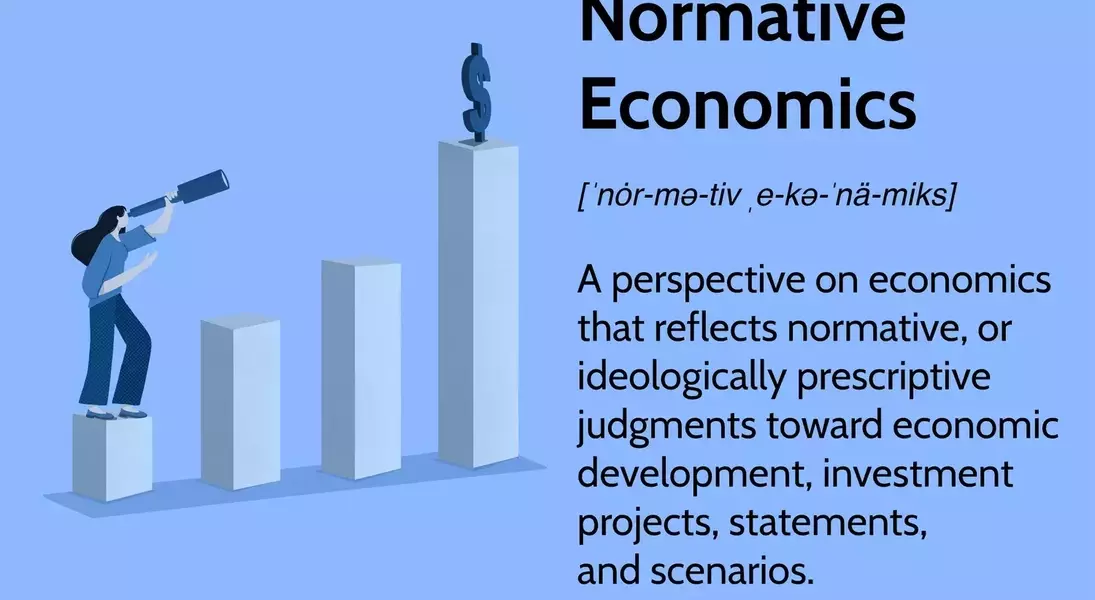
Normative economics is a branch of economic thought that deals with what the economy 'should' be like, rather than simply describing what it is. This perspective incorporates subjective opinions, ethical considerations, and value judgments regarding economic phenomena, guiding the formulation of policies aimed at achieving desired societal outcomes. It contrasts sharply with positive economics, which focuses solely on factual, testable statements about economic relationships and causality.
The essence of normative economics lies in its prescriptive nature. It attempts to define optimal economic conditions and policies by asking questions about what 'ought to be' or what 'should' occur. For example, statements advocating for specific economic growth rates or inflation targets are inherently normative, as they reflect a desired state rather than a purely factual observation. This approach extends to behavioral economics, where insights into human psychology are sometimes leveraged to 'nudge' individuals towards choices deemed beneficial, albeit without coercion. Essentially, while positive economics provides the 'what is,' normative economics supplies the 'what should be,' forming a critical foundation for economic reforms and strategic decision-making.
Normative economics, while invaluable for generating innovative policy ideas and aligning economic strategies with societal values, cannot operate in isolation. It must be complemented by the objective analysis offered by positive economics, which provides empirical data and verifiable facts to assess the feasibility and potential impacts of normative proposals. By integrating these two economic perspectives, policymakers can make informed decisions that are not only aligned with societal aspirations but also grounded in a realistic understanding of economic mechanisms. This balanced approach enables leaders to craft policies that promote justice, equity, and sustainable development, fostering a more prosperous and harmonious society.
